Italy by Train: How Italo and Trenitalia Connect the Alps, Cities, and Sicily
It is the country where every train window is a masterpiece — and the dining car serves espresso that actually tastes good.
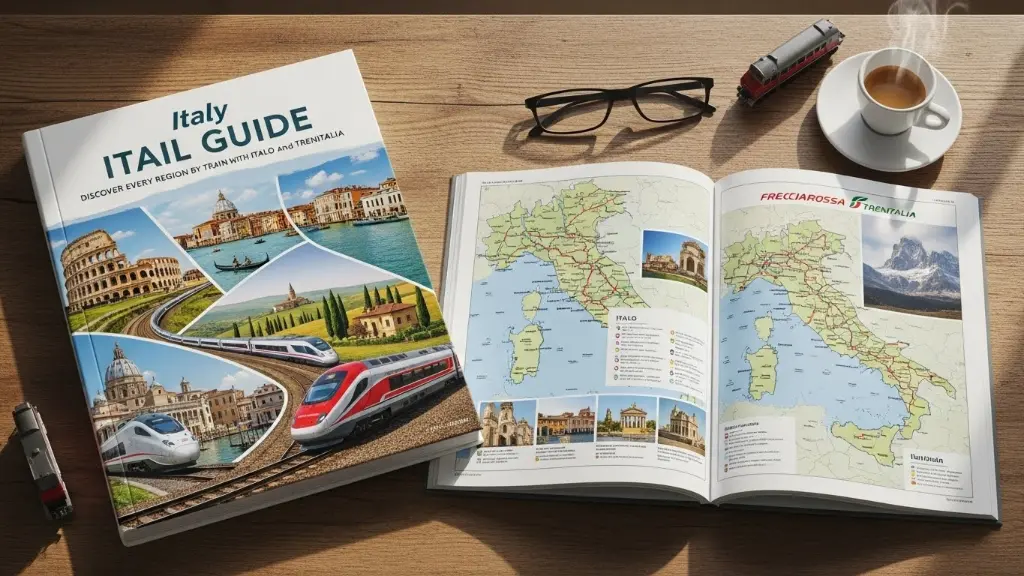
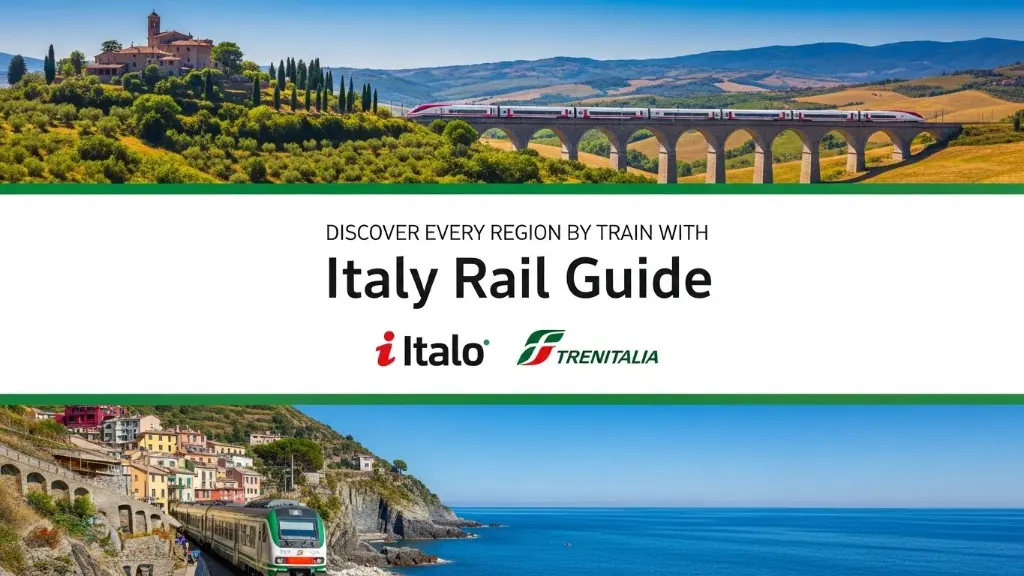
Italy’s railway network is one of Europe’s most extensive, connecting Renaissance cities, coastal villages, Alpine valleys, and Mediterranean islands. Two major operators — Trenitalia and Italo — compete fiercely on high-speed routes, while regional trains wind through landscapes that have inspired artists for centuries.
From the snow-capped Dolomites to the sun-baked shores of Sicily, Italian trains offer something rare: practical transportation that doubles as an unforgettable journey.
This is your complete guide to exploring Italy by rail.
Italy by Train: The Overview
| Fact | Details |
|---|---|
| Total Network | ~20,000 km of railway lines |
| Main Operators | Trenitalia (state), Italo (private), regional operators |
| High-Speed Network | ~1,500 km connecting major cities at up to 300 km/h |
| UNESCO Routes | Multiple — including the Bernina Express (cross-border) and Cinque Terre line |
| Island Connections | Sicily (train ferries), Sardinia (separate network) |
| Eurail/Interrail | Valid on Trenitalia; NOT valid on Italo |
Why Train Travel Works in Italy
- City Centers: Trains arrive in the heart of cities — Rome Termini, Milano Centrale, Firenze Santa Maria Novella. No airport transfers needed.
- Speed: High-speed trains connect Rome to Milan in 2 hours 55 minutes — faster than flying when you count airport time.
- Scenery: Even “ordinary” routes pass through vineyards, olive groves, medieval hill towns, and coastal cliffs.
- Frequency: Major routes have multiple trains per hour.
- Competition: Trenitalia and Italo compete on price — good deals are available if you book ahead.
The History: Railways and Italian Unification
Italy’s railway history is inseparable from its national identity.
The Fragmented Beginning (1839-1861)
Before Italian unification, the peninsula was divided into separate states — each with its own railway plans. The first Italian railway opened in 1839: a short line from Naples to Portici, built under the Kingdom of the Two Sicilies.
Other states followed:
- Piedmont-Sardinia: Ambitious railway expansion under King Carlo Alberto
- Tuscany: Connected Florence to Livorno
- Papal States: Built Rome’s first railways
- Lombardy-Venetia (Austrian): Connected to the Habsburg network
Unification and Nationalization (1861-1905)
When Italy unified in 1861, it inherited a patchwork of incompatible railway lines. The new nation worked to connect them, but private ownership led to inefficiency and neglect.
In 1905, the Italian government nationalized the major railways, creating Ferrovie dello Stato (FS) — the State Railways. This became the foundation of today’s Trenitalia.
The Modern Era
- 1970s-1980s: Italy pioneered high-speed rail in Europe with the “Direttissima” line between Rome and Florence.
- 2009: Italo (NTV) launched as Europe’s first private high-speed rail operator, breaking Trenitalia’s monopoly.
- 2010s-Present: Expansion of the Alta Velocità (high-speed) network; introduction of modern Frecciarossa trains.
Today, Italy has one of Europe’s best high-speed networks — and some of its most beautiful slow train routes.
The Operators: Who Runs Italian Trains?
Understanding Italy’s railway operators is essential for booking the right ticket at the right price.
Trenitalia (The State Railway)
Trenitalia is Italy’s national rail operator, owned by the state through Ferrovie dello Stato (FS). It operates everything from high-speed Frecciarossa trains to slow regional services.
| Aspect | Details |
|---|---|
| Ownership | State-owned (Ferrovie dello Stato) |
| Network | Nationwide — all regions, including islands |
| Train Types | Frecciarossa, Frecciargento, Frecciabianca, Intercity, Regionale |
| High-Speed Routes | Rome-Milan, Rome-Naples, Turin-Venice, and more |
| Regional Services | Connects smaller towns and rural areas |
| Eurail/Interrail | VALID (reservations required for high-speed trains) |
| Website | trenitalia.com |
Strengths:
- Covers the entire country, including small towns
- Eurail/Interrail valid
- Wide range of train types and prices
- Regional trains often very affordable
Weaknesses:
- Can be bureaucratic
- Regional trains sometimes older and less comfortable
- Website can be confusing
Italo (The Private Challenger)
Italo (officially NTV — Nuovo Trasporto Viaggiatori) launched in 2012 as Europe’s first private high-speed rail operator. It operates only high-speed services between major cities.
| Aspect | Details |
|---|---|
| Ownership | Private (now owned by Global Infrastructure Partners) |
| Network | High-speed routes only — major cities |
| Train Types | Italo AGV and Italo EVO (all high-speed) |
| Routes | Rome-Milan, Rome-Naples, Turin-Venice, Rome-Venice, etc. |
| Regional Services | None — major cities only |
| Eurail/Interrail | NOT VALID |
| Website | italotreno.it |
Strengths:
- Modern, stylish trains
- Competitive pricing (often cheaper than Trenitalia)
- Good onboard service
- Free Wi-Fi in all classes
- Leather seats, USB charging, entertainment
Weaknesses:
- Only serves major cities on high-speed lines
- Eurail/Interrail NOT valid — you must buy separate tickets
- Some stations are at peripheral locations (e.g., Roma Tiburtina instead of Roma Termini)
Trenitalia vs. Italo: Quick Comparison
| Factor | Trenitalia | Italo |
|---|---|---|
| Network | Nationwide | High-speed only |
| Eurail Valid | Yes | No |
| Price | Variable | Often cheaper |
| Comfort | Good to excellent | Excellent |
| Small Towns | Yes | No |
| Booking | trenitalia.com | italotreno.it |
My Recommendation:
- If you have a rail pass: Use Trenitalia exclusively.
- If buying point-to-point tickets: Compare both — Italo is often cheaper and more comfortable for major city routes.
- For regional travel: You have no choice — only Trenitalia serves smaller towns.
Regional Operators
Some Italian regions have their own railway operators for local services:
| Operator | Region | Notes |
|---|---|---|
| Trenord | Lombardy | Operates regional trains around Milan |
| Trenitalia Tper | Emilia-Romagna | Regional services in Bologna area |
| Ferrovie del Sud Est | Puglia | Local trains in Puglia region |
| Circumvesuviana | Campania | Naples suburban + Pompeii, Sorrento |
| Ferrovia Circumetnea | Sicily | Circle route around Mount Etna |
| ARST/Trenino Verde | Sardinia | Sardinia’s scenic tourist railway |
Most regional operators accept Eurail/Interrail (check specific lines), but some require separate tickets.
Train Types: A Complete Guide
Italy has a confusing array of train types. Here is what each one means.
High-Speed Trains (Alta Velocità)
These are Italy’s fastest and most comfortable trains, running on dedicated high-speed lines at up to 300 km/h.
Frecciarossa (Trenitalia)
| Feature | Details |
|---|---|
| Speed | Up to 300 km/h |
| Routes | Turin-Milan-Bologna-Florence-Rome-Naples-Salerno |
| Classes | Standard, Premium, Business, Executive |
| Amenities | Wi-Fi, power outlets, dining car, leather seats (in higher classes) |
| Reservation | Mandatory |
| Best For | Fast travel between major cities |
The Frecciarossa (“Red Arrow”) is Italy’s flagship train — sleek, fast, and comfortable. The Executive class includes meals, lounge access, and spacious individual seating.
Frecciargento (Trenitalia)
| Feature | Details |
|---|---|
| Speed | Up to 250 km/h |
| Routes | Rome-Venice, Rome-Verona, Rome-Bari, Rome-Lecce |
| Technology | Tilting train — can run on both high-speed and conventional lines |
| Classes | Standard, Premium, Business |
| Reservation | Mandatory |
| Best For | Routes where high-speed lines are incomplete |
The Frecciargento (“Silver Arrow”) uses tilting technology to maintain high speeds on curvy conventional tracks. It serves routes where the full high-speed line has not been built.
Frecciabianca (Trenitalia)
| FeatureDetailsSpeedUp to 200 km/hRoutesMilan-Genoa, Venice-Trieste, Rome-Ravenna, Adriatic coastTechnologyConventional trains on conventional linesClassesStandard, Premium, BusinessReservationMandatoryBest ForRoutes without high-speed infrastructure |
|---|
The Frecciabianca (“White Arrow”) is the slowest of the Frecce family but still comfortable and efficient.
Italo AGV and Italo EVO
| Feature | Details |
|---|---|
| Speed | Up to 300 km/h |
| Routes | Major high-speed routes (similar to Frecciarossa) |
| Classes | Smart, Comfort, Prima, Club Executive |
| Amenities | Free Wi-Fi, leather seats, USB charging, entertainment portal |
| Reservation | Mandatory |
| Best For | Stylish, modern travel at competitive prices |
Italo trains are arguably more modern and stylish than Frecciarossa, with better entertainment options and often lower prices.
Long-Distance Conventional Trains
Intercity (IC)
| Feature | Details |
|---|---|
| Speed | Up to 160-200 km/h |
| Routes | Nationwide — connects cities not on high-speed lines |
| Classes | First and Second |
| Reservation | Recommended but not always mandatory |
| Best For | Medium-distance travel, scenic routes, budget travel |
Intercity trains are slower than Frecce but cheaper and often more scenic. They serve routes the high-speed network does not reach.
Intercity Notte (ICN) — Night Trains
| Feature | Details |
|---|---|
| Routes | Long-distance overnight routes (e.g., Milan-Sicily, Rome-Syracuse) |
| Accommodation | Seats, couchettes (4 or 6 berth), sleeper cabins (1-3 berth) |
| Reservation | Mandatory for beds |
| Best For | Covering long distances overnight, saving hotel costs |
Italy’s night train network has shrunk in recent decades but still offers key routes, especially to Sicily.
Regional Trains
These are the workhorses of the Italian rail network — slow, cheap, and essential for reaching smaller towns.
Regionale Veloce (RV)
| Feature | Details |
|---|---|
| Speed | Moderate — faster than Regionale, fewer stops |
| Routes | Regional connections with limited stops |
| Reservation | Not required |
| Best For | Regional travel when you want fewer stops |
Regionale (R)
| Feature | Details |
|---|---|
| Speed | Slow — stops at every station |
| Routes | Local connections within regions |
| Reservation | Not required |
| Best For | Reaching small towns, budget travel, scenic slow routes |
Regional trains are often the most scenic option — they follow older routes through valleys, along coasts, and through mountains that high-speed trains bypass via tunnels.
Important: Regional train tickets must be validated (stamped) in the green/white machines on the platform before boarding. Failure to validate can result in fines.
The High-Speed Network: Italy’s Autostrada del Treno
Italy’s Alta Velocità (High-Speed) network is one of Europe’s best, connecting major cities at speeds up to 300 km/h.
The Main High-Speed Corridor
The backbone of the network runs:
Turin — Milan — Bologna — Florence — Rome — Naples — Salerno
| Route | Distance | Fastest Time | Trains per Day |
|---|---|---|---|
| Milan → Rome | 567 km | 2h 55min | 50+ |
| Rome → Naples | 205 km | 1h 10min | 50+ |
| Rome → Florence | 260 km | 1h 25min | 50+ |
| Milan → Florence | 307 km | 1h 40min | 40+ |
| Turin → Rome | 669 km | 4h 10min | 20+ |
| Milan → Naples | 772 km | 4h 30min | 30+ |
Other High-Speed Routes
| Route | Fastest Time | Notes |
|---|---|---|
| Rome → Venice | 3h 25min | Via Bologna; Frecciargento tilting trains |
| Milan → Venice | 2h 25min | Via Verona |
| Rome → Bari | 3h 50min | Frecciargento; partially high-speed |
| Rome → Lecce | 5h 15min | Frecciarossa extended service |
| Turin → Venice | 3h 30min | Via Milan |
| Naples → Bari | 3h 30min | Cross-country high-speed |
High-Speed vs. Flying
For distances under 500 km, Italian high-speed trains almost always beat flying:
| Factor | High-Speed Train | Flight |
|---|---|---|
| City Center to Center | Yes | No (airport transfers) |
| Check-in Time | 0 minutes | 60-90 minutes |
| Security | Minimal | Full |
| Delays | Rare | Weather-dependent |
| Comfort | Spacious | Cramped |
| Productivity | Easy to work | Limited |
| Scenery | Tuscan hills | Clouds |
Bottom Line: Rome-Milan by train is 2h 55min city center to city center. By plane, it is 1h 10min flight time plus 2+ hours of airport hassle. The train wins.
The Price: What Italian Trains Cost
Italian train prices vary enormously depending on train type, class, and when you book.
High-Speed Trains (Frecciarossa, Italo)
| Route | Base Fare (2nd) | Advance Fare | First/Business |
|---|---|---|---|
| Rome → Milan | €50-90 | €19-39 | €70-150 |
| Rome → Naples | €30-50 | €9-19 | €45-80 |
| Rome → Florence | €35-55 | €15-29 | €50-95 |
| Milan → Venice | €35-55 | €12-25 | €50-90 |
Key Insight: Advance booking can save 50-70%. Italo often undercuts Trenitalia on identical routes.
Intercity Trains
| Route | Standard Fare | Advance Fare |
|---|---|---|
| Rome → Genoa | €40-55 | €19-29 |
| Milan → Trieste | €35-50 | €15-25 |
| Naples → Lecce | €35-45 | €12-22 |
Regional Trains
Regional trains have fixed prices — no advance discounts, but they are already cheap.
| Example Route | Price |
|---|---|
| Florence → Siena | €10-12 |
| Rome → Orvieto | €9-11 |
| Milan → Como | €5-7 |
| Naples → Pompeii (Circumvesuviana) | €3-4 |
| Cinque Terre (La Spezia-Monterosso) | €5-8 |
How to Get the Best Prices
- Book Early: The best Trenitalia and Italo fares open 4 months in advance. The cheapest tickets sell out fast.
- Compare Operators: Always check both Trenitalia and Italo for high-speed routes.
- Use “Super Economy” / “Low Cost” Fares: These are non-refundable but dramatically cheaper.
- Avoid Peak Times: Friday evenings, Sunday evenings, and Monday mornings are most expensive.
- Consider Intercity: Often half the price of Frecce for similar routes.
- Regional for Short Trips: No need to pay for high-speed if your destination is 1-2 hours away.
Rail Passes: Are They Worth It?
Rail passes can simplify Italian travel — but they are not always the cheapest option.
Eurail / Interrail Italy Pass
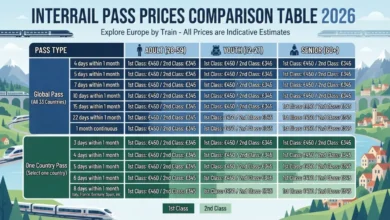
| Pass Type | 3 Days (1 month) | 4 Days | 5 Days | 8 Days |
|---|---|---|---|---|
| Adult (2nd class) | ~€145 | ~€175 | ~€205 | ~€275 |
| Youth (2nd class) | ~€115 | ~€140 | ~€165 | ~€220 |
What’s Included:
- All Trenitalia trains (regional, Intercity, Frecce)
- Reservation fees are extra (€10-13 for high-speed trains)
- Trenord, Tper, and most regional operators
What’s NOT Included:
- Italo trains (you must buy separate tickets)
- Some private railways (Circumvesuviana, etc.)
Is a Rail Pass Worth It?
YES, if:
- You are covering long distances (e.g., Milan → Rome → Naples → Sicily in one trip)
- You want flexibility — no fixed schedule
- You are combining Italy with other European countries (Global Pass)
- You are doing many regional train trips (unlimited travel)
NO, if:
- You are mainly using high-speed trains between major cities (advance tickets are often cheaper)
- Your itinerary is simple (e.g., just Rome → Florence → Venice)
- You want to use Italo (not included)
Example Calculation:
- Rome → Milan (Frecciarossa advance): €29
- Milan → Venice (Frecciarossa advance): €19
- Venice → Florence (Frecciargento advance): €25
- Florence → Rome (Frecciarossa advance): €19
- Total with tickets: €92 + some flexibility loss
- 3-Day Eurail Italy Pass: €145 + €40 reservations = €185
In this example, individual tickets win. But if you add regional trains and flexibility, the pass can make sense.
Trenitalia Passes
Trenitalia offers its own passes for tourists:
| Pass | Price | Validity |
|---|---|---|
| Italy Pass | From €129 | 3 days within 1 month |
| Green Pass (under 26) | Discounted | Same |
These work similarly to Eurail but are only valid in Italy. Compare prices before choosing.
Scenic Routes: The Beautiful Journeys
Italy’s regional and Intercity trains offer some of Europe’s most spectacular scenery. Here are the routes worth traveling slowly.
1. The Cinque Terre Line (La Spezia → Levanto)
The Route: Along the Ligurian coast through the five famous fishing villages.
| Details | |
|---|---|
| Distance | ~30 km |
| Duration | 25-40 minutes |
| Train Type | Regionale |
| Scenery | ★★★★★ |
| Highlight | Mediterranean cliffs, colorful villages, turquoise sea |
This is one of Italy’s most famous train rides. The railway tunnels through cliffs, emerging for brief, stunning glimpses of each village: Riomaggiore, Manarola, Corniglia, Vernazza, Monterosso.
Pro Tip: Buy the Cinque Terre Card for unlimited train travel between the villages plus hiking trail access.
2. The Amalfi Coast Approach (Naples → Sorrento)
The Route: The Circumvesuviana train from Naples through Pompeii to Sorrento.
| Details | |
|---|---|
| Distance | ~50 km |
| Duration | 65-75 minutes |
| Train Type | Circumvesuviana (private operator) |
| Scenery | ★★★★ (improves near Sorrento) |
| Highlight | Mount Vesuvius views, Bay of Naples, Sorrento arrival |
Not a scenic masterpiece for most of the journey (urban sprawl), but the final approach to Sorrento offers beautiful coastal views. Essential for reaching Pompeii and the Amalfi Coast.
Note: Circumvesuviana is NOT covered by Eurail/Interrail. Buy tickets separately (~€4-5).
3. The Brenner Railway (Verona → Innsbruck)
The Route: Through the Italian Alps and over the Brenner Pass into Austria.
| Details | |
|---|---|
| Distance | ~270 km |
| Duration | 3.5-4 hours |
| Train Type | EC (EuroCity), Regionale |
| Scenery | ★★★★★ |
| Highlight | Dolomites, South Tyrol villages, Brenner Pass |
This route climbs from the Veneto plains into the dramatic South Tyrol (Alto Adige). The scenery is exceptional — apple orchards, castles, German-speaking villages, and finally the high Brenner Pass.
Pro Tip: Sit on the RIGHT side heading north for the best Dolomite views.
4. The Calabrian Coast (Salerno → Reggio Calabria)
The Route: Down Italy’s western coast to the toe of the boot.
| Details | |
|---|---|
| Distance | ~340 km |
| Duration | 4-5 hours (Intercity) |
| Train Type | Intercity, Regionale |
| Scenery | ★★★★ |
| Highlight | Tyrrhenian Sea, Calabrian cliffs, Stromboli volcano visible |
One of Italy’s most underrated coastal routes. The train hugs the Calabrian coast for hours, with views of the Tyrrhenian Sea and, on clear days, the Aeolian Islands and smoking Stromboli volcano.
5. The Sicily Train Ferry (Reggio Calabria → Messina)
The Route: Trains are loaded onto ferries to cross the Strait of Messina.
| Details | |
|---|---|
| Distance | ~5 km (strait crossing) |
| Duration | 30-40 minutes |
| Train Type | IC, ICN (train stays on ferry) |
| Scenery | ★★★★★ |
| Highlight | Your entire train sails across the sea |
One of Europe’s last train ferries. The locomotive is detached, and the carriages are rolled onto a ship. You can stay in your seat or go on deck to watch Sicily approach.
Note: A bridge has been proposed for decades but remains unbuilt. Enjoy this unique experience while it lasts.
6. The Circumetnea (Catania → Riposto)
The Route: A narrow-gauge railway that circles Mount Etna.
| Details | |
|---|---|
| Distance | ~110 km |
| Duration | 3-3.5 hours (full circle) |
| Train Type | Narrow-gauge regional (private operator) |
| Scenery | ★★★★★ |
| Highlight | Mount Etna, lava fields, Sicilian villages |
This quirky narrow-gauge railway loops around the base of Europe’s most active volcano. The train passes through lava fields, vineyards, pistachio groves, and traditional Sicilian villages — all in the shadow of smoking Etna.
Note: NOT covered by Eurail/Interrail. Buy tickets separately.
7. The Dolomites Route (Fortezza → San Candido)
The Route: Through the Puster Valley into the heart of the Dolomites.
| Details | |
|---|---|
| Distance | ~65 km |
| Duration | 1-1.5 hours |
| Train Type | Regionale |
| Scenery | ★★★★★ |
| Highlight | Dolomite peaks, Alpine meadows, South Tyrolean villages |
This branch line runs through one of the most beautiful valleys in the Alps. Snow-capped Dolomite peaks tower above, and traditional German-speaking villages dot the valley floor.
Pro Tip: Continue across the border to Lienz in Austria for even more Alpine drama.
8. The Sardinian Trenino Verde
The Route: Various routes through Sardinia’s wild interior.
| Details | |
|---|---|
| Distance | Multiple routes (60-160 km) |
| Duration | 4-8 hours depending on route |
| Train Type | Narrow-gauge tourist train |
| Scenery | ★★★★★ |
| Highlight | Wild mountains, cork forests, remote villages |
Sardinia’s “Little Green Train” is Italy’s most scenic narrow-gauge railway. These heritage trains run on several routes through the island’s rugged interior — an Italy most tourists never see.
Note: Seasonal operation (mostly summer). NOT covered by Eurail/Interrail.
9. The Adriatic Coast (Rimini → Lecce)
The Route: Down Italy’s eastern coast through Le Marche, Abruzzo, Molise, and Puglia.
| Details | |
|---|---|
| Distance | ~600 km |
| Duration | 5-7 hours |
| Train Type | Intercity, Frecciargento, Regionale |
| Scenery | ★★★★ |
| Highlight | Adriatic Sea, Gargano peninsula, Puglia coastline |
The Adriatic route is less famous than the western coast but equally beautiful — endless sea views, medieval towns on cliffs, and the distinctive landscape of Puglia.
10. The Bernina Express (Tirano → St. Moritz)
The Route: From Italy across the Alps into Switzerland — a UNESCO World Heritage Railway.
| Details | |
|---|---|
| Distance | ~60 km |
| Duration | 2.5 hours |
| Train Type | Panoramic train (Rhaetian Railway) |
| Scenery | ★★★★★ |
| Highlight | Glaciers, Alpine lakes, dramatic viaducts, 2,253m summit |
Technically a Swiss train, but it starts in Italy. This is one of the most spectacular railway journeys in the world — from Italian palm trees to Swiss glaciers in a few hours.
Pro Tip: Take the connecting “Bernina Express Bus” from Lugano to Tirano for the complete Italian lakes + Alps experience.
Regional Guide: Italy by Area
Northern Italy (Piemonte, Lombardia, Veneto, Trentino-Alto Adige, Friuli-Venezia Giulia, Liguria, Emilia-Romagna)
The north is Italy’s most developed railway region, with excellent high-speed connections and efficient regional services.
| Hub | Key Connections | Notes |
|---|---|---|
| Milan | Rome, Venice, Turin, Switzerland, France | Italy’s busiest station (Milano Centrale) |
| Venice | Rome, Florence, Milan, Trieste, Austria | Santa Lucia station is on the Grand Canal |
| Turin | Milan, Rome, Paris (TGV), Lyon | Gateway to France |
| Bologna | All high-speed routes pass through | Major junction |
| Verona | Milan, Venice, Munich, Innsbruck | Gateway to Austria/Germany |
| Genoa | Milan, Turin, Cinque Terre, French Riviera | Coastal gateway |
Northern Highlights:
- Cinque Terre coastal line
- Lake Como branch lines
- Dolomites routes from Verona
- Brenner Pass to Austria
- Turin-Milan high-speed (stunning contemporary engineering)
Central Italy (Toscana, Umbria, Lazio, Marche, Abruzzo)
The heart of Renaissance Italy — Florence, Rome, and countless hilltop towns.
| Hub | Key Connections | Notes |
|---|---|---|
| Rome | All major cities, Naples, Sicily | Termini is Italy’s largest station |
| Florence | Rome, Milan, Venice, Bologna | Santa Maria Novella — architectural gem |
| Pisa | Florence, Genoa, coastal routes | Central station near the Leaning Tower |
| Perugia | Rome, Florence (via Foligno) | Umbrian hill town |
| Ancona | Adriatic coast route, Rome | Adriatic Sea ferry port |
Central Highlights:
- Rome-Florence high-speed (through Tuscan hills)
- Florence-Siena branch line
- Orvieto stop (visible from train — stunning cliff-top town)
- Umbria slow routes through green valleys
Southern Italy (Campania, Puglia, Basilicata, Calabria)
Less developed railway infrastructure but some of Italy’s most authentic experiences.
| Hub | Key Connections | Notes |
|---|---|---|
| Naples | Rome (1h 10min), Pompeii, Sorrento, Bari | Centrale station plus Garibaldi (high-speed) |
| Bari | Rome, Naples, Lecce | Adriatic gateway to Greece |
| Lecce | Rome, Bari, Gallipoli | “Florence of the South” |
| Salerno | Naples, Calabria, Amalfi (bus) | End of northern high-speed line |
Southern Highlights:
- Naples-Pompeii-Sorrento (Circumvesuviana)
- Calabrian coast route
- Taranto-Lecce through Puglia
- Night trains to Sicily
The Islands
Sicily
Sicily is connected to the mainland by train ferry. The island has its own railway network, centered on:
| Hub | Key Connections | Notes |
|---|---|---|
| Palermo | Messina, Catania, Agrigento | Island capital |
| Catania | Palermo, Messina, Syracuse | Near Mount Etna |
| Messina | Mainland ferry, Palermo, Catania | Gateway to Sicily |
Sicilian Highlights:
- Train ferry crossing from mainland
- Circumetnea around Mount Etna
- Catania-Syracuse coastal route
- Palermo-Agrigento (Valley of the Temples)
Challenge: Sicily’s railway network is slow and sometimes unreliable. Buses are often faster for certain routes.
Sardinia
Sardinia has a separate railway network not connected to the mainland.
| Operator | Routes | Notes |
|---|---|---|
| Trenitalia | Main lines: Cagliari-Sassari, Cagliari-Olbia | Regular services |
| ARST Trenino Verde | Tourist routes through the interior | Seasonal, heritage trains |
Sardinian Highlights:
- Trenino Verde scenic routes (seasonal)
- Cagliari-Oristano coastal section
Challenge: Sardinia’s trains are slow. Buses and cars are often more practical for island exploration.
Practical Tips for Italian Train Travel
Buying Tickets
Online (Recommended):
- Trenitalia — book 4 months in advance for best prices
- Italo — often cheaper for high-speed routes
- Trainline — compares both operators (small booking fee)
At the Station:
- Ticket machines (touch-screen, multiple languages)
- Ticket offices (be prepared to queue)
- Regional tickets can be bought on the day
Validating Tickets
IMPORTANT: Regional train tickets (paper tickets bought at machines or offices) must be stamped in the green/white validation machines on the platform before boarding.
Failure to validate = fine (typically €50+).
Note: E-tickets and tickets with a specific train/seat assignment do not need validation.
Station Navigation
Italian stations vary from ultra-modern (Roma Tiburtina, Napoli Afragola) to historic and confusing (Roma Termini, Milano Centrale).
Tips:
- Arrive 15-20 minutes early for high-speed trains
- Platform assignments may appear late — check screens
- “Partenze” = Departures, “Arrivi” = Arrivals
- “Binario” = Platform
- Follow the yellow departure boards
Luggage
- No weight limits on Italian trains
- High-speed trains have luggage racks at car ends and overhead
- Regional trains may have limited space — especially local commuter services
- Keep valuables with you — theft can occur at busy stations
Food and Drink
- High-speed trains have dining cars or bar service
- Quality varies — coffee is always good, food is mediocre
- Better option: Buy provisions at station food halls (Bologna, Florence, Rome Termini have excellent food markets)
- Regional trains have no catering — bring your own
Strikes (Sciopero)
Italian railways occasionally strike. Minimum service is usually maintained, but check before traveling.
- Check Trenitalia or news sites for strike announcements
- Essential services (early morning, late evening) usually run even during strikes
- Have a backup plan
Delays
Italian trains are generally punctual, but delays happen.
- High-speed trains: Usually on time
- Intercity: Sometimes delayed
- Regional: More variable, especially in the south
- Check the Trenitalia app for real-time updates
Classes of Service: What to Choose
Trenitalia High-Speed (Frecciarossa)
| Class | Features | Who It’s For |
|---|---|---|
| Standard | Comfortable seats, power outlets, quiet | Budget-conscious travelers |
| Premium | Same seats as Standard, includes snack | Slight upgrade |
| Business | Leather seats, meal, welcome drink, spacious | Business travelers, those wanting comfort |
| Executive | Private salotto (4 seats), full meal, lounge access, quiet car | Luxury travelers, special occasions |
My Recommendation: Standard is perfectly comfortable for journeys under 3 hours. Business is worth it for longer trips or if the price difference is small.
Italo
| Class | Features | Who It’s For |
|---|---|---|
| Smart | Comfortable seats, free Wi-Fi, entertainment | Budget travelers |
| Comfort | More space, seat selection, priority boarding | Comfort seekers |
| Prima | Leather seats, meal service, extra space | Business travelers |
| Club Executive | Private saloon, premium service, lounge access | Luxury travelers |
Italo’s Smart class is often comparable to Trenitalia Business in comfort — check both.
Regional Trains
| Class | Features |
|---|---|
| Second Class | Standard seating — benches or individual seats depending on train age |
| First Class | Slightly more space — rarely worth the upgrade on short regional journeys |
For regional trains, second class is almost always fine.
Night Trains: Sleep Your Way Across Italy
Italy’s overnight train network has shrunk but still offers useful connections.
Current Routes
| Route | Operator | Accommodation |
|---|---|---|
| Milan → Sicily (Palermo/Syracuse) | Trenitalia ICN | Seats, couchettes, sleepers |
| Rome → Sicily (Palermo/Syracuse) | Trenitalia ICN | Seats, couchettes, sleepers |
| Turin → Lecce | Trenitalia ICN | Seats, couchettes, sleepers |
| Milan → Lecce | Trenitalia ICN | Seats, couchettes, sleepers |
Accommodation Types
| Type | Description | Price Range |
|---|---|---|
| Seat | Reclining seat in shared carriage | €30-50 |
| Couchette (6-berth) | Bunk bed in shared compartment (6 people) | €45-70 |
| Couchette (4-berth) | Bunk bed in shared compartment (4 people) | €55-85 |
| Sleeper (3-bed) | Private cabin with beds | €80-130 |
| Sleeper (2-bed) | Private cabin with beds | €100-160 |
| Sleeper (Single) | Private cabin, one bed | €130-200 |
Pro Tip: Sleeper cabins include basic linens and access to shared toilets/showers. Higher-tier cabins may have private facilities.
Night Train Tips
- Book early — sleeper berths sell out
- Bring earplugs and an eye mask
- Keep valuables secure (in sleepers, lock the door)
- The trains can be old and noisy — set realistic expectations
- Morning arrival in Sicily is magical
Connecting Italy to Europe
Italy’s position makes it a natural hub for European rail travel.
Northern Connections
| Destination | Route | Duration | Operator |
|---|---|---|---|
| Switzerland (Zurich) | Milan → Zurich | 3h 15min | EC (Eurocity) |
| Switzerland (Geneva) | Milan → Geneva | 4h | EC |
| Austria (Innsbruck) | Verona → Innsbruck | 3.5h | EC |
| Austria (Vienna) | Venice → Vienna | 7h | EC, Nightjet |
| Germany (Munich) | Verona → Munich | 5.5h | EC |
| France (Paris) | Milan → Paris | 7h | TGV |
| France (Nice) | Genoa → Nice | 3h | Regional + TER |
Southern Connections
| Destination | Route | Duration | Operator |
|---|---|---|---|
| Slovenia (Ljubljana) | Trieste → Ljubljana | 3h | EC |
| Croatia (Zagreb) | Venice → Zagreb | 6.5h | EC |
| Greece (Patras) | Bari → Patras | Ferry | Superfast Ferries (train connection) |
Key International Trains
| Train | Route | Notes |
|---|---|---|
| Freccia Bianco-Rossa | Rome/Milan → Vienna | Daytime service |
| Nightjet | Rome/Milan/Venice → Vienna/Munich | ÖBB overnight trains |
| TGV | Milan → Paris | French high-speed |
| Eurocity | Italy → Switzerland/Austria/Germany | Comfortable international trains |
Common Mistakes to Avoid
1. Not Validating Regional Tickets
Paper regional tickets MUST be stamped before boarding. Fines are €50+.
2. Assuming Italo Accepts Rail Passes
Eurail and Interrail are NOT valid on Italo. You must buy separate tickets.
3. Booking High-Speed at the Last Minute
Advance tickets are 50-70% cheaper. Book 2-4 weeks ahead.
4. Only Using High-Speed Trains
Regional trains are often more scenic and always cheaper for short distances.
5. Not Checking Which Station
Rome has multiple stations (Termini, Tiburtina, Ostiense). Milan has several (Centrale, Garibaldi, Rogoredo). Check carefully.
6. Ignoring Italo
Many travelers only know Trenitalia. Italo is often cheaper and more comfortable for high-speed routes. Always compare.
7. Expecting Swiss Precision
Italian trains are generally punctual, but not Swiss-level. Build buffer time for connections.
8. Forgetting About Circumvesuviana
This private railway to Pompeii and Sorrento is NOT covered by rail passes. Budget separately.
9. Assuming All Train Stations Are Central
Some high-speed trains stop at new peripheral stations (Roma Tiburtina, Napoli Afragola, Reggio Emilia AV). Check your stop.
10. Not Downloading the Apps
The Trenitalia and Italo apps provide real-time updates, mobile tickets, and platform information. Essential.
The Best Italian Train Journeys: A Summary
| Journey | Why It’s Special |
|---|---|
| Rome → Florence (High-Speed) | Through the Tuscan hills at 300 km/h — glimpses of Orvieto, olive groves, vineyards |
| Cinque Terre Coast | Five colorful villages, turquoise Mediterranean, UNESCO landscapes |
| Brenner Railway | Dolomites, South Tyrol, over the Alps to Austria |
| Sicily Train Ferry | Your entire train sails across the Strait of Messina |
| Circumetnea | Circle Mount Etna on a quirky narrow-gauge railway |
| Bernina Express | From Italian palm trees to Swiss glaciers (partly in Italy) |
| Calabrian Coast | Wild Tyrrhenian coastline, volcanic islands on the horizon |
| Sardinia Trenino Verde | Heritage trains through Sardinia’s rugged interior |
| Rome → Naples | 1h 10min of countryside, Vesuvius approaching |
| Milan → Venice | Padania plains, Verona approach, Grand Canal arrival |
Summary
Italy is a train traveler’s paradise — not because the system is perfect, but because the imperfections are outweighed by the sheer beauty of the journey.
Yes, there are occasional delays. Yes, the ticket system is confusing. Yes, the strikes happen.
But where else can you travel from Renaissance Florence to ancient Rome in 90 minutes, then continue to Pompeii, catch a train ferry to Sicily, and circle an active volcano — all on one rail network?
The high-speed trains are fast and modern. The regional trains are slow and scenic. The night trains are romantic and practical. And everywhere — everywhere — the view from the window is a masterpiece.
Two operators compete for your business. Advance tickets are cheap. Rail passes add flexibility. And the espresso in the dining car is always worth ordering.
This is Italy. Every destination is a story. And every train is part of how you get there.
Ready to explore?
- Book Trenitalia at trenitalia.com
- Book Italo at italotreno.it
- Compare both at trainline.com
Download the apps. Book early. Validate your tickets. And let Italy unfold outside your window.
Buon viaggio!