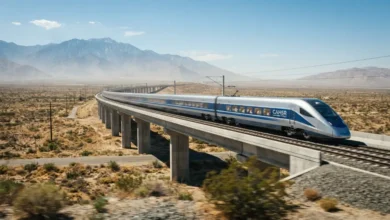
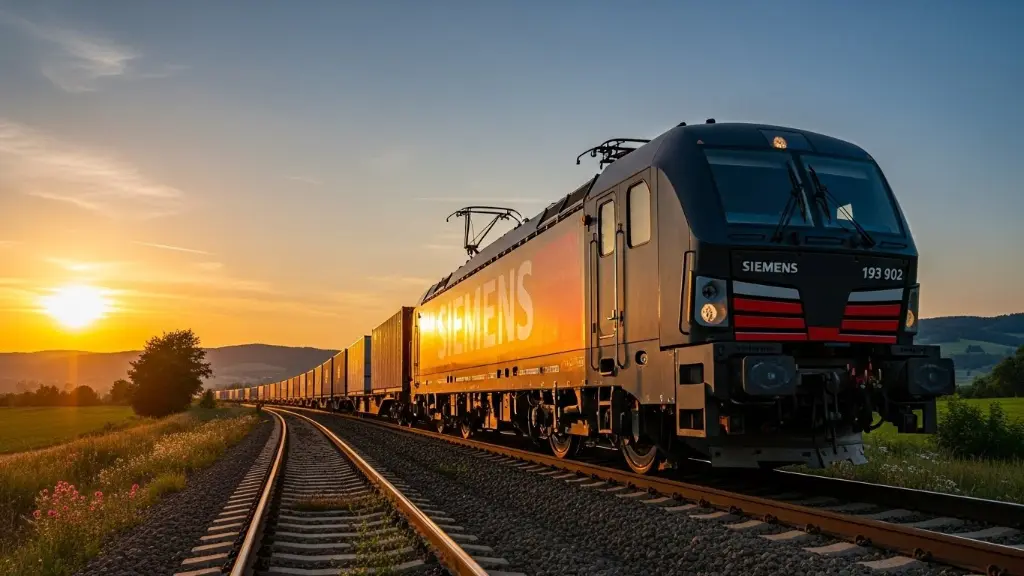
Europe’s most versatile locomotive gains high-speed passenger certification, with deliveries beginning 2026
Siemens Mobility has secured approval for its Vectron locomotive platform to operate passenger services at 230 km/h across six European countries. This certification milestone transforms the already successful Vectron into a true high-speed passenger locomotive, opening new possibilities for cross-border express services.
Deliveries of the high-speed passenger variant will begin in 2026, offering operators a proven, multi-system locomotive capable of seamless international services at speeds previously reserved for dedicated high-speed trains.
The Announcement at a Glance
| Detail | Information |
|---|---|
| Manufacturer | Siemens Mobility |
| Platform | Vectron (high-speed passenger variant) |
| Maximum Speed | 230 km/h |
| Countries Approved | Six European nations |
| Certification Type | Passenger service operation |
| Deliveries Begin | 2026 |
| Significance | Highest speed approval for Vectron platform |
What Is the Vectron?
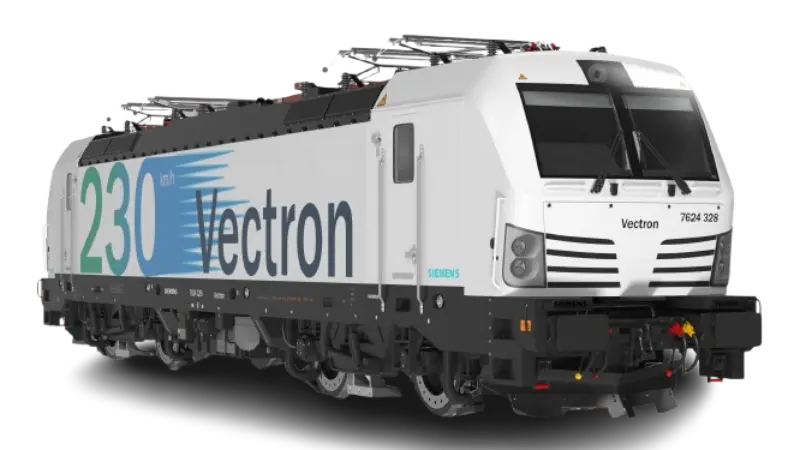
The Vectron is Siemens Mobility’s flagship electric locomotive platform — one of the most successful and versatile locomotive designs in modern European rail.
Vectron Overview
| Aspect | Details |
|---|---|
| Introduced | 2010 (first prototype) |
| In Production | Since 2012 |
| Units Ordered | 2,000+ (as of 2024) |
| Primary Markets | Germany, Austria, Switzerland, Italy, Poland, Scandinavia, Benelux |
| Main Uses | Freight, passenger, mixed traffic |
| Variants | AC, DC, multi-system (MS), dual-mode |
| Manufacturer | Siemens Mobility, Munich, Germany |
Why the Vectron Dominates European Rail
The Vectron has become the locomotive of choice for operators across Europe due to its:
| Strength | Explanation |
|---|---|
| Multi-System Capability | Can operate under different voltages and signaling systems |
| Cross-Border Ready | Single locomotive crosses multiple countries without change |
| Modular Design | Configured for specific operator requirements |
| Proven Reliability | Thousands in service with strong performance records |
| Modern Technology | Latest traction, diagnostics, and safety systems |
| Leasing Availability | Major lessors stock Vectrons for flexible deployment |
The 230 km/h Breakthrough
Previous Speed Limits
Until now, the Vectron was approved for:
| Variant | Maximum Speed | Primary Use |
|---|---|---|
| Vectron Freight | 160 km/h | Heavy freight services |
| Vectron Passenger | 200 km/h | Intercity passenger services |
| Vectron Multi-System | 160-200 km/h | Mixed traffic operations |
The New High-Speed Approval
The 230 km/h certification represents a significant step up:
| Parameter | Specification |
|---|---|
| Maximum Speed | 230 km/h |
| Service Type | Passenger operations |
| Countries | Six European nations (initial approval) |
| Trainset Compatibility | Designed for push-pull passenger coaches |
| Signaling | ETCS Level 2 equipped |
What 230 km/h Means
| Comparison | Context |
|---|---|
| ICE 1/ICE 2 | 280 km/h maximum |
| Railjet (Austria) | 230 km/h maximum |
| EuroCity Services | Typically 200 km/h maximum |
| Conventional IC | 160-200 km/h typical |
| New Vectron | 230 km/h — matching Railjet capability |
The 230 km/h approval places the Vectron in the same performance category as Austria’s Railjet services, enabling true high-speed locomotive-hauled passenger operations.
The Six Countries: Where Vectron Can Run at 230 km/h
While the specific six countries have not been officially detailed in all announcements, the Vectron’s existing multi-system approvals and the likely high-speed corridors suggest:
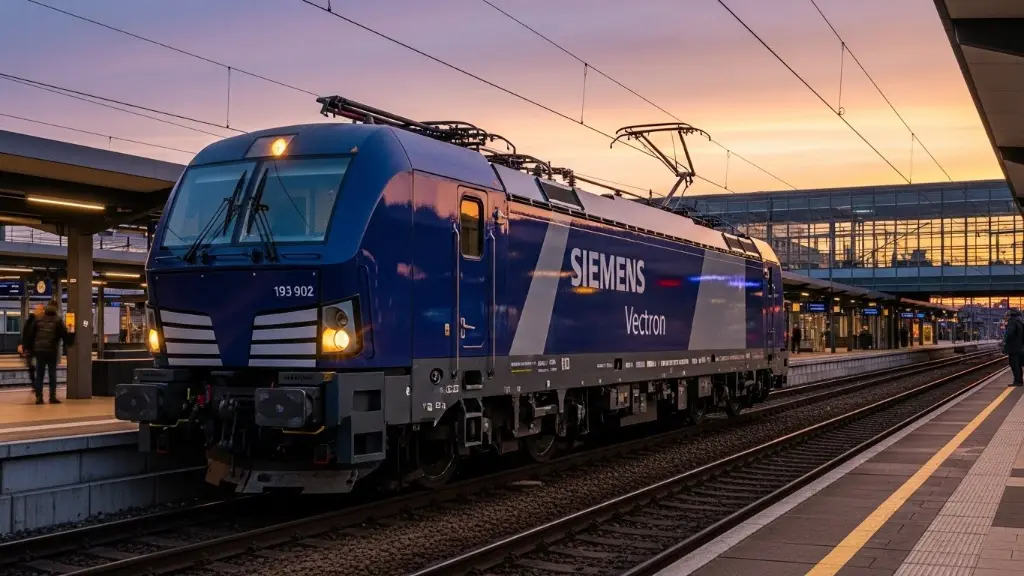
Probable Initial Approval Countries
| Country | Rail Network | Voltage System | Key High-Speed Routes |
|---|---|---|---|
| Germany | DB Netz | 15 kV AC 16.7 Hz | Extensive Schnellfahrstrecken |
| Austria | ÖBB | 15 kV AC 16.7 Hz | Westbahn, Südbahn corridors |
| Switzerland | SBB | 15 kV AC 16.7 Hz | Gotthard, Simplon routes |
| Italy | RFI | 3 kV DC / 25 kV AC | Northern corridors |
| Czech Republic | SŽDC | 3 kV DC / 25 kV AC | Modernized corridors |
| Poland | PKP PLK | 3 kV DC | CMK and upgraded routes |
The Multi-System Advantage
The Vectron’s ability to operate under different electrical systems is crucial for 230 km/h international services:
| Voltage System | Countries |
|---|---|
| 15 kV AC 16.7 Hz | Germany, Austria, Switzerland, Sweden, Norway |
| 25 kV AC 50 Hz | France, Belgium, Netherlands, parts of Czech Republic, new Italian lines |
| 3 kV DC | Italy (conventional), Poland, Czech Republic, Slovakia |
| 1.5 kV DC | Netherlands, parts of France |
A multi-system Vectron can switch between these voltages automatically at borders — no locomotive change required, no delays, no complexity.
Technical Specifications: High-Speed Vectron
Performance Parameters
| Specification | High-Speed Variant |
|---|---|
| Maximum Speed | 230 km/h |
| Power Output | 6,400 kW (estimated) |
| Tractive Effort | High starting effort for passenger acceleration |
| Axle Configuration | Bo’Bo’ (4 powered axles) |
| Weight | ~90 tonnes |
| Length | ~18.98 m |
| Gauge | Standard (1,435 mm) |
Electrical Systems
| System | Capability |
|---|---|
| 15 kV AC 16.7 Hz | Germany, Austria, Switzerland |
| 25 kV AC 50 Hz | High-speed lines, Belgium, Netherlands |
| 3 kV DC | Italy, Poland, Czech Republic |
| 1.5 kV DC | Optional for Netherlands/France |
Signaling and Train Control
| System | Status |
|---|---|
| ETCS Level 2 | Equipped — essential for high-speed operation |
| ETCS Baseline 3 | Latest standard supported |
| National Systems | PZB, LZB (Germany), SCMT (Italy), SHP (Poland), etc. |
| GSM-R | Equipped for rail communications |
Safety Features
| Feature | Purpose |
|---|---|
| ETCS | European Train Control System for safe high-speed operation |
| Crash Energy Management | Enhanced structure for passenger service |
| Fire Protection | Passenger service standards |
| Emergency Braking | High-performance braking for 230 km/h |
| Diagnostic Systems | Real-time monitoring and predictive maintenance |
Why This Matters for European Rail
The Locomotive-Hauled Renaissance
While high-speed rail has been dominated by fixed-formation trains (TGV, ICE, AVE), locomotive-hauled services offer distinct advantages:
| Factor | Fixed Formation (EMU/DMU) | Locomotive-Hauled |
|---|---|---|
| Flexibility | Fixed capacity | Add/remove coaches as needed |
| Maintenance | Entire train out of service | Swap locomotives, coaches stay in service |
| Investment | Higher upfront cost | More gradual investment possible |
| Commonality | Dedicated fleet | Locomotives usable for multiple services |
| Border Crossings | Complex multi-system EMUs or change trains | One locomotive crosses all borders |
The Cross-Border Opportunity
The 230 km/h Vectron enables new service patterns:
| Route Possibility | Current Situation | With 230 km/h Vectron |
|---|---|---|
| Germany — Austria | Railjet (ÖBB locos), ICE | Single loco Vienna-Hamburg possible |
| Germany — Switzerland | Loco change at border common | Through service simplified |
| Germany — Italy | EC with loco changes | Potential single-loco operation |
| Austria — Italy | Railjet to Brenner, change | Extended Railjet-style services |
| Germany — Poland | Loco changes or slow EMUs | High-speed through service |
| Czech — Germany | Mixed operations | Streamlined express services |
Competition with High-Speed EMUs
The 230 km/h Vectron will compete with and complement existing high-speed options:
| Train Type | Speed | Flexibility | Cross-Border |
|---|---|---|---|
| ICE 3/4 | 250-330 km/h | Fixed formation | Limited countries |
| Railjet | 230 km/h | Fixed formation | Austria-Germany-Switzerland |
| TGV | 320 km/h | Fixed formation | France-focused |
| 230 km/h Vectron + Coaches | 230 km/h | Highly flexible | Six+ countries |
Potential Operators and Services
Current Vectron Passenger Operators
Several operators already use Vectrons for passenger services and may upgrade to the high-speed variant:
| Operator | Country | Current Use |
|---|---|---|
| ÖBB | Austria | Nightjet services (not Railjet) |
| SBB | Switzerland | International services |
| České dráhy | Czech Republic | EC and domestic |
| PKP Intercity | Poland | International and domestic |
| DSB | Denmark | Cross-border to Germany |
| RegioJet | Czech Republic | Open-access passenger services |
| Flixtrain | Germany | Budget long-distance |
Potential New Applications
| Application | Opportunity |
|---|---|
| Open-Access Operators | High-speed services competing with national operators |
| Night Train Operators | Faster positioning runs, high-speed daytime legs |
| Cross-Border Expresses | New international routes |
| Charter and Special Services | Premium excursion trains |
| Railjet Expansion | ÖBB extending Railjet concept with common locos |
The Leasing Market
Major locomotive lessors may order 230 km/h Vectrons for their fleets:
| Lessor | Vectron Fleet | Potential Interest |
|---|---|---|
| ELL (European Locomotive Leasing) | 200+ Vectrons | Strong candidate |
| MRCE (Mitsui Rail Capital Europe) | 150+ Vectrons | Strong candidate |
| Railpool | 100+ Vectrons | Likely interest |
| Alpha Trains | Vectron fleet | Potential customer |
| Akiem | Growing fleet | Possible orders |
Lessors offer operators access to modern locomotives without massive capital investment — the 230 km/h variant could be particularly attractive for seasonal or new services.
The Competitive Landscape
The 230 km/h Vectron enters a market with established competitors:
Competing Locomotive Platforms
| Locomotive | Manufacturer | Max Speed | Countries |
|---|---|---|---|
| Siemens Vectron | Siemens | 230 km/h (new) | 20+ |
| Bombardier TRAXX | Alstom (now) | 200 km/h | 15+ |
| Alstom Prima | Alstom | 200 km/h | Limited |
| Škoda 109E | Škoda | 200 km/h | Czech/Slovakia |
| Newag Griffin | Newag | 200 km/h | Poland |
| Stadler EuroDual | Stadler | 160 km/h | Dual-mode focus |
The Speed Advantage
At 230 km/h, the Vectron now offers:
- 30 km/h faster than most competing platforms
- Matching Railjet Taurus performance (ÖBB’s express locomotive)
- Competitive with older ICE trainsets on some routes
TRAXX vs. Vectron
The TRAXX (now owned by Alstom following Bombardier acquisition) is the Vectron’s main competitor:
| Factor | Vectron | TRAXX |
|---|---|---|
| Max Speed (Passenger) | 230 km/h | 200 km/h |
| Multi-System Variants | Comprehensive | Comprehensive |
| Fleet Size | 2,000+ ordered | 2,500+ delivered |
| Latest Technology | Current production | Continued development |
| Manufacturer Support | Siemens (strong) | Alstom (strong) |
The 230 km/h approval gives Vectron a clear speed advantage in the passenger locomotive market.
Delivery Timeline and Rollout
Expected Schedule
| Phase | Period | Activities |
|---|---|---|
| Certification Complete | 2024 | 230 km/h approval secured |
| Order Finalization | 2024-2025 | Operators commit to high-speed variant |
| Manufacturing | 2025-2026 | Production of first units |
| Deliveries Begin | 2026 | First 230 km/h Vectrons handed over |
| Service Entry | 2026-2027 | Revenue service begins |
| Fleet Expansion | 2027+ | Ongoing orders and deliveries |
Production Capacity
Siemens produces Vectrons at:
| Facility | Location | Role |
|---|---|---|
| Munich-Allach | Germany | Final assembly, main plant |
| Component Plants | Various | Bogies, electrical systems, etc. |
With over 2,000 Vectrons already ordered, Siemens has demonstrated the manufacturing capacity to meet demand for the high-speed variant.
Technical Deep Dive: What Makes 230 km/h Possible
Engineering Challenges at High Speed
Operating at 230 km/h requires addressing several engineering challenges:
| Challenge | Solution |
|---|---|
| Aerodynamics | Refined nose design, smooth body |
| Traction Power | 6,400 kW output for acceleration |
| Braking Performance | Enhanced braking systems for safe stopping distances |
| Suspension | High-speed bogies with superior stability |
| Pantograph | High-speed current collection without arc damage |
| Signaling | ETCS Level 2 for safe high-speed operation |
| Track Forces | Optimized axle load and suspension for track friendliness |
The Bogie Design
High-speed running demands exceptional bogie performance:
| Requirement | Implementation |
|---|---|
| Stability | Advanced yaw dampers prevent hunting oscillation |
| Guidance | Precision wheelsets maintain alignment |
| Suspension | Two-stage suspension for comfort and stability |
| Traction | Frame-mounted motors with cardan drive |
| Braking | Disc brakes with electronic control |
The Pantograph Challenge
Current collection at 230 km/h requires:
| Factor | Requirement |
|---|---|
| Contact Force | Precisely controlled — too light loses contact, too heavy damages wire |
| Aerodynamics | Pantograph head designed for minimal uplift/downforce |
| Material | Carbon strips for consistent conductivity |
| Speed Range | Must work from 0-230 km/h under varying conditions |
Siemens’ experience with ICE trains informs the Vectron’s high-speed pantograph design.
ETCS: The Enabler
High-speed operation fundamentally requires ETCS (European Train Control System):
| ETCS Feature | Importance |
|---|---|
| Continuous Supervision | Train position known at all times |
| Movement Authority | Safe distance to next train guaranteed |
| Speed Monitoring | Automatic enforcement of speed limits |
| Interoperability | Same system across all six countries |
| Cab Signaling | Driver sees signals in cab, not lineside |
Without ETCS Level 2, 230 km/h operation would not be approved on most European high-speed infrastructure.
Impact on European Rail Services
Faster Journey Times
The 230 km/h capability enables meaningful time savings:
| Route Example | At 200 km/h | At 230 km/h | Saving |
|---|---|---|---|
| Munich — Vienna | ~4h 00min | ~3h 40min | ~20 min |
| Berlin — Warsaw | ~5h 30min | ~5h 00min | ~30 min |
| Zurich — Milan | ~3h 15min | ~3h 00min | ~15 min |
| Prague — Dresden | ~2h 10min | ~2h 00min | ~10 min |
Times are illustrative and depend on route characteristics, stops, and other factors.
New Service Possibilities
| Service Concept | Opportunity |
|---|---|
| Pan-European Express | Single-loco trains across multiple countries |
| Premium Open-Access | New operators challenging incumbents |
| Extended Railjets | ÖBB-style services across more countries |
| High-Speed Night Trains | Faster daytime positioning, longer overnight runs |
| Flexible Capacity | Add coaches for peak demand, reduce off-peak |
Integration with Existing Networks
The 230 km/h Vectron will operate alongside:
- High-speed EMUs (ICE, TGV, Frecciarossa)
- Conventional express trains
- Regional services
- Freight traffic
Its flexibility allows deployment where fixed-formation high-speed trains are impractical or uneconomical.
The Business Case
Operator Economics
| Factor | Benefit |
|---|---|
| Faster Journeys | More competitive with air, more attractive to passengers |
| Fleet Commonality | Same locomotive type for multiple services |
| Cross-Border Efficiency | No loco changes, better utilization |
| Maintenance Savings | Common parts, shared expertise |
| Leasing Flexibility | Access without capital investment |
| Capacity Matching | Add/remove coaches as needed |
Comparison with Dedicated High-Speed Trains
| Factor | 230 km/h Vectron + Coaches | Dedicated High-Speed EMU |
|---|---|---|
| Top Speed | 230 km/h | 250-350 km/h |
| Capital Cost | Lower (loco + coaches) | Higher (integrated trainset) |
| Flexibility | High | Low |
| Capacity Adjustment | Easy | Difficult |
| Cross-Border | Many countries | Limited countries |
| Maintenance | Separated loco/coaches | Integrated |
The 230 km/h Vectron occupies a valuable middle ground — faster than conventional locomotive-hauled trains, more flexible than dedicated high-speed EMUs.
Environmental Considerations
Electric Traction Benefits
| Aspect | Impact |
|---|---|
| Zero Direct Emissions | No exhaust at point of use |
| Grid Efficiency | Electric power increasingly renewable |
| Regenerative Braking | Energy returned to grid during braking |
| Modal Shift | Faster trains attract passengers from air and road |
Energy Consumption at 230 km/h
Higher speeds generally mean higher energy consumption due to aerodynamic drag (which increases with the square of speed). However:
| Factor | Mitigation |
|---|---|
| Modern Design | Efficient traction systems |
| Regenerative Braking | Energy recovery |
| Optimized Driving | Driver advisory systems |
| Renewable Grid | Increasingly clean electricity |
Even at 230 km/h, rail remains far more efficient than aviation for equivalent journeys.
Supporting Climate Goals
The European Union’s climate targets require significant modal shift from aviation and road to rail. The 230 km/h Vectron supports this by:
- Making rail more competitive on medium-distance routes
- Enabling new cross-border services
- Providing flexible, efficient operations
- Reducing need for short-haul flights
Challenges and Considerations
Infrastructure Requirements
Not all tracks support 230 km/h operation:
| Requirement | Status |
|---|---|
| Track Quality | Must meet high-speed standards |
| Signaling | ETCS Level 2 required |
| Electrification | Compatible voltage system |
| Curves and Gradients | Line speed may be lower |
| Platforms | Through-running or suitable stopping |
The 230 km/h capability will be fully usable only on appropriately equipped routes.
Regulatory Complexity
Each country maintains its own:
- Railway safety authority
- Approval processes
- Operating rules
- Infrastructure standards
While ETCS and EU regulations are harmonizing European rail, obtaining approvals in six countries remains a significant achievement.
Market Acceptance
Operators must be convinced of the value proposition:
- Is 230 km/h worth the premium?
- Are there enough suitable routes?
- Can the market support new high-speed services?
Siemens will need to demonstrate clear benefits to secure orders for the high-speed variant.
The Vectron Success Story
The 230 km/h approval is the latest chapter in the Vectron’s remarkable success:
Vectron Milestones
| Year | Milestone |
|---|---|
| 2010 | First Vectron prototype unveiled |
| 2012 | Series production begins |
| 2013 | First customer deliveries (DB Schenker) |
| 2015 | 100th Vectron delivered |
| 2016 | Multi-system variant enters service |
| 2018 | 500th Vectron ordered |
| 2019 | Dual-mode (electric + diesel) variant launched |
| 2020 | 1,000th Vectron ordered |
| 2022 | 1,500th Vectron ordered |
| 2023 | 2,000th Vectron milestone approached |
| 2024 | 230 km/h passenger approval secured |
Market Leadership
| Metric | Status |
|---|---|
| Total Orders | 2,000+ units |
| Countries Approved | 20+ |
| Operators | 50+ (including lessors) |
| Variants | AC, DC, MS, Dual-Mode |
| Applications | Freight, passenger, mixed |
The Vectron has become the defining European locomotive of the 2010s and 2020s.
What’s Next for Vectron
Ongoing Development
| Area | Development |
|---|---|
| Higher Speed | 230 km/h now; 250 km/h possible in future? |
| New Markets | Additional country approvals |
| Dual-Mode Evolution | Battery or hydrogen hybrid potential |
| Digitalization | Enhanced predictive maintenance, connectivity |
| ETCS Updates | Baseline 3 and future standards |
The Competition Responds
Alstom (TRAXX), Stadler, and others will need to respond to the Vectron’s speed advantage. Potential responses:
| Competitor | Possible Response |
|---|---|
| Alstom | TRAXX speed upgrade, new platform |
| Stadler | EuroDual evolution, new designs |
| Škoda | Enhanced Czech/CEE platforms |
| National Builders | Regional champion development |
For Rail Enthusiasts
Spotting the High-Speed Vectron
When 230 km/h Vectrons enter service, watch for:
| Feature | Identification |
|---|---|
| External Differences | Likely subtle — refined aerodynamics |
| Livery | Operator-specific; may indicate variant |
| Service Patterns | High-speed express services |
| Running Numbers | Operator-specific numbering series |
Photography Opportunities
| Phase | What to Capture |
|---|---|
| Now | Current Vectron fleet in standard configuration |
| 2026 | First high-speed variant deliveries |
| 2026-2027 | Service introduction on new routes |
| Ongoing | Cross-border operations, international services |
Technical Details to Watch
- Pantograph design for high-speed running
- Bogie specifications
- Aerodynamic refinements
- ETCS equipment fits
- Operator-specific modifications
Summary
The approval of Siemens’ Vectron locomotive for 230 km/h passenger service across six European countries marks a significant milestone for European rail.
For Operators:
- New high-speed capability with proven platform
- Multi-country operation from single locomotive
- Flexibility of locomotive-hauled operation at competitive speeds
- Access via leasing or purchase
For Passengers:
- Faster journey times on equipped routes
- Potential for new cross-border services
- Modern, comfortable rolling stock
- Improved competitiveness with air travel
For European Rail:
- Strengthens locomotive-hauled passenger market
- Enables new service patterns
- Supports modal shift and climate goals
- Demonstrates continued European rail innovation
For Siemens:
- Extends market leadership
- Opens new market segments
- Builds on 2,000+ unit success
- Positions for future development
The Vectron began as a freight locomotive. It evolved into a multi-purpose platform. Now, with 230 km/h passenger approval, it takes its place among Europe’s high-speed railway fleet.
Deliveries begin in 2026. The next chapter of the Vectron story is about to be written — at 230 kilometers per hour.
Stay Updated:
- Siemens Mobility news at siemens.com/mobility
- European rail developments at railtech.com
- Railway Gazette coverage at railwaygazette.com
Faster. Farther. Vectron.