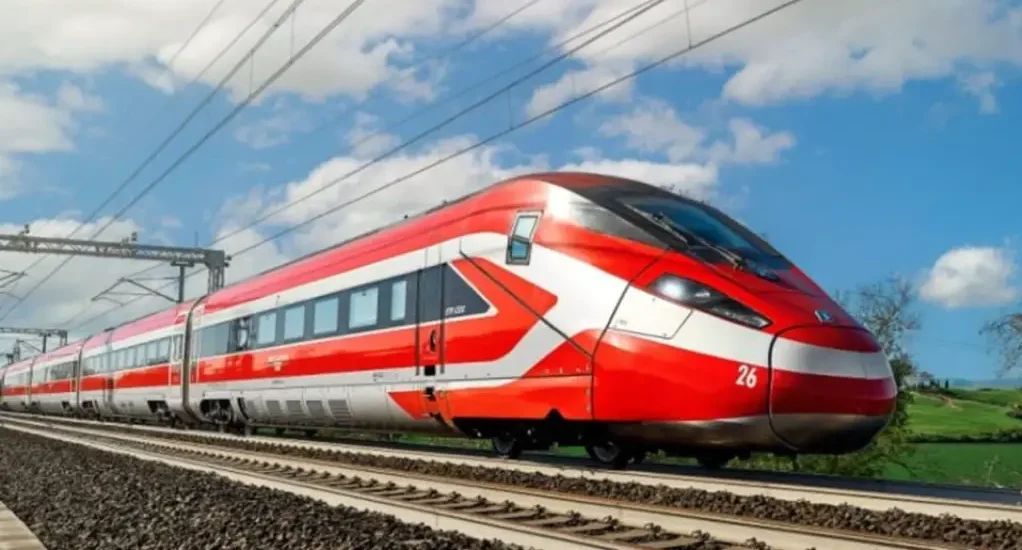
A single train now connects Switzerland’s financial capital to the heart of the Renaissance — and the journey is as spectacular as the destinations
For generations, traveling from Zurich to Florence by train meant planning an expedition. You would study timetables, calculate connection times in Milan, and hope your train from Switzerland arrived punctually enough to catch the Frecciarossa south. The journey was possible, but it required effort, patience, and a tolerance for platform sprinting.
Those days are ending.
New direct and semi-direct services are transforming the Zurich-Florence corridor into one of Europe’s most compelling rail journeys. What once demanded careful planning now requires only a single ticket and a window seat. In roughly six hours, travelers cross from the German-speaking Alps to the Italian Renaissance heartland — passing through the engineering marvel of the Gotthard Base Tunnel, skirting the lakes of Lombardy, and descending into Tuscany.
This is the train journey that belongs on every European rail bucket list.
Why This Route Matters Now
The opening of the Gotthard Base Tunnel in 2016 changed everything for north-south European rail travel. At 57 kilometers, it remains the world’s longest railway tunnel, and it slashed journey times between Switzerland and Italy by nearly an hour. But the full potential of this engineering achievement took years to materialize in passenger timetables.
Now that potential is being realized. Improved EuroCity services, better connections, and expanded capacity mean that Zurich to Florence has evolved from a complicated multi-train odyssey into a seamless European experience. The Swiss precision that built the tunnel now delivers passengers to Tuscany with remarkable efficiency.
The timing couldn’t be better. As travelers increasingly seek alternatives to short-haul flights, as climate consciousness reshapes booking decisions, and as the romance of train travel experiences a genuine renaissance, the Zurich-Florence corridor offers exactly what modern rail passengers want: speed, scenery, and simplicity.
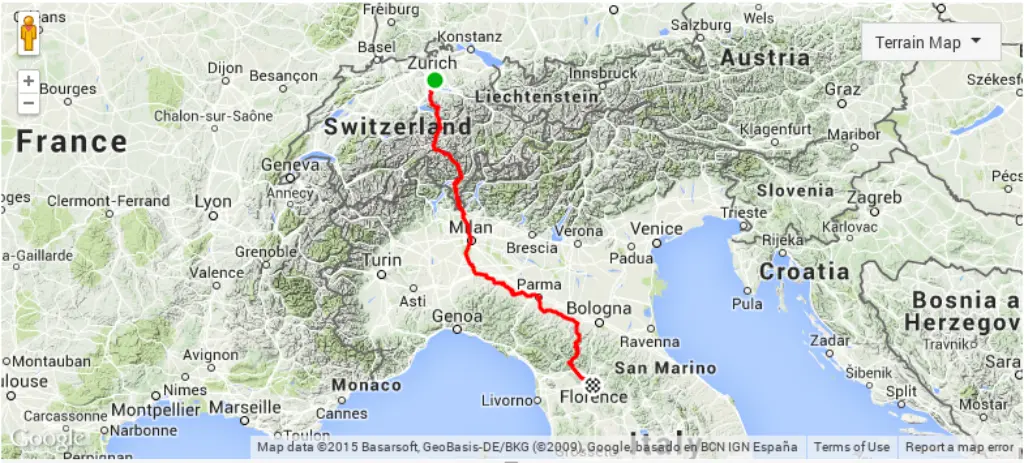
The Journey: Six Hours from Alps to Renaissance
The train departs Zurich Hauptbahnhof, Switzerland’s grand central station, and immediately begins its southward journey through the Swiss Mittelland. Within minutes, the city gives way to the rolling countryside that characterizes the Swiss plateau — prosperous farms, distant Alpine peaks, and the ordered landscape of one of Europe’s wealthiest nations.
The first major milestone comes quickly: the approach to the Gotthard. For over a century, trains conquered this Alpine barrier via the historic mountain route, climbing through spiral tunnels and crossing dramatic viaducts. That scenic route still exists for those who seek it, but the new base tunnel offers something different — a straight shot through the mountain’s heart at speeds up to 250 km/h.
| Journey Segment | Duration | Scenic Highlights |
|---|---|---|
| Zurich → Gotthard approach | ~1 hour | Swiss Mittelland, Alpine foothills |
| Gotthard Base Tunnel | ~20 minutes | World’s longest railway tunnel |
| Ticino → Lombardy | ~1.5 hours | Italian lakes, palm trees, Mediterranean architecture |
| Lombardy → Tuscany | ~2.5 hours | Po Valley, Apennine foothills, cypress hills |
| Arrival Florence | — | Renaissance city center |
The tunnel passage lasts roughly twenty minutes. Passengers who blink might miss the transition from German-speaking Switzerland to Italian-speaking Ticino. When daylight returns, everything has changed. The architecture shifts toward Mediterranean styles, palm trees appear, and the station signs are suddenly in Italian.
From Lugano and the lakes of southern Switzerland, the train continues into Italy proper. The Lombardy plains stretch toward Milan, though Florence-bound services often route east of the city, maintaining momentum toward Tuscany. As the train pushes south, the landscape transforms once more — the flat agricultural plains gradually yielding to the gentle hills that announce Tuscany’s approach.
The final hour delivers the full Tuscan experience through the window. Rolling hills crowned with cypress trees, medieval towns perched on distant ridges, and vineyards that produce some of the world’s most celebrated wines. When the train finally pulls into Firenze Santa Maria Novella — that magnificent station adjacent to the church that gave it its name — passengers have completed one of Europe’s great railway journeys.
What Makes This Service Special
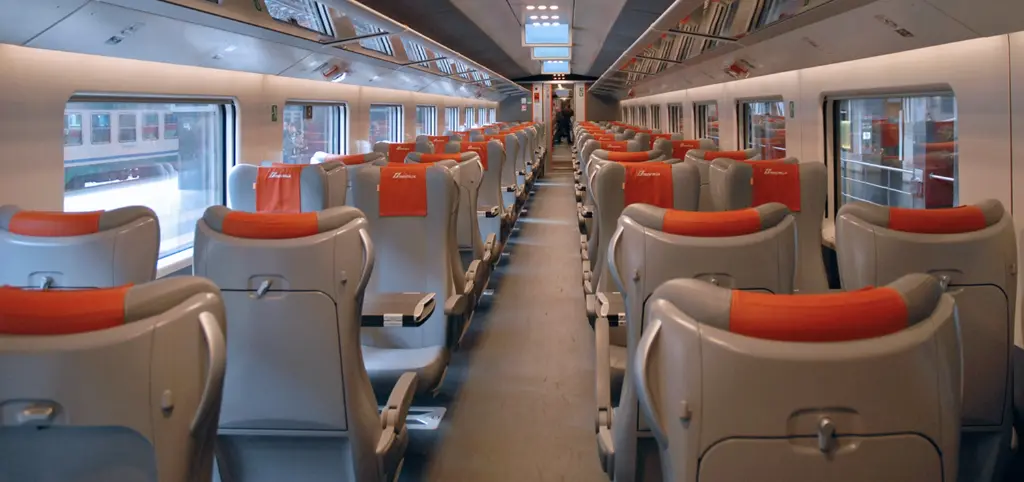
Several factors distinguish the modern Zurich-Florence service from what came before.
The journey time has compressed dramatically. What once required seven or eight hours with a nervous connection in Milan now takes approximately six hours with improved services. The Gotthard Base Tunnel deserves primary credit, but operational improvements throughout the corridor contribute to the gains.
Comfort levels have risen substantially. The EuroCity trains operating this route feature modern carriages with proper legroom, functioning Wi-Fi, power outlets at every seat, and dining cars serving both Swiss and Italian cuisine. First class offers genuine luxury, while second class provides comfort that would shame many airlines’ business cabins.
The scenic variety remains unmatched. Passengers experience four distinct landscapes in a single journey: the Swiss plateau, the Alpine transition, the Italian lakes region, and the Tuscan hills. Few rail journeys on Earth pack such geographic diversity into six hours.
Practical Information: Tickets and Timing
Booking this journey is refreshingly straightforward. The Swiss Federal Railways website (sbb.ch) handles the entire route, issuing tickets valid from Zurich through to Florence on a single reservation. Trenitalia can also sell the journey, though the Swiss system tends to offer a smoother booking experience for international travel.
| Ticket Type | Price Range | Flexibility | Best For |
|---|---|---|---|
| Supersaver (advance) | €29-49 | Fixed train, no refunds | Budget travelers booking early |
| Standard 2nd Class | €80-120 | Flexible, refundable | Travelers needing flexibility |
| Standard 1st Class | €140-180 | Flexible, premium comfort | Business travelers, comfort seekers |
| Eurail/Interrail + reservation | Pass + €11-15 | Depends on pass type | Multi-country rail trips |
The Swiss Travel Pass covers the Swiss portion of the journey (Zurich to Chiasso at the Italian border), though travelers must purchase a separate ticket for the Italian section. Eurail and Interrail passes cover the entire route, though seat reservations are required and cost an additional €11-15.
Train frequency has improved markedly. Multiple departures daily now serve the corridor, with early morning trains enabling a full day in Florence and evening returns allowing the reverse. For those who prefer morning arrivals, departing Zurich around 7:00 delivers passengers to Florence by early afternoon — perfect timing for a late lunch in the Oltrarno.
The Gotthard: Engineering Marvel Beneath Your Feet
No discussion of this route is complete without acknowledging what lies beneath those twenty minutes of darkness.
The Gotthard Base Tunnel represents the culmination of a Swiss national project spanning decades. Construction began in 1999 and continued for seventeen years, employing thousands of workers who excavated 28 million tonnes of rock from the mountain’s core. The human cost included nine workers who lost their lives during construction — a reminder that great infrastructure demands great sacrifice.
The tunnel actually consists of two parallel single-track tubes, each 57 kilometers long, connected by cross-passages every 325 meters. Trains travel through these tubes at up to 250 km/h, though passenger services typically operate somewhat slower to maintain schedule reliability.
For rail enthusiasts, the tunnel represents a pilgrimage site of sorts. Here is proof that 21st-century Europe can still build transformative infrastructure, that political will and engineering excellence can combine to reshape geography itself. When your train emerges into the Ticino sunshine, you’ve just passed through humanity’s longest tunnel — and you didn’t even need to change trains.
Florence: Why the Destination Justifies the Journey
Six hours is a meaningful time investment. Florence rewards it completely.
The city that gave the world the Renaissance remains one of Europe’s essential destinations. The Uffizi houses works by Botticelli, Leonardo, and Michelangelo that simply cannot be experienced through photographs. The Duomo’s dome, Brunelleschi’s engineering triumph, still dominates the skyline as it has for six centuries. The Ponte Vecchio spans the Arno with the same shops that have occupied it since the medieval period.
But Florence offers more than museums and monuments. The Oltrarno neighborhood provides authentic Florentine life away from tourist crowds. The Mercato Centrale delivers some of Italy’s finest food in a historic iron-and-glass market hall. The surrounding Tuscan countryside — Chianti, Fiesole, San Gimignano — lies within easy day-trip distance.
Arriving by train enhances the Florence experience in practical ways. Santa Maria Novella station sits in the historic center, steps from major attractions. No airport transfer, no taxi negotiation, no suburban arrival requiring onward transport. You step off the train and step into the Renaissance.
Zurich: The Other Bookend
The journey works equally well in reverse, and Zurich merits more than its reputation as a banking center might suggest.
The old town (Altstadt) climbs narrow streets from the Limmat River toward historic guild houses and hidden squares. The Kunsthaus ranks among Europe’s finest art museums, while the Swiss National Museum explores the country’s history in an architectural landmark. The lake offers swimming in summer — yes, Swiss actually swim in their remarkably clean urban waters — and promenades year-round.
Zurich also functions as a gateway. Passengers arriving from Florence can continue to Lucerne (45 minutes), Bern (under an hour), Basel (under an hour), or even Paris via the TGV connection. The train from Tuscany slots seamlessly into broader European rail itineraries.
Comparing the Options: Train, Plane, or Car
The Zurich-Florence corridor offers genuine modal choice, and the train’s advantages deserve examination.
| Travel Mode | Total Time | City Center Access | CO2 Emissions | Productivity |
|---|---|---|---|---|
| Train | ~6 hours | Yes — both ends | Low (~25 kg) | High — work, relax, dine |
| Flight | ~4-5 hours total | No — airport transfers needed | High (~150 kg) | Low — security, cramped seats |
| Car | ~5 hours driving | Yes | Medium (~80 kg) | None — driver must focus |
Flying takes roughly 90 minutes in the air, but airport realities extend the journey considerably. Zurich Airport lies 15 minutes from the city center; Florence’s Peretola airport sits 20 minutes out (or 90 minutes if you’re using Pisa and connecting). Add security, boarding, and baggage claim, and the four-hour minimum door-to-door time begins approaching the train’s six hours — with none of the train’s comfort, scenery, or productivity.
Driving the route takes approximately five hours via the Gotthard road tunnel and Italian autostrade, though traffic, tolls, fuel, and parking erode any time advantage. The journey demands full attention and delivers none of the relaxation that train travel provides.
The train increasingly wins on value as well as experience. When Ryanair charges €150 for a flexible fare plus baggage, the €49 advance train fare looks attractive. When Swiss charges €300 for a last-minute business flight, the €180 first-class train ticket becomes irresistible.
Tips for the Perfect Journey
Seat selection matters on this route. When traveling southbound, the right side of the train offers better views of the Swiss Alps during the approach to the Gotthard. Through Ticino and the lake region, either side delivers spectacular scenery. As the train enters Tuscany, the left side provides the iconic hillside views.
Timing your journey thoughtfully enhances the experience. Morning departures from Zurich ensure daylight throughout the scenic sections. The reverse journey, departing Florence in the afternoon, places the Tuscan hills and Alpine crossings in golden evening light.
The dining car deserves a visit even if you’ve brought provisions. Swiss railways operate some of Europe’s best train catering, and the experience of drinking Italian wine while watching Italy roll past the window captures something essential about continental rail travel.
Consider breaking the journey if time permits. Lugano, on the Swiss-Italian border, offers Mediterranean atmosphere with Swiss efficiency. Milan, for those whose routing passes through, provides world-class dining, shopping, and culture. Even Lucerne, slightly off the direct route, can be incorporated into a creative itinerary.
The Future of This Corridor
Investment in the Zurich-Florence route continues. The Ceneri Base Tunnel, opened in 2020, completed the “flat route” through the Gotthard corridor, eliminating the last significant climb on the Swiss side. Italian improvements to the Bologna-Florence high-speed line and ongoing upgrades to cross-border operations promise further journey time reductions.
Industry observers suggest that Zurich-Florence could eventually compress to five hours or slightly under as the infrastructure fully matures and operators optimize schedules. The route may also see new direct services from operators seeking to capitalize on the improved infrastructure.
The broader trend favors rail. European Union policy actively promotes train travel over short-haul aviation. Swiss voters consistently support rail infrastructure investment. Italian high-speed rail expansion continues apace. The political and economic winds favor this corridor’s continued improvement.
Booking Your Journey
The most reliable booking channel remains the Swiss Federal Railways at sbb.ch, which offers English-language booking and issues tickets valid for the complete journey. Trenitalia’s website (trenitalia.com) also covers the route but can prove more complex for international origins.
| Booking Platform | Best For | Notes |
|---|---|---|
| sbb.ch | Direct booking, best prices | Official Swiss Railways, no fees |
| trenitalia.com | Italy-originating journeys | Can be complex for international |
| Trainline | Comparing options | Small booking fee applies |
| Omio | Multi-modal comparison | Booking fee applies |
Rail passes require attention to detail. Swiss Travel Pass holders need Italian tickets for the Florence portion. Eurail/Interrail users need reservations, which should be booked separately through the railways’ websites. Last-minute reservation booking can prove difficult in peak season, so advance planning remains advisable.
Conclusion: The Journey Europe Deserves
The Zurich to Florence train represents everything European rail travel can be. It crosses three language regions and two countries without requiring passengers to change trains or navigate unfamiliar stations. It passes through engineering achievements that rank among humanity’s greatest while revealing landscapes that inspired centuries of art. It delivers travelers from the heart of one world-class city to the heart of another.
For too long, this journey felt like an expedition requiring expertise and tolerance for complexity. Now it feels like what rail travel should always feel like — purchasing a ticket, boarding a train, and arriving refreshed at a destination worth reaching.
The Renaissance masters whose works fill the Uffizi could never have imagined traveling from the Alps to Florence in six hours. But they would have understood the impulse that drives today’s travelers to make the journey: the human desire to move through beautiful spaces toward beautiful places.
The train from Zurich to Florence satisfies that desire completely. Book it. Ride it. Understand why European rail travel is experiencing its well-deserved renaissance.
Booking Resources:
- Swiss Federal Railways: sbb.ch
- Trenitalia: trenitalia.com
- Trainline: trainline.com
Six hours. Two countries. One unforgettable journey.