After years of disconnection, a comfortable daily rail service now links Warsaw and Vilnius, bridging the gap between Central Europe and the Baltic States.
For decades, traveling overland between Poland and Lithuania felt like navigating a missing link in the European map. Despite being neighbors and EU partners, the rail infrastructure was divided by history and physics. The “Iron Curtain” legacy left the Baltic states on Russian broad-gauge tracks, while Poland rolled on standard European gauge.
Travelers were forced onto cramped buses for nine hours or expensive short-haul flights. The train option was either non-existent or involved a weekend-only service that took too long to be practical. The gap between Warsaw and Vilnius remained one of the most frustrating disconnects in European travel.
But that has finally changed. A new, synchronized daily service now connects the two capitals. While it isn’t a high-speed bullet train just yet, it offers a comfortable, scenic, and incredibly affordable way to cross from Central Europe into the Baltics.
The “Direct” Connection: How It Works
The service is marketed as a direct connection, but there is a catch—albeit a very simple one. Because of the track gauge difference mentioned earlier, a single train cannot physically travel the whole way yet.
The solution is a synchronized transfer at the border station of Mockava.
| Step | Location | Action |
|---|---|---|
| 1 | Warsaw Centralna | Board IC Hańcza (PKP Intercity) |
| 2 | Mockava (Border) | Step off Polish train, walk across platform (5 meters) |
| 3 | Mockava (Border) | Board LTG Link train to Vilnius |
| 4 | Vilnius | Arrival in city center |
Passengers board the IC Hańcza train in Warsaw. This train travels northeast through Bialystok and Suwałki. At the small Lithuanian border station of Mockava, the train stops directly across the platform from an awaiting Lithuanian train.
The transfer is seamless. The schedules are locked together; the Lithuanian train will not leave without the passengers from Warsaw. The whole process takes minutes, and then you are off to Vilnius.
The Journey Experience
The trip takes approximately 9 hours. While this is slower than flying, it is roughly the same time as the bus, but with infinitely more comfort and freedom to move.
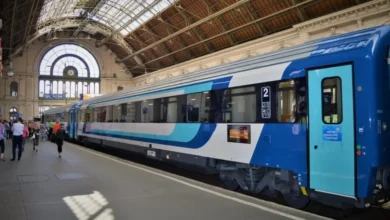
On the Polish side, the IC Hańcza is a standard locomotive-hauled InterCity train. It offers compartment seating (six seats per cabin) or open-plan carriages. It’s a solid, reliable train, usually equipped with a dining car or trolley service. The route winds through the Masurian Lake District and the lush forests of northeastern Poland, offering lovely views of one of the country’s most remote regions.
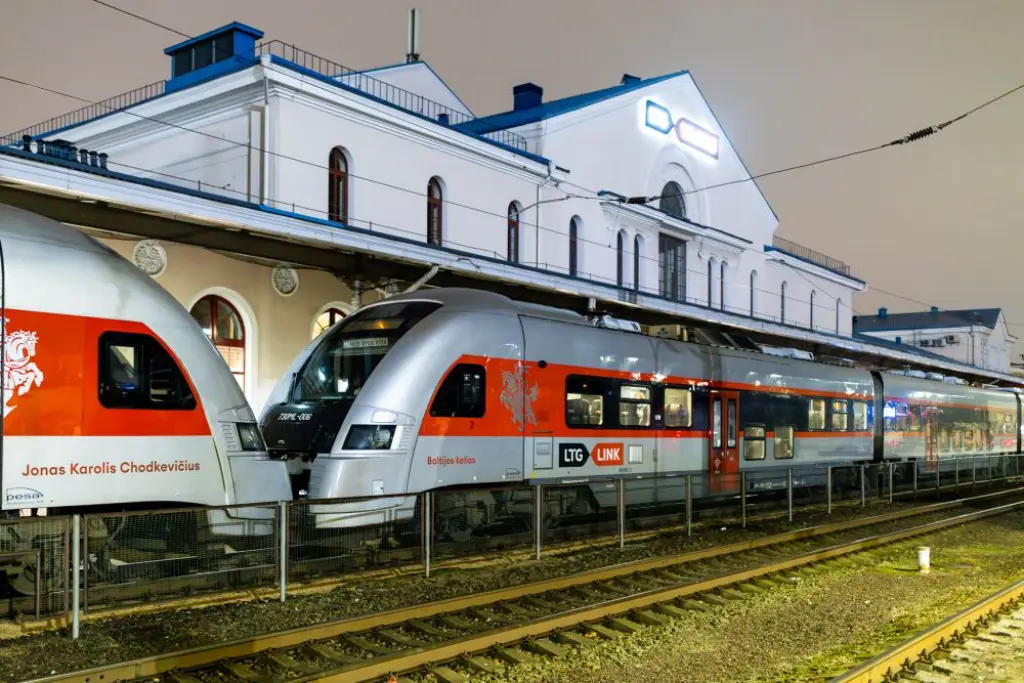
On the Lithuanian side, the experience upgrades significantly. LTG Link uses modern PESA diesel multiple units for the connection. These trains are sleek, quiet, and equipped with excellent Wi-Fi and power outlets. The ride through the Lithuanian countryside is smooth, passing through the city of Kaunas before arriving at Vilnius Railway Station.
Why This Route Matters
This connection is more than just a convenient ride; it is a precursor to Rail Baltica.
Rail Baltica is the massive infrastructure project currently under construction that will eventually connect Warsaw, Kaunas, Riga, and Tallinn with a high-speed, standard-gauge line. When complete (projected around 2030), the journey from Warsaw to Vilnius will take just four hours.
Until then, this current daily service is the vital interim solution. Since its launch, the route has been incredibly popular, often selling out days in advance. It has reconnected families, facilitated tourism, and provided a green alternative to the endless line of trucks and buses on the “Via Baltica” highway.
Ticket Pricing and Value
The most shocking aspect of this journey is the price. A standard second-class ticket from Warsaw to Vilnius typically costs between €25 and €30.
| Travel Mode | Typical Cost | Travel Time | Comfort |
|---|---|---|---|
| Train | €25 – €30 | 9 hours | High (space, dining car) |
| Bus | €20 – €40 | 8-10 hours | Low (cramped seats) |
| Flight | €100 – €250 | 4 hours (total) | Medium (fast but stressful) |
Compared to last-minute flights or even budget buses, this is an extraordinary bargain. The ticket covers both the Polish and Lithuanian segments of the journey. You buy one ticket (via the PKP Intercity or LTG Link website), and it is valid for the whole trip.
Practical Tips for the Trip
Booking is essential. This is not a train you can just hop on last minute, especially on weekends or during summer. Tickets open 30 days in advance on the PKP Intercity website (intercity.pl) or the LTG Link site (ltglink.lt).
Bring snacks and water. While the Polish train usually has a dining car, the transfer time at Mockava is short, and there are no shops on the platform. The Lithuanian train has vending machines or a small snack trolley, but a full meal isn’t served.
Don’t forget your ID or Passport. Even though both countries are in the Schengen Zone, this is a border crossing. Border guards often board the train near Mockava or Trakiszki to perform spot checks.
Summary
The Warsaw-Vilnius train is not a high-speed miracle—yet. It takes nine hours, requires a quick change of trains, and moves at a leisurely pace. But it is also a triumph of cooperation. It transforms a journey that used to be a logistical headache into a pleasant day of slow travel.
For budget travelers, rail enthusiasts, and anyone who prefers the rhythm of the rails to the stress of the airport, the new Poland-Baltic connection is a game-changer. It has finally put the Baltics back on the European rail map.
Ready to go?
- Route: Warsaw Centralna → Mockava (Transfer) → Vilnius
- Time: ~9 hours
- Cost: ~€25-30
- Booking: intercity.pl or ltglink.lt