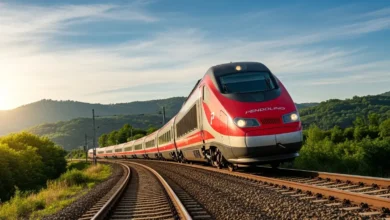

In recent years, several European countries have introduced restrictions on short-haul flights where a viable train alternative exists. While headlines often say “Europe is banning short flights,” the reality is more nuanced — but the shift toward rail is very real.
So what’s actually happening, and how could it affect your future trips?
Which Countries Are Restricting Short Flights?
France became the first country to officially limit certain domestic flights when a train alternative under 2.5 hours is available. The goal is to reduce carbon emissions and encourage rail travel.
Other countries, including Germany and Spain, have discussed similar measures or increased taxes on short-haul aviation to promote train usage.
Why Are Governments Targeting Short-Haul Flights?
Short flights generate disproportionately high emissions per passenger compared to high-speed rail. On routes under 800 kilometers, trains often match or beat planes in total journey time while producing far lower CO₂ emissions.
This shift supports broader European climate strategies and reinforces the move toward Sustainable Travel in Europe.
Are Flights Really Being “Banned”?
Not entirely. Most policies apply only when:
- A direct train route exists
- Travel time by rail is under a set threshold (e.g., 2–2.5 hours)
- The journey is domestic rather than international
International connections and routes without efficient rail alternatives remain unaffected.
What This Means for Travelers
For popular city pairs like Paris–Lyon or Madrid–Barcelona, rail is increasingly becoming the default option. Travelers may notice fewer flight options and more investment in high-speed train services.
On many of these routes, trains already outperform planes in door-to-door travel time. See our full breakdown in Train vs Plane: Route-by-Route Travel Time Comparison in Europe.
Will This Expand Across Europe?
Momentum is building. The European Union is heavily investing in rail infrastructure and cross-border high-speed connections. As networks improve, more routes could become viable replacements for short-haul aviation.
Governments are also supporting night trains and international rail corridors to reduce reliance on flights within the continent.
Is This the End of Cheap Flights?
Not necessarily. Budget airlines will continue operating on longer routes and where rail is not competitive. However, for short, busy corridors with strong train infrastructure, aviation may gradually lose ground.
The Bigger Picture: A Rail Renaissance
Rather than a blanket ban on flights, Europe is witnessing a strategic transition. High-speed rail networks are expanding, night trains are returning, and sustainability is becoming a central factor in travel decisions.
If you’re planning a European trip, understanding how rail fits into this evolving landscape can save you time, reduce stress, and lower your environmental impact.
Explore the full transformation in our guide to High-Speed Trains in Europe – The Complete Guide.