Railway Country Guide — USA: The Land of the Road Trip (and One Fast Train)
It is the country that invented the car culture, but it hasn’t forgotten the rails entirely.
The United States offers a railway experience of extremes. In the Northeast Corridor, sleek Acela trains race between Boston, New York, and Washington D.C., offering a genuine high-speed alternative to flying. But venture west, and the network transforms into something else entirely: a slow, epic, multi-day cruise on rails across deserts, prairies, and mountain ranges.
While it lacks the density of Europe or the speed of Asia, train travel in the USA offers a unique perspective on the sheer scale of the American continent.
This is your complete guide to exploring the USA by train.
USA by Train: The Overview
| Fact | Details |
|---|---|
| Total Network | ~250,000 km (mostly freight), ~35,000 km passenger |
| Main Operator | Amtrak (National Railroad Passenger Corporation) |
| Private Operators | Brightline (Florida, West) |
| High-Speed | Acela (Northeast), Brightline (Florida) |
| Maximum Speed | 240 km/h (150 mph) – Acela |
| Long-Distance | Superliners (Double-decker trains) |
| Rail Passes | USA Rail Pass (segments based) |
| Currency | US Dollar ($) |
Why Train Travel Works in the USA
- The Northeast Corridor (NEC): The only true high-speed, high-frequency network. It connects Boston, NYC, Philadelphia, Baltimore, and D.C. faster than driving or flying (city-to-city).
- The “Land Cruise”: Long-distance trains like the California Zephyr or Empire Builder are vacations in themselves. They offer observation cars, dining cars, and sleeper cabins for multi-day journeys.
- Scenery: The routes often go where roads don’t—through the remote Rockies, along the Pacific cliffs, or deep into the canyons of West Virginia.
- Space: American trains are huge. Legroom in coach class is equivalent to business class on an airline.
The History: From Golden Spike to Amtrak
Railways built America. The completion of the Transcontinental Railroad in 1869 united the East and West coasts, cutting travel time from months to days. For decades, rail was king.
But the rise of the automobile (Interstate Highway System) and the jet engine killed private passenger rail. By 1970, most railroads wanted to dump their money-losing passenger services. The government stepped in and created Amtrak in 1971 to take over the remaining routes.
Today, Amtrak operates a skeleton network of long-distance trains and state-supported regional corridors, battling for funding while ridership slowly grows.
The Operators: Amtrak and the New Kids
1. Amtrak
The national operator. It runs almost all intercity trains.
- Reputation: Mixed. The Northeast Corridor is reliable and fast. Long-distance trains are famous for delays (they share tracks with freight trains, which often get priority) but beloved for the experience.
2. Brightline
The new private challenger.
- Florida: Operates high-speed service between Miami and Orlando. Sleek, modern, and station-centric.
- West: Building a high-speed line between Las Vegas and Los Angeles (construction underway).
3. Commuter Agencies
Regional systems like Metro-North (NYC), Metra (Chicago), and Caltrain (California) handle daily commuters but are great for short trips.
Train Types: Speed vs. Size
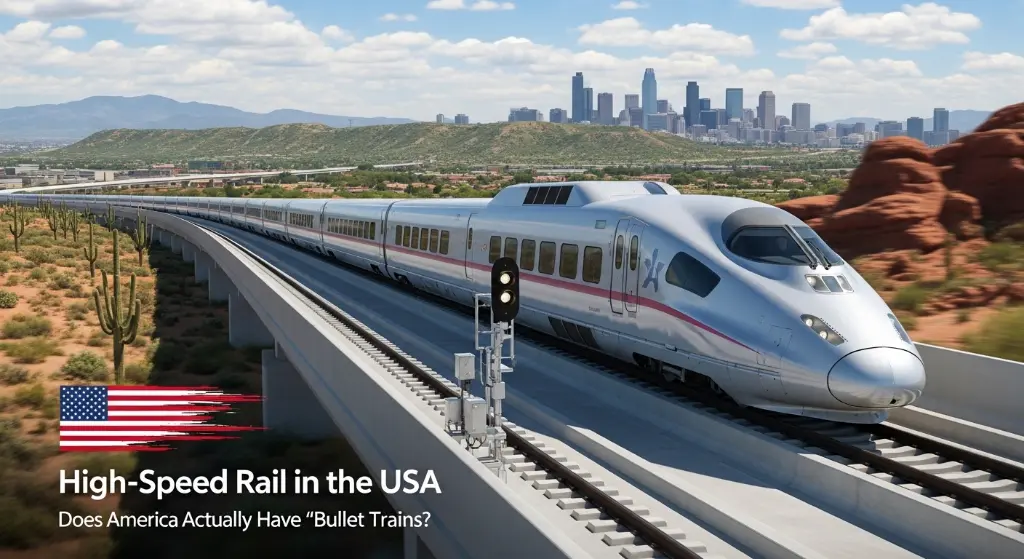
High-Speed & Corridor
- Acela: The flagship. Runs Boston–NYC–DC. Reaches 150 mph. Business and First Class only.
- Northeast Regional: The workhorse of the NEC. Slightly slower, more stops, includes Coach class.
- Brightline: Brand new trains in Florida. Reaches 125 mph. Premium experience.
Long-Distance (The Superliners)
These massive double-decker trains run the Western routes (Zephyr, Southwest Chief, etc.).
- Coach: huge reclining seats.
- Sleepers: Roomettes (small 2-bunk cabins) and Bedrooms (en-suite toilet/shower).
- Observation Car: A lounge with floor-to-ceiling windows and swivel chairs. The social heart of the train.
Single-Level Long-Distance
Trains running to/from New York (like the Lake Shore Limited or Silver Meteor) use single-level “Viewliner” cars due to tunnel height restrictions in NYC.
The Price: Dynamic and Diverse
Pricing is similar to airlines. Book early for the best deals.
Fares
- Saver / Value: Non-refundable or restrictive. Cheapest option.
- Flexible: More expensive but refundable.
- Sleeper: Includes all meals in the dining car. Prices can be high ($500–$1,500+ for a room), but remember it replaces a hotel and food bill.
Discounts
- Seniors (65+): 10% off on some fares.
- Children: 50% off (ages 2-12).
- Military/Veterans: 10% off.
Rail Passes: The USA Rail Pass
The Amtrak USA Rail Pass is not a timeline pass (like Eurail’s “7 days in a month”). It is a segment pass.
- Cost: ~$499 (often on sale for $299).
- Validity: 10 segments (rides) within 30 days.
- Catch: Valid for Coach class only. You cannot upgrade to a sleeper. You must make reservations for each leg.
- Verdict: Incredible value if you are willing to sleep in a reclining seat for a cross-country trip.
Scenic Routes: America the Beautiful
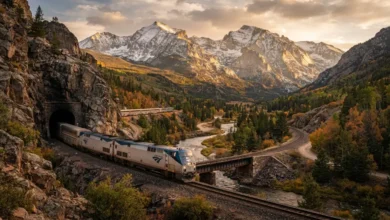
1. California Zephyr (Chicago – San Francisco)
Widely considered the most beautiful train ride in North America.
- Highlights: The Rocky Mountains (crossing the Continental Divide), the red rocks of Ruby Canyon, and the Sierra Nevada snow-capped peaks.
2. Coast Starlight (Seattle – Los Angeles)
A stunning run along the Pacific Ocean.
- Highlights: The train hugs the cliffs north of Santa Barbara and winds through the Cascade Mountains in Oregon.
3. Empire Builder (Chicago – Seattle/Portland)
The northern route.
- Highlights: Crossing Glacier National Park. If you go in summer, the long daylight hours let you see the mountains late into the evening.
4. Pacific Surfliner (San Luis Obispo – San Diego)
A shorter, regional route in Southern California that runs right on the beach. Perfect for a day trip.
Regional Guide: Major Hubs
New York City (Moynihan Train Hall / Penn Station)
The busiest hub. The new Moynihan Train Hall (across the street from the old Penn Station dungeon) is a spectacular, light-filled atrium worthy of the city.
Chicago (Union Station)
The “Hub of the Heartland.” Almost all long-distance trains start, end, or pass through here. The Great Hall is a movie star (seen in The Untouchables).
Washington D.C. (Union Station)
A monumental station near the Capitol. The gateway to the South.
Los Angeles (Union Station)
A beautiful blend of Art Deco and Mission Revival styles. The “Last of the Great Railway Stations.”
International Connections: North Only
- To Canada (Vancouver): The Amtrak Cascades runs from Seattle.
- To Canada (Montreal): The Adirondack runs from NYC (one of the most scenic autumn routes in the world).
- To Canada (Toronto): The Maple Leaf runs from NYC.
- To Mexico: No rail connection.
Practical Tips for Travelers
- Bring Snacks: While dining cars exist (and serve decent steaks and burgers for sleeper passengers), Coach passengers often rely on the Café Car, which sells microwaved pizza and snacks. Bring fresh food.
- Delays: On long-distance routes, delays are common. A train can be 2, 4, or even 10 hours late if stuck behind freight. Do not book a tight connection or a flight on the same day as your arrival.
- Observation Car: Go there early. Seats fill up fast when the scenery gets good.
- Fresh Air Breaks: Trains stop for “smoke breaks” every few hours. The conductor will announce when you can step off. Do not wander far!
Common Mistakes
- Booking a 2-day trip in Coach without preparation: It’s doable, but bring a blanket, pillow, and earplugs.
- Expecting Euro-style speeds everywhere: Outside the Northeast, 79 mph is the max, and average speeds are often 45-50 mph.
- Tipping: It is customary to tip your Sleeping Car attendant (approx. $5-10 per night) and Dining Car waiters.
Summary
Train travel in the USA is a choice to slow down. It’s about meeting interesting characters in the lounge car, watching the cornfields of Nebraska turn into the peaks of Colorado, and seeing the backyard of America that highways bypass.
Whether you are zipping to a meeting on the Acela or embarking on a 50-hour pilgrimage on the Zephyr, the train offers a view of the United States that is intimate, vast, and undeniably romantic.
Ready to ride? Start in Chicago, board the Zephyr, and don’t plan anything for the next two days except watching the world go by.
Useful Links:
- Amtrak: amtrak.com
- Brightline: gobrightline.com