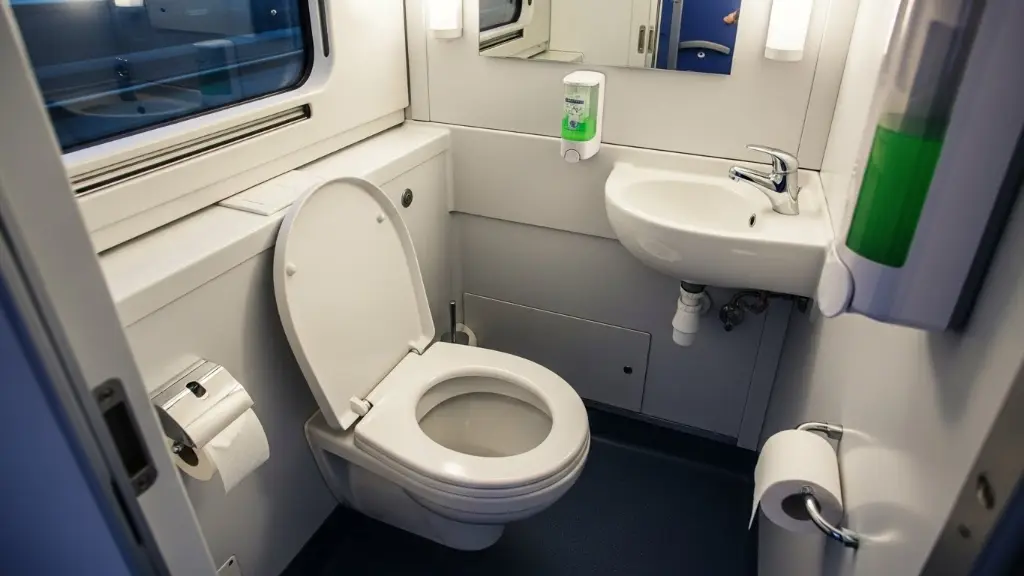
If you’re planning a train trip across Europe (especially with an Interrail pass!), you’ve probably wondered: “Are there even toilets on the train? And what about hygiene?” This is one of the most common questions we get from American travelers—and that’s completely understandable! After all, you don’t want to be trapped in a train car for a 5-hour journey with no place to go.
Rest assured – yes, there are toilets on virtually every European train! Here’s a quick guide to ease all your concerns.
✅ Yes, Toilets Are… Pretty Much Everywhere!
On every modern long-distance train (like ICE, TGV, Thalys, EuroCity, Intercity), you’ll find at least one toilet in every passenger car. In older or regional trains (e.g., in Romania, Bulgaria, or on some national routes), a toilet might only be available every 2-3 cars – but there’s always one!
At major stations (e.g., Paris Gare de Lyon, Berlin Hbf, Barcelona Sants), toilets are often paid—more on that in a moment. On the train itself, using the toilet is always free.
🚄 What Are the Toilets Like? TGV vs. Regional Train
1. High-Speed Trains (TGV, ICE, Thalys, Eurostar)
Think of this as “Lufthansa on rails.” The toilets are modern, clean, and often attended by staff (like on French TGVs). You’ll find:
- Separate cabins for men and women (or unisex with a lock)
- Running water
- Toilet paper
- A trash can
- Even a mirror and paper towels!
Cleaning happens every few hours. In short: it’s like an airplane toilet—you can use it without worry.
2. Regional and Night Trains (e.g., in Romania, Bulgaria, Poland, Czech Republic)
Here, the situation is… more modest. The toilets are functional, but:
- Often, there’s just one unisex cabin (a door with “WC” or the male/female symbol).
- Toilet paper can run out – bring your own (a small roll in your backpack is a must-have!).
- Sometimes there’s no running water.
- The level of cleanliness depends on the route and time of day.
Pro-tip: On regional trains in Eastern Europe (like Romania’s Regio), it’s better to use the toilet at the station before departure—but even the one on the train is usable. It’s not a campsite horror story—it’s just basic functionality.
💶 Paid Toilets – Where and How?
At many stations, toilets require payment. A machine at the entrance will show the fee (usually 50 cents or 1 €). On the train itself, you NEVER pay—the doors open with a simple push of a button or turn of a handle.
📌 Remember: always have some €0.50 or €1 coins on you at stations—cards often don’t work!
🔍 How to Spot a Toilet on the Train?
Europe uses a fairly standardized system of signs. Look for:
- The “WC” symbol – the most common, visible on the door or on the car’s information sign.
- Toilet icons (a white figure of a man/woman on a blue or green background).
- The words “Toilet,” “Lavatory,” “WC,” or the local language equivalent (e.g., “Toaleta” in Poland, “Toiletten” in Germany).
In first-class cars, toilets are usually cleaner and less crowded than in second class.
💡 5 Golden Rules for Using Train Toilets
- Always carry your own toilet paper! It’s often missing on regional trains.
- Lock the door – on a crowded train, someone might accidentally walk in.
- Don’t flush too forcefully – water pressure can be low in some older trains.
- If the toilet looks unpleasant—use it quickly and leave immediately. The next passenger will appreciate your speed!
- On overnight trains, staff usually clean the toilets before bedtime—feel free to use them.
The Bottom Line
Yes – European trains have toilets, and they are clean enough to use comfortably! On express trains (TGV, ICE), you’ll find almost hotel-like conditions; on regional ones, basic functionality. Remember your paper and coins for the station, and the rest will be smooth sailing.
Now you can board your train without any worries about… the most urgent needs! 🚂🚽