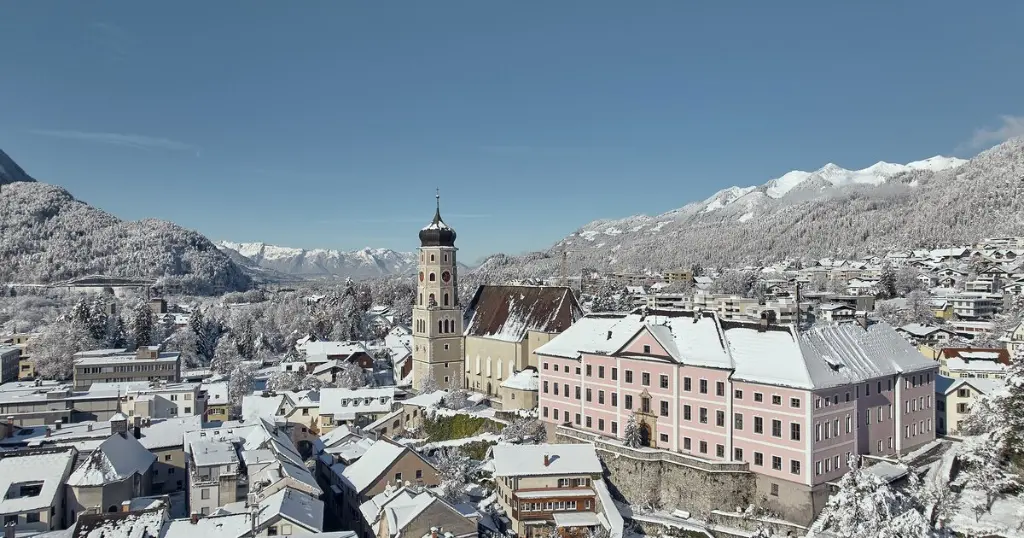
It was the railway that finally united Austria. And it still delivers passengers to some of the best skiing on Earth.
The Arlberg Railway (Arlbergbahn) runs from Innsbruck, the capital of Tyrol, to Bludenz in Vorarlberg — Austria’s westernmost province. Along the way, it climbs through the dramatic Inn Valley, punches through the 10.6-kilometer Arlberg Tunnel, and descends into a world that feels more Swiss than Austrian.
This is not just a scenic train ride. This is the railway that made modern Austria possible.
Here is the story of the line that conquered the Alps — and how you can ride it today.
The History: Breaking Austria’s Isolation
Before 1884, Vorarlberg was practically a separate country.
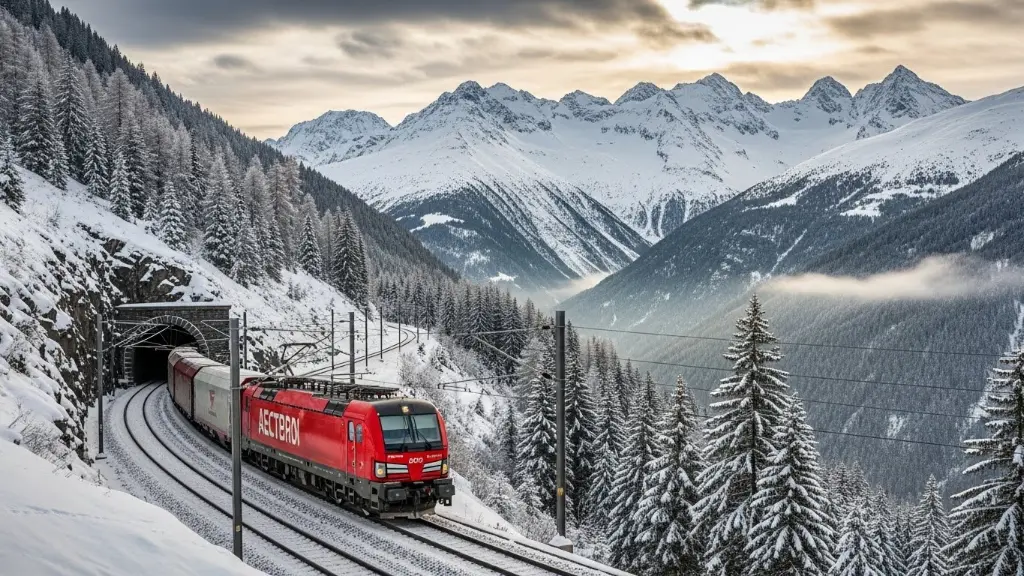
Austria’s westernmost province was cut off from the rest of the empire by the mighty Arlberg Pass (1,793 meters). In winter, the pass was often impassable. Trade was difficult. Communication was slow. Vorarlberg looked west to Switzerland, not east to Vienna.
The Habsburg Empire needed a solution. They needed a railway.
Construction began in 1880. The challenge was immense:
- The Arlberg Tunnel: 10,648 meters (6.6 miles) through solid Alpine rock — one of the longest tunnels in the world at the time.
- Brutal Conditions: Workers labored in darkness, fighting flooding, rock collapses, and suffocating heat.
- Human Cost: Dozens of workers died during the four-year construction.
On September 21, 1884, the Arlberg Railway opened. Suddenly, Vorarlberg was connected to Vienna. The Orient Express would later use this route, carrying aristocrats and spies between Paris and Constantinople.
140 years later, the Arlbergbahn remains Austria’s most important east-west railway link — and one of its most beautiful.
The Journey: From Tyrolean Peaks to Alpine Valleys
The Innsbruck to Bludenz journey takes approximately 1.5 to 2 hours, depending on the train. Every kilometer offers something different.
Innsbruck Hauptbahnhof
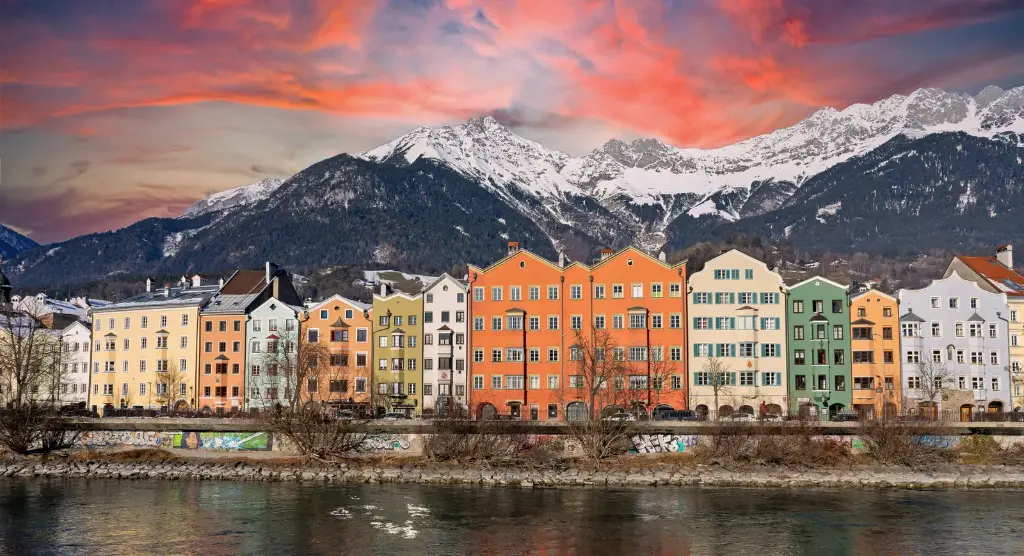
- Starting Point: Innsbruck’s main station sits at the heart of the city, surrounded by mountains. The Nordkette range rises dramatically to the north.
- Elevation: 574 meters
- The Vibe: Urban Alpine energy. Skiers, hikers, and travelers from all over Europe pass through here.
- Pro Tip: Grab a coffee at the station before boarding. The journey ahead is spectacular.
Innsbruck → Ötztal
- What You See: The train heads west along the Inn Valley (Inntal). The river flows alongside the tracks, with the Stubai Alps rising to the south and the Karwendel range visible behind you.
- Highlight: Views of the Martinswand — a dramatic limestone cliff face where Emperor Maximilian I was famously stranded while hunting in 1493 (according to legend).
- Pro Tip: Sit on the LEFT side for the best mountain views as you leave Innsbruck.
Ötztal Station
- What You See: The gateway to the Ötztal Valley — one of Austria’s longest and most dramatic Alpine valleys.
- Highlight: On clear days, you can glimpse the glaciers at the head of the valley, including the area where Ötzi the Iceman was discovered in 1991.
- Optional Stop: This is where hikers and skiers change for buses to Sölden and Obergurgl.
Ötztal → Imst-Pitztal
- What You See: The Inn Valley narrows. Rugged peaks crowd closer. The river below becomes wilder.
- Highlight: The Tschirgant massif (2,370m) dominates the view to the south — a distinctive pyramid-shaped peak.
- The Vibe: The landscape grows more dramatic. You can feel the altitude rising.
Imst-Pitztal → Landeck-Zams
- What You See: The train continues through the Upper Inn Valley. Medieval castles appear on hilltops. Tyrolean villages with onion-domed churches dot the landscape.
- Highlight: Landeck Fortress (Schloss Landeck) perched high above the town — a 13th-century castle with commanding views.
- Pro Tip: Landeck is the junction for the Reschen Railway toward Italy. If you are heading to South Tyrol, this is where you would change.
Landeck-Zams → St. Anton am Arlberg
- What You See: The climb begins in earnest. The train leaves the Inn Valley and enters the narrow Stanzer Valley, ascending toward the Arlberg.
- The Climb: The gradient increases. The train works harder. Snow-capped peaks close in on both sides.
- Highlight: Passing through tiny Alpine villages — St. Jakob, Pettneu, Schnann — that look like they have not changed in centuries.
- The Vibe: Anticipation builds. You are approaching one of the most famous ski areas in the world.
St. Anton am Arlberg
- Elevation: 1,304 meters
- What You See: The legendary ski resort appears — a mix of traditional Tyrolean architecture and modern ski infrastructure.
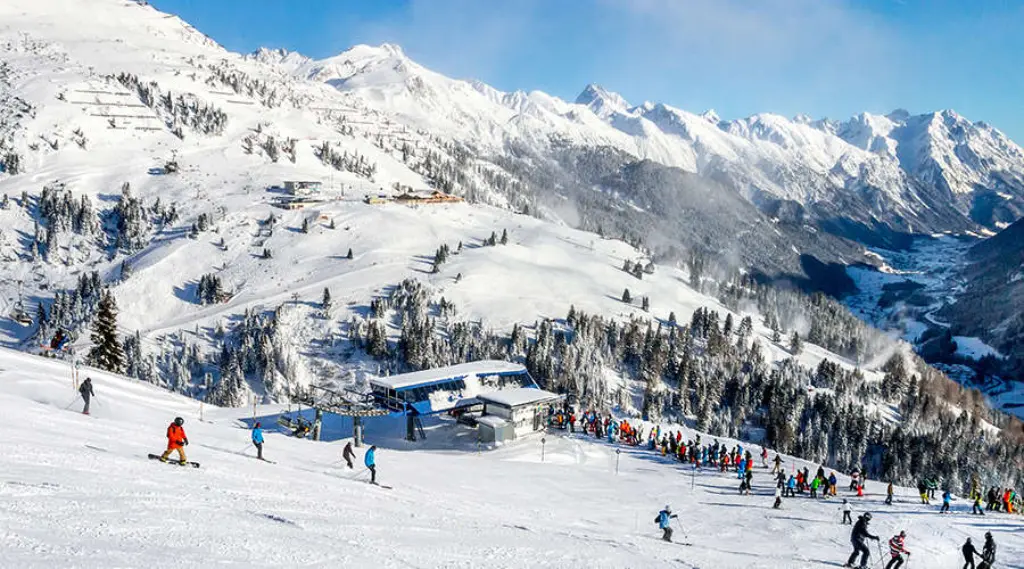
- Highlight: St. Anton is the birthplace of Alpine skiing. The first ski club was founded here in 1901. The first organized ski school opened in 1922. This is hallowed ground for winter sports enthusiasts.
- Optional Stop: If you are a skier, this is your stop. World-class terrain, legendary après-ski, and over 300 kilometers of slopes.
The Arlberg Tunnel (10,648 meters)
- What Happens: Shortly after St. Anton, the train plunges into the Arlberg Tunnel. Complete darkness for about 8-10 minutes.
- Fun Fact: When it opened in 1884, this was the longest railway tunnel in Austria and one of the longest in the world. It remains one of Austria’s most important railway tunnels.
- Elevation at Summit: 1,311 meters inside the tunnel — the highest point of the journey.
- The Experience: Your ears may pop as you cross the Alpine divide. When you emerge, you are in a different world.
Langen am Arlberg
- What You See: The first station on the Vorarlberg side. The landscape has changed — the valley is narrower, the peaks are sharper, and the architecture has a slightly Swiss feel.
- Highlight: This is the western portal of the Arlberg Tunnel. The engineering achievement is visible in the massive tunnel entrance.
- The Vibe: You have crossed to Austria’s western frontier.
Langen → Klösterle
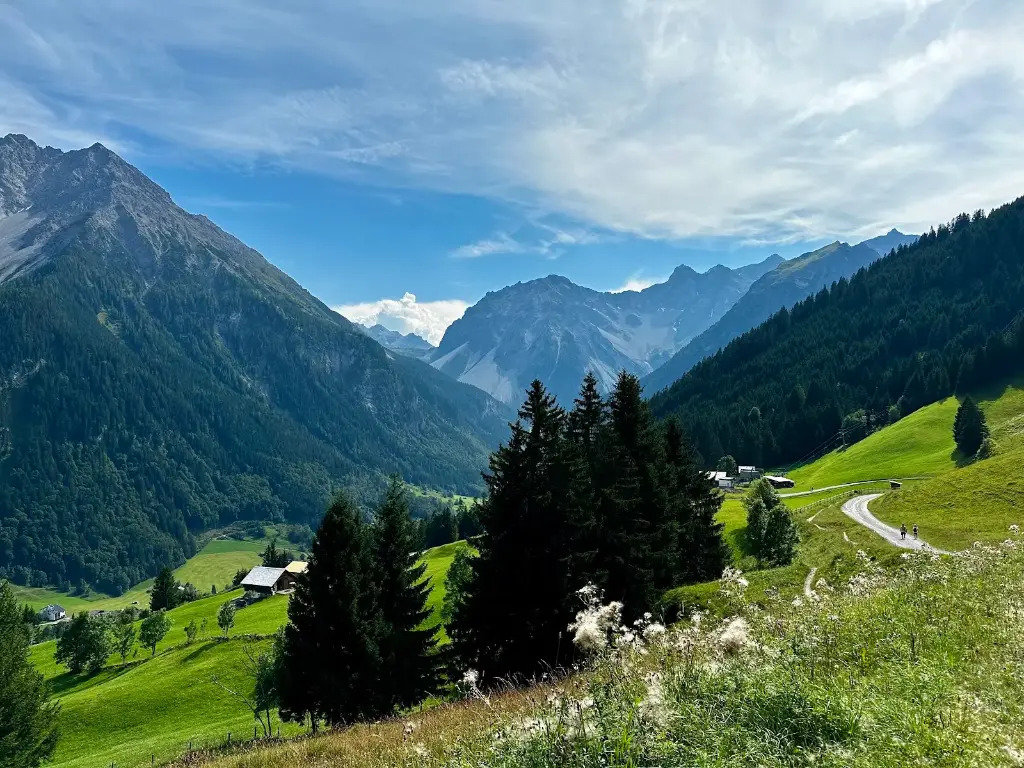
- What You See: The train descends through the Klostertal (Monastery Valley). Steep forested slopes. Waterfalls after rain or snowmelt. Remote Alpine farms clinging to the hillsides.
- Highlight: The Alfenz River rushes alongside the tracks. The valley is wild and narrow — very different from the broad Inn Valley.
- Pro Tip: Switch to the RIGHT side for the best views of the valley and river.
Klösterle → Bludenz
- What You See: The valley gradually opens. More villages appear. Vineyards and orchards begin to dot the hillsides as you lose altitude.
- Highlight: The approach to Bludenz reveals a charming old town with a medieval core and mountain views in every direction.
Bludenz
- Elevation: 588 meters
- What You See: A picturesque Austrian town at the junction of five valleys. The Rätikon mountain range rises to the south.
- Arrival: Bludenz station is a major junction. Trains continue west to Feldkirch, Bregenz (on Lake Constance), and into Switzerland.
- Highlight: The town is famous for chocolate — the Milka factory is located here. The Alpine air often carries a faint scent of cocoa.
What Makes It Special?
| Feature | Details |
|---|---|
| Historic Importance | The railway that unified Austria — opened in 1884 |
| The Arlberg Tunnel | 10.6 km through the heart of the Alps — an engineering marvel of the 19th century |
| St. Anton am Arlberg | Birthplace of Alpine skiing — a living legend for winter sports |
| Two Distinct Regions | Tyrol on one side, Vorarlberg on the other — different dialects, different cultures |
| The Inn Valley | One of Austria’s most scenic river valleys |
| The Klostertal | Wild, narrow, and dramatic — a hidden Alpine gem |
| Gateway to Switzerland | The line continues to Lake Constance and Zurich |
| Regular Train Service | Not a tourist train — just a beautiful part of the Austrian rail network |
The Price (Standard Austrian Fares)
A one-way ticket from Innsbruck to Bludenz costs approximately:
| Class | Advance Price | Standard Price |
|---|---|---|
| Second Class | €15 – €25 | €30 – €40 |
| First Class | €25 – €45 | €50 – €70 |
Rail Pass Discounts
| Pass | What You Get |
|---|---|
| Eurail / Interrail Global Pass | Fully included. Railjet reservation optional (€3). |
| ÖBB Vorteilscard | 50% off all Austrian train tickets. €66/year — excellent value if traveling in Austria. |
| ÖBB Sparschiene | Advance discount tickets. Book 2-3 weeks ahead for the best prices. |
| Einfach-Raus-TicketGroup day pass for regional trains — great for budget travelers. |
Pro Tip: Book on the ÖBB website for Sparschiene deals. Prices are lowest when booking early.
Is It Worth It?
ABSOLUTELY YES, if:
- You love mountain scenery. The Inn Valley and Klostertal offer non-stop Alpine views.
- You are traveling between Innsbruck and western Austria/Switzerland. This is the standard route — and it happens to be stunning.
- You are a ski enthusiast. Passing through St. Anton is a pilgrimage.
- You appreciate railway history. The Arlberg Tunnel was one of the greatest engineering achievements of the 19th century.
- You want to experience two Austrian cultures. Tyrol and Vorarlberg feel distinctly different.
MAYBE NOT, if:
- You expect a dedicated panoramic train. This is regular Austrian rail service with standard (but large) windows.
- You hate tunnels. The Arlberg Tunnel is 10+ kilometers of darkness.
- The weather is bad. Cloud and fog hide the peaks.
- You are looking for the cheapest route to Switzerland. Buses via Munich can be cheaper (but far less scenic).
The Best Seat Strategy
| Direction | Best Side | Why |
|---|---|---|
| Innsbruck → Bludenz | LEFT | Best views of the Inn Valley mountains and Ötztal peaks |
| Bludenz → Innsbruck | RIGHT | Same views in reverse |
Pro Tip: After emerging from the Arlberg Tunnel (heading west), switch to the RIGHT side for the best Klostertal views.
Window Note: Railjet trains have large windows but they do not open. For photography, minimize reflections by wearing dark clothing and cupping your hands around the camera lens.
Best Time to Ride
| Season | Experience |
|---|---|
| Winter (December-March) | Snow-covered peaks, skiers at St. Anton, magical Alpine atmosphere |
| Spring (April-May) | Melting snow, waterfalls at full power, wildflowers blooming |
| Summer (June-August) | Lush green valleys, hiking season, longest daylight |
| Autumn (September-October) | Golden larch forests, clear skies, fewer crowds |
Best Season for Views: Late autumn and winter often bring the clearest skies. Summer can have afternoon clouds building around the peaks.
Ski Season Note: If you ride during ski season (December-April), St. Anton station will be bustling with skiers in colorful gear. It adds to the atmosphere.
What to Do at Each End
In Innsbruck
- Nordkette Cable Car: Ride from the city center to 2,300 meters in 25 minutes. Jaw-dropping views.
- Altstadt (Old Town): The Golden Roof (Goldenes Dachl), medieval arcades, and Habsburg palace.
- Bergisel Ski Jump: Designed by Zaha Hadid. Climb to the top for panoramic views (even in summer).
- Ambras Castle: Renaissance palace with an impressive armory and portrait gallery.
- Tyrolean Cuisine: Try Tiroler Gröstl (fried potatoes with beef and egg) or Kaiserschmarrn (shredded pancake).
In Bludenz
- Altstadt (Old Town): Medieval streets, colorful houses, and the parish church of St. Laurentius.
- Milka Chocolate World: The famous Milka factory offers tours and a chocolate shop.
- Muttersberg Cable Car: Ride up for views over the five valleys that meet at Bludenz.
- Brandnertal: A beautiful side valley perfect for hiking in summer and skiing in winter.
- Gateway to Switzerland: Continue by train to Feldkirch, Bregenz (Lake Constance), or Zurich.
In St. Anton am Arlberg (If You Stop)
- Skiing/Snowboarding: 300+ kilometers of slopes across the Ski Arlberg region — Austria’s largest connected ski area.
- Summer Hiking: World-class trails including high-Alpine routes.
- Après-Ski Culture: St. Anton invented après-ski. The MooserWirt and Krazy Kanguruh are legendary.
- Skiing History: Visit the Ski Museum to learn about the birthplace of Alpine skiing.
- Verwall Valley: A quieter valley for hiking away from the resort buzz.
Combine It With…
The Arlberg Railway is a natural link in many European train adventures.
Vienna → Innsbruck → Zurich
- Vienna → Innsbruck (Railjet, 4.5 hours)
- Innsbruck → Bludenz (Arlberg Railway, 1.5-2 hours)
- Bludenz → Zurich (Railjet, 1.5 hours via Feldkirch)
Cross Austria and enter Switzerland in one day — all on comfortable intercity trains.
The Alpine Trio: Innsbruck → St. Anton → Lech
- Train from Innsbruck to St. Anton (1.5 hours)
- Bus from St. Anton to Lech am Arlberg (30 minutes)
Combine two of Austria’s most legendary ski resorts in one trip. Lech is quieter and more exclusive than St. Anton.
Innsbruck → Bludenz → Lake Constance (Bodensee)
- Innsbruck → Bludenz (Arlberg Railway)
- Bludenz → Bregenz (30 minutes)
- Explore Lake Constance — boat trips to Germany (Lindau) and Switzerland (Rorschach)
From Alpine peaks to lakeside promenades in a single morning.
The Complete Tyrol Experience
- Salzburg → Innsbruck (along the Giselabahn through the Kitzbühel Alps)
- Innsbruck → Bludenz (Arlberg Railway)
- Bludenz → Zurich (continue west)
A grand traverse of the Austrian Alps from east to west.
Ski Safari: Arlberg Region
- Base yourself in St. Anton, Lech, or Zürs
- Use the lift system to ski across the entire Ski Arlberg region
- Return to Innsbruck or continue to Switzerland after your ski days
The Arlberg Railway is your gateway to Austria’s premier ski destination.
Practical Tips
Train Types
- Railjet: The fastest and most comfortable option. Modern trains with first and second class, dining car, and Wi-Fi.
- Railjet Xpress: Some services skip smaller stations for faster journey times.
- REX (Regional Express): Slower trains with more stops. Can be cheaper. Windows sometimes open.
How Often Do Trains Run?
Trains run approximately every 1-2 hours in both directions. The route is a major intercity corridor, so service is frequent.
Seat Reservations
- Not Required: Most Railjet trains on this route do not require reservations.
- Recommended: On Friday afternoons (ski traffic), Sunday evenings (returning skiers), and holidays.
- Cost: €3 through ÖBB if you want a guaranteed seat.
Ski Equipment
- Most Railjet trains have space for skis and snowboards.
- During peak ski season, special ski transport services run to the Arlberg.
- Consider shipping luggage ahead if traveling with heavy gear.
Weather Considerations
- Winter: Trains run in almost all conditions, but heavy snowfall can cause delays.
- Check ÖBB Scotty for real-time train information.
Connections Beyond Bludenz
| Destination | Duration | Notes |
|---|---|---|
| Feldkirch | 15 min | Medieval town, connections to Liechtenstein |
| Bregenz | 35 min | Lake Constance waterfront, Bregenz Festival |
| Zurich | 1.5 hours | Change at Feldkirch or direct Railjet services |
| Munich | 2.5 hours | Via Lindau and the scenic Allgäu route |
The Future: Arlberg Base Tunnel?
There have been discussions about building a new Arlberg Base Tunnel to allow faster travel through the mountains.
If built, this would create a high-speed route under the mountain, similar to the Gotthard and Brenner Base Tunnels.
What would this mean for the current railway?
- The historic mountain route would likely remain open for regional trains.
- Intercity trains might bypass the scenic route.
- The engineering heritage would be preserved, but the classic journey could become rarer.
For now, no concrete plans exist. The Arlberg Railway continues to operate as it has for 140 years.
The Arlberg: More Than a Railway
The word “Arlberg” means “Eagle Mountain.” It is more than a mountain pass — it is a symbol.
The Arlberg divides Austria. Tyroleans to the east. Vorarlbergers to the west. Different dialects. Different traditions. Different ways of looking at the Alps.
Before 1884, this divide was almost absolute. The railway changed everything. Suddenly, Vienna was connected to Switzerland. Trade flowed. Ideas spread. Austria became whole.
And then, in the 20th century, the Arlberg became something else: the birthplace of modern skiing. Hannes Schneider, the father of ski instruction, developed his techniques here. The first package ski holidays were sold to British tourists. Après-ski was invented in St. Anton’s smoky huts.
Today, the Arlberg Railway carries a different kind of passenger: skiers heading for powder days, hikers seeking Alpine trails, travelers connecting between Austria and Switzerland. But the journey is the same — the dramatic Inn Valley, the climb to St. Anton, the darkness of the tunnel, and the sudden emergence into the green Klostertal.
Summary
The Arlberg Railway is not marketed as a scenic tourist train. There are no panoramic windows, no reserved seats with champagne service, no audio guides explaining every peak.
It is simply a working railway that happens to cross one of the most dramatic mountain passes in the Alps.
For 140 years, the Arlbergbahn has connected East and West, Tyrol and Vorarlberg, Austria and Switzerland. It carried emperors and empresses, spies on the Orient Express, and generations of skiers dreaming of powder.
Today, it carries you.
A regular train ticket. A window seat. The Inn Valley rolling by. The Arlberg Tunnel swallowing the train. And then — emergence into a different world.
That is the magic of the Arlberg Railway. It is not a show. It is just Austria, doing what Austria does: building railways through impossible mountains and making it look easy.
Ready to cross the Alps? Book your tickets on the ÖBB website. Railjet trains run every 1-2 hours from Innsbruck to Bludenz. Grab a window seat, sit back, and let Austria’s greatest railway show you what it can do.