It is the country that punches far above its weight in the railway world.
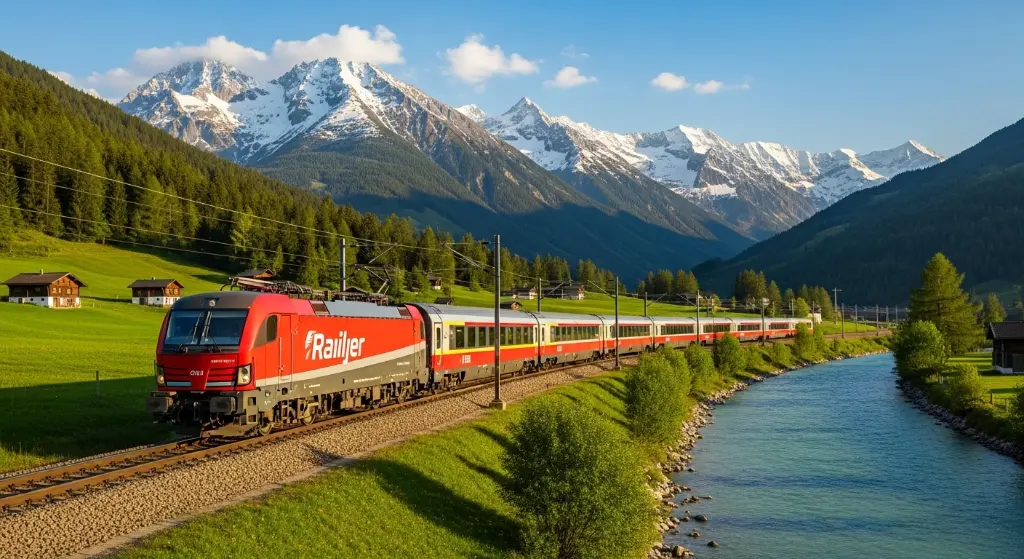
Austria’s national railway, ÖBB (Österreichische Bundesbahnen), is arguably the most ambitious rail operator in Europe right now. While other nations cut night trains, Austria built a new fleet of “Nightjets.” While others focus solely on speed, Austria perfected the “Railjet,” combining high speed with high comfort and breathtaking Alpine views.
With Vienna serving as the central turntable of Europe, and regional trains climbing impossibly steep valleys to deliver skiers straight to the lifts, Austria is a model of what a modern railway network should look like.
Austria by Train: The Overview
| Fact | Details |
|---|---|
| Total Network | ~5,600 km (heavily electrified) |
| Main Operator | ÖBB (State-owned) |
| Major Private Competitors | WESTbahn (on the Vienna-Salzburg line) |
| Maximum Speed | 230 km/h (Railjet), 250 km/h (New West Line) |
| International Connections | Connections to ALL 8 neighbors (DE, CZ, SK, HU, SI, IT, CH, LI) |
| Eurail/Interrail | Fully valid on ÖBB, WESTbahn, and most private lines |
The History: Engineering the Impossible
Austria’s railway history is defined by the Alps. In 1854, they completed the Semmering Railway—the world’s first true mountain railway. Engineers said it was impossible to build tracks over such a pass; Austria did it anyway, creating a route of viaducts and tunnels that is now a UNESCO World Heritage site.
This spirit continues today. The Koralm Tunnel (opening soon) and the Semmering Base Tunnel are multi-billion euro projects designed to flatten the Alps for trains, slashing travel times between major cities.
The Operators: Red vs. Green-White
1. ÖBB (Österreichische Bundesbahnen) — The Red Giant
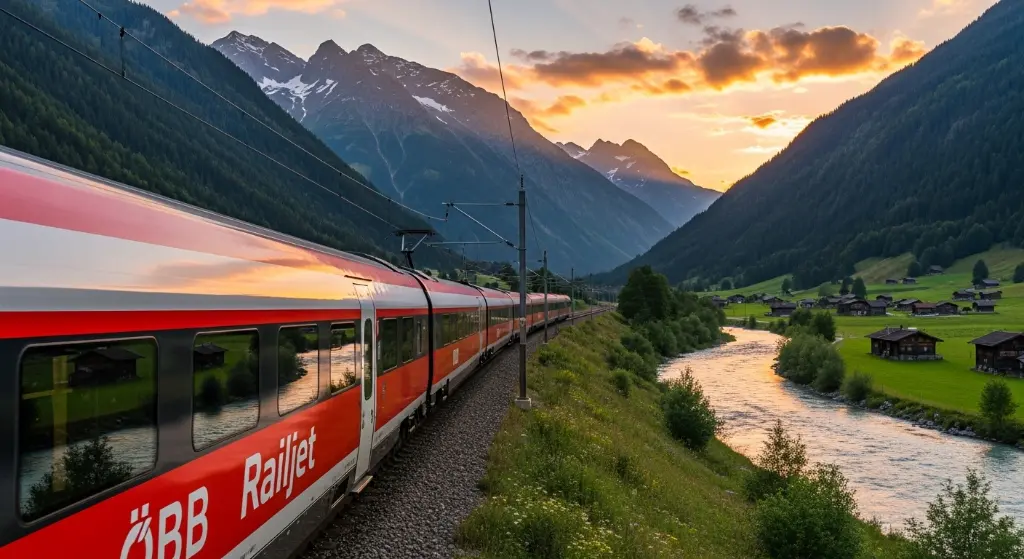
The state operator runs the vast majority of trains. Their red-and-grey livery is ubiquitous. They are known for reliability, the Nightjet network, and the premium Railjet trains.
- Best for: Almost everything, from local commuting to international sleepers.
2. WESTbahn — The Private Challenger
Running exclusively between Vienna, Linz, Salzburg (and now Munich/Innsbruck), WESTbahn offers double-decker trains with leather seats for everyone. They challenge ÖBB on price and service.
- Best for: The Vienna-Salzburg corridor. You can buy tickets on board!
Train Types: The Jet Family
| Train Category | Name | Description |
|---|---|---|
| RJ / RJX | Railjet / Xpress | The flagship. Sleek, fast (230 km/h), with Economy, First, and Business Class. |
| NJ | Nightjet | The most famous night train network in Europe. New “mini-cabins” for solo travelers are a game-changer. |
| IC / EC | InterCity / EuroCity | Traditional locomotive-hauled trains. Often have windows that open—great for photos! |
| REX / R / S | Regional | The workhorses. REX trains (Regional Express) are fast and modern; S-Bahn trains serve cities. |
The Price: Early Birds and Cards
Austrian trains can be pricey if bought last minute, but generous discounts exist.
- Sparschiene: These are the “saver fares.” Vienna to Salzburg can cost as little as €19 if booked weeks ahead.
- Vorteilscard: If you plan to spend more than a week traveling, consider buying this discount card (€66). It gives you 50% off all standard tickets instantly.
- WESTbahn: Often has special “WESTsuperpreis” deals that are cheaper than ÖBB but specific to their trains.
Rail Passes: Seamless Travel
Eurail and Interrail work perfectly here.
- Reservations: Unlike France or Spain, seat reservations are optional on almost all Austrian day trains (Railjet/EC/IC). You can just hop on. However, for €3, it is worth reserving a seat on busy routes (e.g., Friday afternoons).
- Private Lines: Passes are valid on WESTbahn and even some smaller private lines like the Zillertalbahn.
Scenic Routes: Alpine Magic
1. The Semmering Railway (Vienna to Graz)
The “Grandfather” of mountain railways. You will cross 16 iconic viaducts and 15 tunnels. The view of the Kalte Rinne viaduct is legendary.
2. The Arlberg Line (Innsbruck to Bludenz)
This crucial east-west link offers some of the most dramatic snowy peaks and deep valleys in the country. It is the main route to Switzerland.
3. The Tauern Railway (Salzburg to Villach)
Crossing the High Tauern range, this line offers spectacular views of the Gastein Valley before diving into a long tunnel to emerge in the sunny south.
Regional Guide: Major Hubs
- Vienna (Wien Hbf): A modern “glass cathedral” of a station. It is the hub for Nightjets leaving for Rome, Paris, Hamburg, and Zurich.
- Salzburg Hbf: The border station. You can switch here to German trains or head south into the Alps.
- Innsbruck Hbf: The heart of the Tyrol. Trains here offer stunning views of the Nordkette mountains right from the platform.
International Connections: The Turntable of Europe
Vienna is arguably the best-connected rail hub in Europe right now.
- To Budapest: Railjets run every hour (2.5h).
- To Prague: Railjets run every 2 hours (4h).
- To Munich: Fast connections via the “German Corner” (4h).
- To Bratislava: The “Twin City Liner” trains connect the two closest capitals in the world in under an hour.
Practical Tips
- Business Class: On Railjet, “Business Class” is actually higher than First Class. For a €15 upgrade fee on top of a 1st Class ticket, you get a semi-private pod, a welcome drink, and true peace.
- Ski Trains: In winter, “Snow Express” trains run from Germany and Vienna directly to ski resorts like St. Anton and Kitzbühel. You walk from the train to the gondola.
- Food: ÖBB’s catering (DoN) is decent. Try the Gulasch or Kaiserschmarrn in the dining car.
- Doors: On older trains, you may need to pull a handle and push the door to open it. Don’t be shy; give it a shove!
Common Mistakes
- Confusing Westbahn and ÖBB tickets: They are separate companies. Your specific ÖBB “Sparschiene” ticket is not valid on a Westbahn train, and vice versa. (Standard full-price tickets are often mutually accepted, but check first).
- Assuming night trains are cheap: Nightjet is popular. Private sleeper cabins sell out months in advance and can be expensive. Book early.
Summary
Austria understands that a train ride is part of the vacation. Whether you are sipping coffee in a Railjet business pod, sleeping your way to Venice, or taking a local train to a hiking trailhead, the Austrian system is efficient, clean, and staggeringly beautiful.
Ready to go? Start in Vienna, grab a window seat on the left side of the train to Graz, and get your camera ready for the Semmering Pass.