It is the train that disappears into a mountain — and emerges in a completely different world.
The Bohinj Railway connects Bohinjska Bistrica, nestled near the pristine Lake Bohinj, to Most na Soči in the heart of the Soča Valley. In just under an hour, you pass through the longest railway tunnel in Slovenia, cross dramatic viaducts, and descend into a valley where the river runs an impossible shade of emerald green.
No crowds. No tourist trains. Just raw Alpine beauty and over a century of railway history.
Here is why this forgotten railway deserves to be on every traveler’s list.
The History: An Empire’s Engineering Marvel
The Bohinj Railway was not built for tourists. It was built for power.
In 1906, the Austro-Hungarian Empire completed this line to connect the port of Trieste (then Austria’s only seaport) with the rest of the empire. The goal was simple: move goods and troops faster.
The centerpiece was the Bohinj Tunnel — 6,339 meters (nearly 4 miles) long. When it opened, it was one of the longest railway tunnels in Europe. Over 100 workers died during its construction.
Today, the empire is gone, but the railway remains — a monument to early 20th-century engineering, now carrying hikers, cyclists, and curious travelers through one of Europe’s most beautiful corners.
The Journey: Through the Mountain and Into the Emerald Valley
The Bohinjska Bistrica to Most na Soči segment is short but spectacular.
Bohinjska Bistrica
- Starting Point: The train departs from this small Alpine town, the gateway to Lake Bohinj and Triglav National Park.
- What You See: Forested hills, traditional Slovenian farmhouses, the Julian Alps rising in the distance.
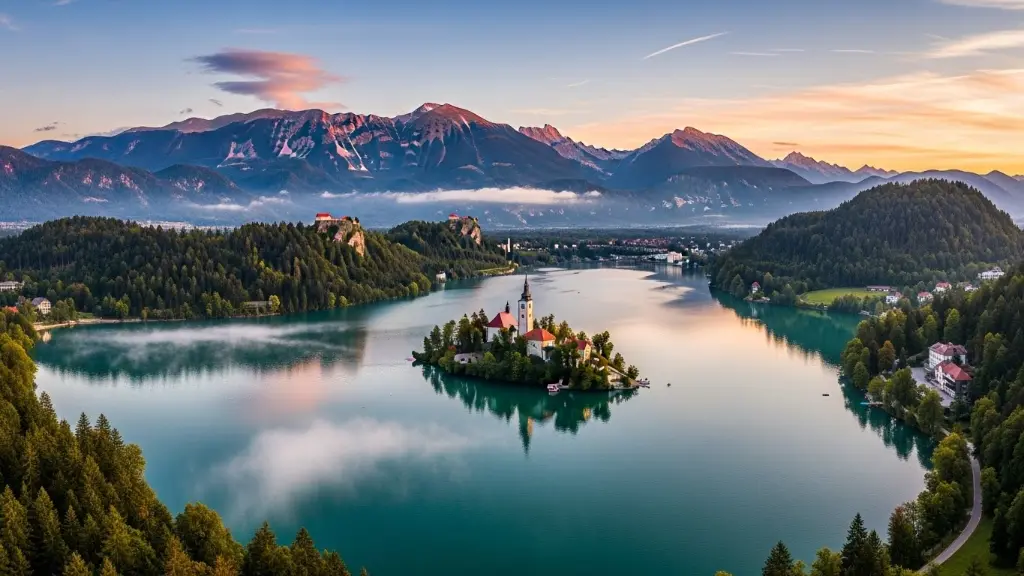
- The Vibe: Quiet. Authentic. A world away from tourist-packed Lake Bled.
- Pro Tip: Visit Lake Bohinj before or after your train journey. It is Slovenia’s largest natural lake — and far less crowded than Bled.
The Bohinj Tunnel (6,339 meters)
- What Happens: Shortly after departure, the train plunges into complete darkness. You are inside the mountain for about 8-10 minutes.
- Fun Fact: The tunnel passes directly under the Julian Alps. Above you are peaks reaching over 2,000 meters.
- The Experience: It is oddly thrilling. When you emerge on the other side, everything has changed — the climate, the vegetation, even the light.
Podbrdo
- What You See: The first station after the tunnel. A tiny mountain village clinging to the steep valley walls.
- Highlight: The train descends rapidly through a series of curves and short tunnels. You can feel the altitude dropping.
- Pro Tip: This is a popular starting point for hikers tackling the Julian Alps from the west.
The Descent into the Soča Valley
- What You See: The valley opens up dramatically. Dense forests give way to meadows. The first glimpses of the turquoise Soča River appear below.
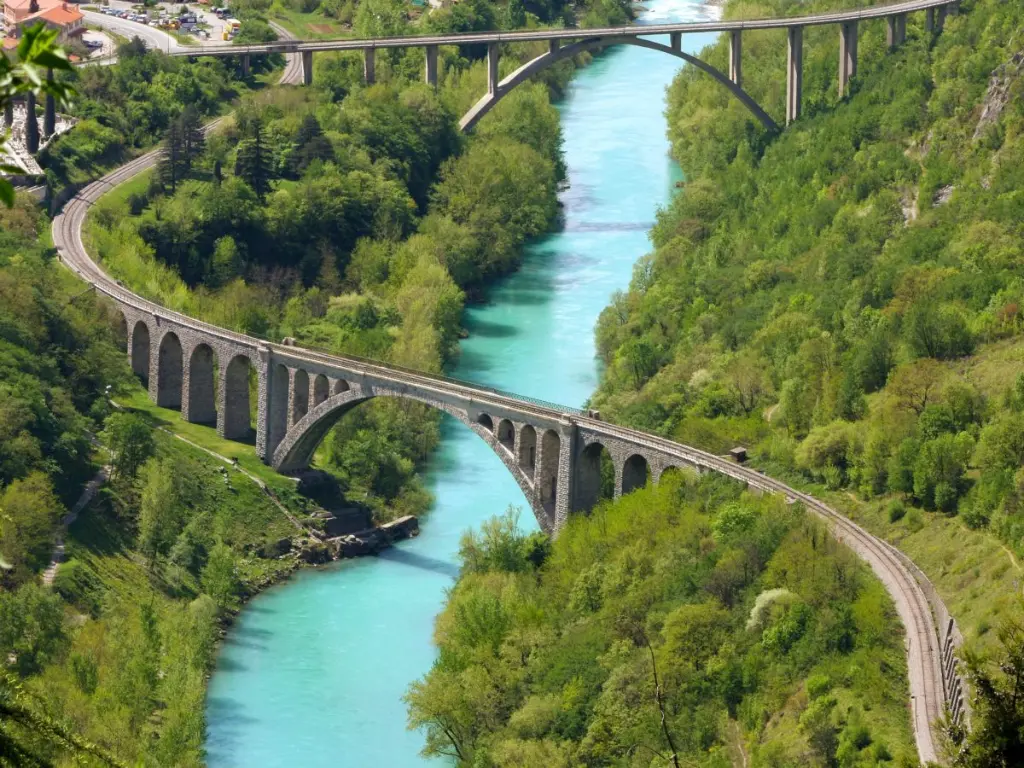
- Highlight: The railway viaducts. The train crosses several stone and steel bridges perched high above deep gorges.
- The Vibe: Wild. Remote. It feels like you have discovered a secret corner of Europe.
Most na Soči
- Arrival: The train pulls into this small town at the confluence of the Soča and Idrijca rivers.
- What You See: The famous emerald-green Soča River in full glory. Surrounded by forested hills and Alpine peaks.
- Highlight: The view of the river from the station area. The water color is almost unreal — a deep turquoise that looks photoshopped.
What Makes It Special?
| Feature | Details |
|---|---|
| The Bohinj Tunnel | 6,339 meters through the heart of the Julian Alps |
| Emerald Soča River | One of the most beautiful rivers in Europe |
| Historic Railway | Built in 1906 by the Austro-Hungarian Empire |
| Engineering Marvels | Viaducts, bridges, and tunnels carved into steep mountain terrain |
| No Tourist Crowds | This is a local train, not a marketed “panoramic experience” |
| Gateway to Adventure | Access to hiking, kayaking, and WWI history |
| Authentic Slovenia | Traditional villages untouched by mass tourism |
The Price (Unbelievably Cheap)
This is Slovenia — train travel is remarkably affordable.
A one-way ticket from Bohinjska Bistrica to Most na Soči costs approximately:
- Second Class: €3.50 – €5.00
- First Class: Not available on regional trains
Yes, you read that correctly. Under €5 for one of the most scenic train rides in Europe.
Rail Pass Discounts
| Pass | What You Get |
|---|---|
| Eurail / Interrail Global Pass | Fully included. No reservation needed. |
| Eurail Slovenia Pass | Fully included. |
Pro Tip: Given the low ticket prices, a rail pass is only worth it if you are traveling extensively in Slovenia or across Europe. For just this route, buy a regular ticket.
How to Buy Tickets
- At the Station: Buy from the ticket window or conductor on the train.
- Online: The Slovenian Railways (SŽ) website allows online booking, but for short regional trips, just buy at the station.
- No Reservation Needed: This is a regional train. Just show up and hop on.
Is It Worth It?
ABSOLUTELY YES, if:
- You love hidden gems. This railway is virtually unknown outside of Slovenia.
- You appreciate railway history and engineering. The tunnel and viaducts are over 100 years old.
- You want to access the Soča Valley. This train is the most scenic way to get there.
- You are a budget traveler. Under €5 for world-class scenery.
- You love the outdoors. Hiking, kayaking, canyoning — the Soča Valley has it all.
- You hate crowds. You might share the train with a handful of locals and maybe a few hikers.
MAYBE NOT, if:
- You expect luxury panoramic windows. This is a standard regional train.
- You want a long, all-day scenic journey. The ride is under an hour.
- You need English announcements and tourist infrastructure. This is authentic, local Slovenia.
- You do not have time for the region. The train is best combined with exploring Lake Bohinj or the Soča Valley.
The Best Seat Strategy
| Direction | Best Side | Why |
|---|---|---|
| Bohinjska Bistrica → Most na Soči | LEFT | Better views of the valley and river as you descend |
| Most na Soči → Bohinjska Bistrica | RIGHT | Same views in reverse |
Pro Tip: The trains are rarely crowded. Move around freely to catch views on both sides, especially as you exit the tunnel.
Best Time to Ride
| Season | Experience |
|---|---|
| Spring (April-May) | Waterfalls at full flow, wildflowers blooming, snow on peaks |
| Summer (June-August) | Best weather, perfect for combining with Soča River activities |
| Autumn (September-October) | Golden forests, fewer tourists, crisp mountain air |
| Winter (November-March) | Snow-covered landscape, quiet and atmospheric, but some services reduced |
Pro Tip: Summer weekends can bring more visitors to the Soča Valley, but the train itself stays quiet. For the best experience, travel on a weekday.
What to Do at Each End
In Bohinjska Bistrica / Lake Bohinj Area
- Lake Bohinj: Slovenia’s largest natural lake. Swim, kayak, or just sit and stare at the crystal-clear water.
- Savica Waterfall: A stunning 78-meter waterfall — one of Slovenia’s most famous natural sights.
- Vogel Cable Car: Ride up to 1,535 meters for panoramic views of the Julian Alps and Lake Bohinj.
- Triglav National Park: Slovenia’s only national park. Endless hiking trails for all levels.
- Church of St. John the Baptist: A tiny medieval church on the lake shore — one of the most photographed spots in Slovenia.
In Most na Soči / Soča Valley Area
- The Soča River: The star of the region. The water is an unbelievable shade of emerald green.
- Kayaking and Rafting: The Soča is one of Europe’s best rivers for whitewater sports.
- Tolmin Gorges: A short bus or taxi ride away. Dramatic canyon with turquoise pools and a natural thermal spring.
- WWI History: The Soča Valley was the Isonzo Front in WWI. Visit the Kobarid Museum (one of Europe’s best WWI museums) or the Italian Ossuary.
- Canyoning: For adventure seekers — rappel down waterfalls in the surrounding canyons.
- Napoleon Bridge: A historic stone bridge over the Soča near Kobarid. Stunning photo spot.
Combine It With…
The Bohinj Railway is just one segment of a longer route. Here is how to extend your adventure.
The Full Bohinj Line: Jesenice → Nova Gorica
The Bohinjska Bistrica to Most na Soči segment is the most scenic, but the full line offers more.
| Segment | Highlights |
|---|---|
| Jesenice → Bohinjska Bistrica | Views of Triglav, approach to the Julian Alps |
| Bohinjska Bistrica → Most na Soči | The tunnel, the viaducts, the emerald Soča |
| Most na Soči → Nova Gorica | The famous Solkan Bridge — the world’s longest stone railway arch |
The Solkan Bridge: If you continue past Most na Soči toward Nova Gorica, you will cross this engineering marvel — an 85-meter stone arch spanning the Soča River. It is the largest stone railway bridge in the world. Worth the extra 30 minutes.
Lake Bled + Lake Bohinj + Soča Valley Loop
- Start in Lake Bled (Slovenia’s most famous destination)
- Bus or car to Lake Bohinj (30 minutes)
- Train from Bohinjska Bistrica to Most na Soči (Bohinj Railway)
- Explore the Soča Valley
- Return via bus or continue to Nova Gorica and the coast
This loop combines Slovenia’s greatest hits in 2-3 days.
Slovenia to Italy by Train
- Bohinjska Bistrica → Most na Soči → Nova Gorica (Bohinj Railway)
- Walk across the border to Gorizia, Italy (the two cities are connected)
- Continue by Italian train to Trieste, Venice, or beyond
A scenic cross-border journey following the old Austro-Hungarian trade route.
The Soča Valley Road Trip (by Train + Bus)
- Train: Bohinjska Bistrica → Most na Soči
- Bus: Most na Soči → Kobarid → Bovec
- Explore the upper Soča Valley — the most dramatic section
Buses run along the Soča Valley and connect with train schedules.
Practical Tips
Getting to Bohinjska Bistrica
- From Ljubljana: Train to Jesenice (1 hour), then change to the Bohinj Railway (40 minutes to Bohinjska Bistrica).
- From Lake Bled: Bus to Bohinjska Bistrica (30 minutes) or taxi.
- By Car: Easy drive from Ljubljana (1.5 hours) or Bled (30 minutes).
Getting Away from Most na Soči
- By Train: Continue to Nova Gorica (45 minutes) for connections to Italy or the Slovenian coast.
- By Bus: Buses run to Kobarid and Bovec (the heart of the Soča Valley adventure scene).
- By Car: If you have a rental, the Soča Valley road is one of the most scenic drives in Slovenia.
Food and Drink
- No Dining Car: This is a short regional train. Bring snacks.
- Local Specialties: In the Soča Valley, try Tolmin cheese (the local specialty), štruklji (rolled dumplings), and Soča trout.
- Wine: The nearby Goriška Brda region produces excellent wines — just a short trip from Nova Gorica.
Language
- Slovenian is the official language. English is widely spoken in tourist areas but less common in small villages.
- A few words go a long way: Hvala (thank you), Prosim (please), Dober dan (good day).
Currency
- Slovenia uses the Euro (€).
- Cards are accepted widely, but carry some cash for small purchases in rural areas.
Alternative: The Museum Train
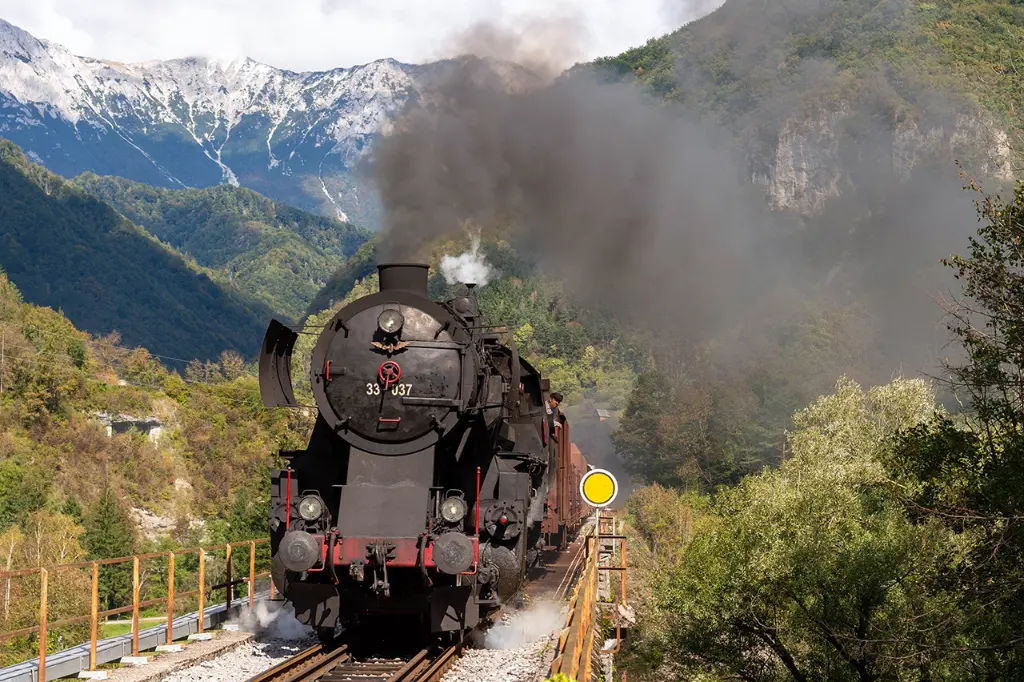
On special occasions (mainly summer weekends and holidays), a heritage steam train operates on the Bohinj Railway.
- Vintage locomotives and restored carriages.
- Stops at viewpoints for photos.
- Commentary about the railway’s history.
- A true step back in time.
Check the Slovenian Railway Museum or local tourism websites for schedules. It is a fantastic way to experience the line if your timing works out.
Why You Have Never Heard of This Train
Slovenia is still under the radar for many travelers. Most people visit Lake Bled, take a few photos, and leave.
But those who venture further — to Lake Bohinj, to the Soča Valley, and onto this historic railway — discover a different Slovenia. Wilder. Quieter. More dramatic.
The Bohinj Railway does not have a marketing team. It does not sell reserved seats or luxury packages. It is just a simple regional train that happens to pass through some of the most spectacular scenery in the Alps.
And that is exactly what makes it special.
Summary
The Bohinj Railway is proof that the best travel experiences are often the ones no one talks about.
For less than €5, you travel through a 6-kilometer tunnel under the Julian Alps, emerge into a hidden valley, and descend to one of Europe’s most beautiful rivers.
No crowds. No reservations. No luxury panoramic cars — just big windows, wooden seats, and scenery that rivals anything in Switzerland.
If you are in Slovenia and love trains, mountains, or adventure — this is your ride.
Ready to discover Slovenia’s secret railway? Check schedules on the Slovenian Railways website or just show up at Bohinjska Bistrica station. No booking needed — just hop on and enjoy.