Germany Rail Guide: High-Speed ICE Trains and Smart Group Ticket Options
It is the country where trains are not just transportation — they are a national institution.
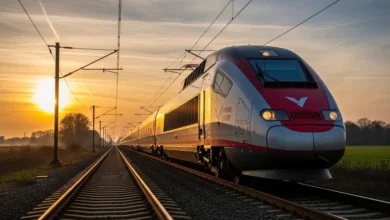
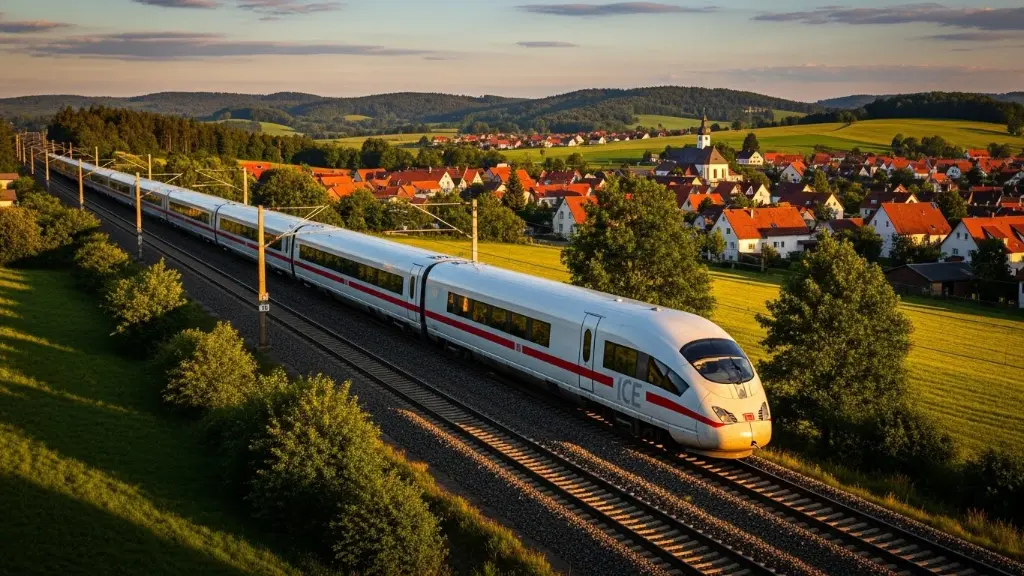
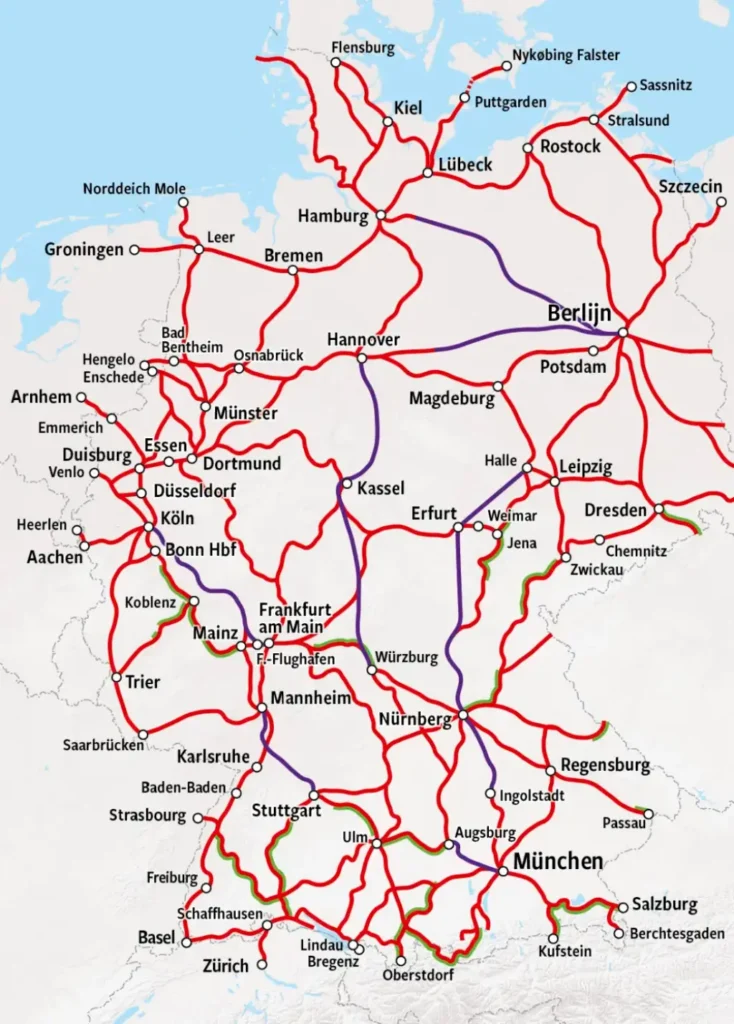
Germany operates one of the world’s most extensive and well-connected railway networks. High-speed ICE trains race between cities at 300 km/h. Regional trains reach every corner of the country. And from Berlin, Munich, or Frankfurt, you can travel directly to a dozen European countries.
Add in some of Europe’s best-value group tickets, stunning scenic routes along the Rhine and through the Alps, and a network that touches nearly every town with a church steeple — and you have a country built for rail travel.
This is your complete guide to exploring Germany by train.
Germany by Train: The Overview
| Fact | Details |
|---|---|
| Total Network | ~33,400 km of railway lines |
| Main Operator | Deutsche Bahn (DB) — state-owned |
| Competitors | FlixTrain, various regional operators |
| High-Speed Network | ~3,000+ km of dedicated Schnellfahrstrecken |
| Maximum Speed | 300 km/h (ICE 3, ICE 4) |
| International Connections | 9 neighboring countries, plus direct trains to Italy, France, Belgium, Netherlands |
| Eurail/Interrail | Valid on all DB trains (ICE reservation recommended) |
Why Train Travel Works in Germany
- Density: Germany has more railway stations per capita than almost any European country.
- Connectivity: From any major city, you can reach another in 1-4 hours.
- Central Location: Germany borders nine countries — trains connect to all of them.
- Group Tickets: The Deutschland-Ticket, Länder-Tickets, and group day passes offer extraordinary value.
- No Domestic Flights Needed: ICE trains are faster than flying for most internal routes.
- 24/7 Travel: Night trains connect Germany to Austria, Switzerland, Italy, Belgium, Netherlands, and France.
The History: Railways and German Unity
Germany’s railway history is deeply intertwined with its political history — railways helped create modern Germany.
The Pioneering Years (1835-1870)
Germany’s first railway opened on December 7, 1835: a 6-kilometer line between Nuremberg and Fürth in Bavaria. The locomotive was named “Adler” (Eagle), and it marked the beginning of railway fever.
In the following decades, the various German states built their own railways:
- Prussia: Aggressive expansion, focused on military and industrial needs
- Bavaria: Quality construction, scenic mountain routes
- Saxony: Dense network serving industrial heartland
- Baden and Württemberg: Connections through the Black Forest and to Switzerland
By 1870, Germany had over 18,000 km of railway — one of the densest networks in the world.
The Reichsbahn Era (1871-1945)
After German unification in 1871, the new empire worked to integrate the separate railway systems. In 1920, the Deutsche Reichsbahn was established as a unified national railway.
The Reichsbahn became famous for engineering excellence:
- Development of streamlined express trains (the “Fliegender Hamburger” reached 160 km/h in 1933)
- Electrification of major routes
- Precision scheduling that became synonymous with German efficiency
World War II devastated the railway network. By 1945, most major bridges were destroyed, and the country was divided.
Division and Reunification (1945-1994)
The Cold War split German railways:
- West Germany: Deutsche Bundesbahn (DB)
- East Germany: Deutsche Reichsbahn (DR)
Both systems developed separately for 45 years. The Bundesbahn invested in high-speed technology, while the Reichsbahn maintained an extensive but aging network.
After reunification in 1990, the two railways merged. In 1994, Deutsche Bahn AG was created as a unified, state-owned but commercially operated railway.
The ICE Era (1991-Present)
On June 2, 1991, Germany launched the InterCity Express (ICE) — its first high-speed train. The inaugural service ran from Hamburg to Munich via Frankfurt.
Since then, Germany has built an extensive high-speed network:
- 1991: ICE 1 launches (Hamburg-Munich)
- 1998: Hannover-Berlin high-speed line opens
- 2002: Cologne-Frankfurt high-speed line (300 km/h)
- 2006: ICE service to Paris begins
- 2017: Berlin-Munich high-speed line (3h 55min journey time)
- 2023: Direct ICE service Berlin-Paris expands
Today, ICE trains carry over 80 million passengers annually.
The Operators: Who Runs German Trains?
Deutsche Bahn (DB) — The National Railway
Deutsche Bahn is Germany’s national railway company, state-owned but operated commercially. It dominates long-distance travel and operates most regional services.
| Aspect | Details |
|---|---|
| Ownership | State-owned (Bundesrepublik Deutschland) |
| Network | Nationwide — all regions |
| Train Types | ICE, IC/EC, RE, RB, S-Bahn |
| High-Speed Routes | All major ICE lines |
| Regional Services | Most TER regional trains (though some franchised) |
| International | Direct trains to Austria, Switzerland, France, Belgium, Netherlands, Denmark, Poland, Czech Republic, Italy |
| Eurail/Interrail | VALID (reservation recommended for ICE) |
| Website | bahn.de |
DB is actually a group of companies:
- DB Fernverkehr: Long-distance services (ICE, IC, EC)
- DB Regio: Regional trains (RE, RB)
- DB Netze: Infrastructure (tracks, stations)
- DB Station&Service: Station management
Competitors
Germany has opened its railways to competition, and several operators now challenge DB:
FlixTrain
| Aspect | Details |
|---|---|
| Type | Low-cost long-distance |
| Routes | Berlin-Cologne, Hamburg-Cologne, Berlin-Munich, Berlin-Stuttgart, and more |
| Price | Often significantly cheaper than DB |
| Comfort | Basic but adequate |
| Eurail/Interrail | NOT VALID |
| Website | flixtrain.de |
FlixTrain is the rail arm of FlixBus. It offers budget fares on major routes, often undercutting DB by 50% or more. Trains are less frequent and sometimes older, but for budget travelers, it is worth checking.
Other Competitors
| Operator | Routes | Notes |
|---|---|---|
| Westbahn | Munich → Vienna (Austria) | Austrian competitor on DB territory |
| ALEX (Länderbahn) | Bavaria, Saxony, Czech connections | Regional and cross-border |
| Metronom | Lower Saxony (Hamburg region) | Regional operator |
| National Express | NRW region (Cologne area) | Regional RE/RB services |
| Go-Ahead | Baden-Württemberg, Bavaria | Regional franchises |
| Transdev | Various regional franchises | Multiple regions |
For Travelers: These regional operators are usually seamless — your DB ticket or rail pass is typically valid. FlixTrain is the main exception (requires separate booking).
Train Types: A Complete Guide
Germany has a clear hierarchy of train types, from high-speed ICE to local S-Bahn.
High-Speed Trains
ICE (InterCity Express)
The flagship of German rail — fast, comfortable, and extensive.
| Feature | Details |
|---|---|
| Speed | Up to 300 km/h (ICE 3, ICE 4) |
| Routes | All major cities, plus international to France, Belgium, Netherlands, Switzerland, Austria |
| Classes | Second Class (2. Klasse), First Class (1. Klasse) |
| Amenities | Wi-Fi, power outlets, restaurant/bistro car, quiet zones, family areas |
| Reservation | Recommended but not mandatory (except international routes) |
| Best For | Long-distance travel, speed, comfort |
ICE Train Types:
| Type | Max Speed | Features | Routes |
|---|---|---|---|
| ICE 1 | 280 km/h | Classic design, restaurant car | Various |
| ICE 2 | 280 km/h | Shorter trains, tilting capability | Various |
| ICE 3 | 330 km/h | Sleek design, Cologne-Frankfurt line | High-speed routes, Paris |
| ICE 4 | 250 km/h | Newest fleet, longer trains, more capacity | Expanding across network |
| ICE T | 230 km/h | Tilting trains for curvy routes | Dresden, Leipzig, Austria |
| ICE TD | 200 km/h | Diesel tilting (for non-electrified sections) | Limited routes |
ICE Sprinter
Premium express ICE services with fewer stops, higher prices, and guaranteed seat reservations. Runs on routes like:
- Frankfurt → Berlin (3h 45min non-stop)
- Munich → Berlin (3h 55min with minimal stops)
- Frankfurt → Munich
Long-Distance Conventional Trains
IC (InterCity)
Traditional long-distance trains, slower than ICE but still comfortable.
| Feature | Details |
|---|---|
| Speed | Up to 200 km/h |
| Routes | Secondary long-distance routes, some international |
| Classes | Second Class, First Class |
| Reservation | Recommended but not mandatory |
| Best For | Routes without ICE service, scenic travel |
IC trains use older but comfortable carriages. Some routes offer stunning scenery that ICE lines bypass with tunnels.
EC (EuroCity)
International long-distance trains connecting Germany to neighboring countries.
| Feature | Details |
|---|---|
| Speed | Up to 200 km/h |
| Routes | Germany to Austria, Switzerland, Italy, Czech Republic, Poland, Hungary |
| Classes | Second Class, First Class |
| Reservation | Recommended, sometimes mandatory |
| Best For | International travel to countries without high-speed connections |
Popular EC routes include:
- Munich → Innsbruck → Verona → Venice/Bologna
- Munich → Salzburg → Vienna
- Hamburg → Copenhagen (via ferry or Fehmarn)
- Berlin → Prague → Vienna
- Frankfurt → Basel → Zurich/Interlaken
Regional Trains
RE (Regional-Express)
Faster regional trains with limited stops.
| Feature | Details |
|---|---|
| Speed | Up to 160 km/h |
| Routes | Inter-city regional connections |
| Classes | Usually Second Class only (some First Class) |
| Reservation | Not required or available |
| Best For | Medium distances, connections to smaller cities |
RE trains are the workhorses of the German regional network. They are comfortable, frequent, and covered by the Deutschland-Ticket and Länder-Tickets.
RB (Regionalbahn)
Local stopping trains serving all stations.
| Feature | Details |
|---|---|
| Speed | Up to 140 km/h |
| Routes | Local connections, all stations |
| Classes | Second Class only |
| Reservation | Not required or available |
| Best For | Reaching small towns, short distances |
RB trains stop everywhere — every village with a platform. Slower but essential for reaching rural Germany.
S-Bahn
Urban and suburban rail networks in major cities.
| Feature | Details |
|---|---|
| Speed | Up to 140 km/h |
| Routes | Urban and suburban within metropolitan areas |
| Frequency | Every 5-20 minutes |
| Tickets | Local transport tickets (VBB, MVV, VRS, etc.) or DB tickets |
| Best For | City transportation, airport connections |
Major S-Bahn networks:
- Berlin: Extensive network covering the city and Brandenburg
- Munich: Dense urban network, airport connection
- Hamburg: Connecting all boroughs and suburbs
- Frankfurt: City and airport connections
- Cologne/Rhine-Ruhr: Connecting the Ruhr industrial region
- Stuttgart: City and regional connections
The High-Speed Network: ICE Lines
Germany’s Schnellfahrstrecken (high-speed lines) enable ICE trains to reach 300 km/h.
Key High-Speed Routes
| Line | Route | Max Speed | Opened |
|---|---|---|---|
| Hannover-Würzburg | First high-speed line | 280 km/h | 1991 |
| Mannheim-Stuttgart | Southwest corridor | 280 km/h | 1991 |
| Hannover-Berlin | East-West connection | 250 km/h | 1998 |
| Cologne-Frankfurt | “Neubaustrecke” | 300 km/h | 2002 |
| Nuremberg-Ingolstadt | Munich connection | 300 km/h | 2006 |
| Berlin-Munich (VDE 8) | North-South backbone | 300 km/h | 2017 |
Journey Times Between Major Cities
| Route | Distance | ICE Time | Trains/Day |
|---|---|---|---|
| Berlin → Munich | 585 km | 3h 55min | 25+ |
| Berlin → Frankfurt | 545 km | 3h 50min | 30+ |
| Berlin → Hamburg | 285 km | 1h 45min | 35+ |
| Berlin → Cologne | 575 km | 4h 15min | 20+ |
| Frankfurt → Munich | 390 km | 3h 10min | 40+ |
| Frankfurt → Cologne | 180 km | 1h 00min | 50+ |
| Frankfurt → Hamburg | 490 km | 3h 35min | 25+ |
| Hamburg → Munich | 780 km | 5h 30min | 15+ |
| Munich → Cologne | 575 km | 4h 25min | 15+ |
| Cologne → Hamburg | 425 km | 3h 55min | 20+ |
ICE vs. Flying
For domestic German travel, ICE almost always beats flying:
| Factor | ICE | Flight |
|---|---|---|
| City Center to Center | Yes | No (airport transfers) |
| Check-in Time | 0 minutes | 60-90 minutes |
| Security | None | Full screening |
| Frequency | Every 30-60 min on major routes | Limited |
| Weather Delays | Rare | Common |
| Work During Travel | Easy (Wi-Fi, power, tables) | Limited |
| Environmental Impact | Lower | Higher |
Bottom Line: Berlin-Munich by ICE is 3h 55min city center to city center. By plane, it is 1h 05min flight time plus 2-3 hours of airport hassle. The train wins.
The Price: What German Trains Cost
German train pricing uses a flexible yield management system — prices vary based on demand and booking time.
ICE Pricing (Examples)
| Route | Flex Price (last-minute) | Sparpreis (advance) | Super Sparpreis |
|---|---|---|---|
| Berlin → Munich | €140-170 | €30-60 | €18-30 |
| Frankfurt → Berlin | €130-160 | €25-50 | €18-30 |
| Hamburg → Munich | €150-180 | €35-70 | €20-35 |
| Cologne → Berlin | €130-160 | €30-55 | €18-30 |
| Munich → Frankfurt | €100-130 | €25-45 | €18-25 |
Understanding DB Ticket Types
| Ticket Type | Flexibility | Price Level | Notes |
|---|---|---|---|
| Flexpreis | Full flexibility — any train, refundable | Highest | For business travelers, uncertain schedules |
| Sparpreis | Specific train only, limited changes | Medium | Good value if plans are fixed |
| Super Sparpreis | Specific train, no changes, no refund | Lowest | Best deal but no flexibility |
IC/EC Pricing
IC and EC trains are typically cheaper than ICE for similar distances:
| Example Route | ICE Price | IC/EC Price |
|---|---|---|
| Munich → Innsbruck | €50-80 | €30-50 |
| Hamburg → Copenhagen | N/A (no ICE) | €40-70 |
| Frankfurt → Basel | €70-100 (ICE) | €45-70 (IC) |
Regional Train Pricing
RE and RB trains use distance-based pricing or flat-rate tickets:
| Example Route | Standard Ticket |
|---|---|
| Munich → Nuremberg (RE) | €25-30 |
| Berlin → Dresden (RE) | €22-28 |
| Hamburg → Lübeck (RE) | €14-18 |
| Frankfurt → Mainz (S-Bahn/RB) | €5-8 |
But the real value is in the special tickets (see below).
Special Tickets: Germany’s Best-Value Deals
Germany offers some of Europe’s best group and flat-rate tickets. These are essential knowledge for budget travelers.
Deutschland-Ticket (€49 Ticket)
Revolutionary flat-rate monthly pass for all regional transport nationwide.
| Feature | Details |
|---|---|
| Price | €49/month (subscription) |
| Validity | All RE, RB, S-Bahn, U-Bahn, trams, buses nationwide |
| NOT Valid On | ICE, IC, EC, FlixTrain |
| Availability | Monthly subscription (cancel anytime) |
| Purchase | DB Navigator app, local transport apps, ticket offices |
Deutschland-Ticket Impact:
This ticket transformed German rail travel when it launched in May 2023. For €49/month, you get:
- Unlimited regional trains across all 16 federal states
- All urban transport (metros, trams, buses)
- No need to understand complex fare zones
The Catch: No ICE, IC, or EC trains. But creative routing with RE/RB can get you almost anywhere.
Example Journeys Possible:
- Berlin → Munich: ~6-7 hours (via Leipzig, Nuremberg)
- Hamburg → Munich: ~7-8 hours (via Hanover, Würzburg)
- Cologne → Berlin: ~6 hours (via Hanover)
Quer-durchs-Land-Ticket
Day pass for unlimited regional train travel across Germany.
| Feature | Details |
|---|---|
| Price | €44 for 1 person, +€8 for each additional (up to 5 people) |
| Validity | One day, all RE/RB trains nationwide |
| Hours | Monday-Friday: 9:00-3:00 next day; Weekends/holidays: midnight to 3:00 next day |
| NOT Valid On | ICE, IC, EC |
| Purchase | DB website, app, ticket machines, ticket offices |
Quer-durchs-Land-Ticket Value:
For groups, this is extraordinary value:
- 5 people, one day, all regional trains = €76 total (€15.20 per person)
- Perfect for a day trip or slow travel
Länder-Tickets (State Tickets)
Each German state offers a day ticket for regional trains within its borders (plus sometimes neighboring areas).
| State | Ticket Name | Solo Price | Group Price (up to 5) | Coverage |
|---|---|---|---|---|
| Bavaria | Bayern-Ticket | €27 | €50 (+€9/person) | All of Bavaria + Salzburg |
| Baden-Württemberg | BW-Ticket | €25 | €49 (+€6/person) | All of Baden-Württemberg |
| North Rhine-Westphalia | SchönerTagTicket NRW | €32 | €51 (+€5/person) | All of NRW |
| Saxony | Sachsen-Ticket | €26 | €49 (+€8/person) | Saxony + Thuringia |
| Hesse | Hessenticket | €37 | €55 (+€5/person) | All of Hesse |
| Berlin-Brandenburg | VBB-Ticket | €10 (zones) | Varies | Berlin + Brandenburg region |
State Ticket Strategy:
- Perfect for exploring one region intensively
- Often extend slightly into neighboring states (check details)
- Valid on regional trains, often also local buses/trams
- Same weekday/weekend time restrictions as Quer-durchs-Land
Schönes-Wochenende-Ticket (Retired)
Note: The famous “Beautiful Weekend Ticket” was discontinued in 2019 and replaced by the Quer-durchs-Land-Ticket system.
Group and Family Savings
| Offer | Details |
|---|---|
| Mitfahrer-Rabatt | Additional travelers pay less on the same booking |
| BahnCard Discount | 25% or 50% off all tickets (subscription card) |
| Children (0-5) | Free, no ticket needed |
| Children (6-14) | Free when traveling with parent/grandparent (must be listed on ticket) |
| Kids 6-14 alone | 50% off |
BahnCard: The Frequent Traveler’s Friend
DB’s BahnCard program offers discounts for regular travelers.
BahnCard Options
| Card | Price (2nd Class) | Price (1st Class) | Discount |
|---|---|---|---|
| BahnCard 25 | €59.90/year | €121/year | 25% off Flexpreis, Sparpreis |
| BahnCard 50 | €244/year | €492/year | 50% off Flexpreis, 25% off Sparpreis |
| BahnCard 100 | €4,339/year | €7,365/year | Unlimited travel on all DB trains |
BahnCard 25 — Is It Worth It?
Break-even calculation:
If you save €60 in ticket discounts, the card pays for itself. That is:
- ~€240 of full-price tickets at 25% off, OR
- ~2-3 longer ICE trips per year
For anyone taking more than 2-3 long-distance trips per year, BahnCard 25 is worthwhile.
BahnCard 50 — For Regular Travelers
The 50% discount on Flexpreis tickets is powerful for business travelers or those with uncertain schedules. Break-even is around €490 in savings (about 4-5 long-distance round trips at full price).
BahnCard 100 — Unlimited Freedom
For heavy travelers, the BahnCard 100 offers unlimited travel on all DB trains, including:
- All ICE, IC, EC trains
- All regional trains (RE, RB, S-Bahn)
- Free city transport in many cities
At €4,339/year (2nd class), it pays off if you spend €360+/month on train travel.
Probe BahnCard
DB offers trial BahnCards (Probe BahnCard) for 3 months at reduced rates — a good way to test the value.
Rail Passes: Are They Worth It?
Eurail / Interrail German Pass
| Pass Type | 3 Days | 4 Days | 5 Days | 7 Days |
|---|---|---|---|---|
| Adult (2nd class) | ~€185 | ~€215 | ~€250 | ~€305 |
| Youth (2nd class) | ~€145 | ~€170 | ~€200 | ~€245 |
What’s Included:
- All DB trains (ICE, IC, EC, RE, RB, S-Bahn)
- ICE reservation recommended (€4.50-5.50, optional but advisable)
- FlixTrain NOT included
What’s NOT Included:
- FlixTrain (separate tickets required)
- Some special tourist trains
Is a Rail Pass Worth It in Germany?
Often NO for Germany alone — and here is why:
Germany’s Sparpreis and Super Sparpreis advance tickets are very cheap:
- Berlin → Munich: €18-30 advance
- Frankfurt → Hamburg: €18-30 advance
- Multiple trips booked ahead often cost less than a pass
When a Pass DOES Make Sense:
- Spontaneous travel (cannot/will not book ahead)
- Peak season when advance tickets are sold out
- Combined with other countries (Global Pass)
- Using many regional trains (Deutschland-Ticket may be better though)
Deutschland-Ticket vs. Rail Pass
For budget travelers focusing on Germany:
| Deutschland-Ticket | Eurail German Pass | |
|---|---|---|
| Price | €49/month | €185+ (3 days) |
| ICE/IC/EC | No | Yes |
| Regional Trains | Unlimited | Included |
| Urban Transport | Yes (all metros, trams, buses) | No |
| Flexibility | Unlimited regional travel | Flexible day selection |
| Best For | Slow travel, budget travelers, city exploration | Fast travel, mixed long-distance and regional |
My Recommendation:
- For 1-2 weeks of travel: Deutschland-Ticket (€49) + select ICE Sparpreis tickets
- For fast travel with uncertain schedule: Eurail Pass
- For Europe-wide travel: Eurail Global Pass
Scenic Routes: The Beautiful Journeys
Germany offers stunning train journeys — from Rhine castles to Alpine panoramas. Here are the routes worth savoring.
1. The Rhine Valley (Cologne/Bonn → Mainz/Wiesbaden)
The Route: Along the romantic Middle Rhine, past castles, vineyards, and the Lorelei rock.
| Details | |
|---|---|
| Distance | ~130 km |
| Duration | 1.5-2 hours |
| Train Type | RE (regional), IC (less frequent) |
| Scenery | ★★★★★ |
| UNESCO Status | Yes — Upper Middle Rhine Valley |
| Highlight | 40+ castles, Lorelei rock, terraced vineyards, river views |
This is Germany’s most famous scenic railway. The train hugs the Rhine’s left bank (more scenic) or right bank, passing medieval castles every few kilometers. The Lorelei rock, the Marksburg castle, and countless wine villages create a fairy-tale landscape.
Pro Tip: Sit on the river side (LEFT going south on the left bank, RIGHT going north). The RE trains run frequently and are covered by the Deutschland-Ticket.
2. The Black Forest Railway (Schwarzwaldbahn) — Offenburg → Konstanz
The Route: Through the heart of the Black Forest via spiral tunnels.
| Details | |
|---|---|
| Distance | ~150 km |
| Duration | 2.5 hours |
| Train Type | RE (regional) |
| Scenery | ★★★★★ |
| Highlight | 39 tunnels, spiral loops, Black Forest valleys, cuckoo clock villages |
An engineering masterpiece from the 1870s. The train climbs 670 meters using spiral tunnels — you can see the same church three times from different angles as the train loops upward. Dense forests, half-timbered villages, and mountain meadows complete the picture.
Pro Tip: The section between Hausach and Villingen is the most spectacular. Covered by the Deutschland-Ticket and Baden-Württemberg-Ticket.
3. The Höllentalbahn (Freiburg → Donaueschingen)
The Route: Through the dramatic “Hell Valley” of the Black Forest.
| Details | |
|---|---|
| Distance | ~60 km |
| Duration | 1.5 hours |
| Train Type | S-Bahn Breisgau (local) |
| Scenery | ★★★★★ |
| Highlight | Ravenna Gorge viaduct, steep gradients, Titisee lake |
The Höllentalbahn climbs through one of the Black Forest’s most dramatic valleys. The Ravenna Gorge viaduct — illuminated during December Christmas markets — is spectacular. The route passes Titisee, a popular lake resort.
4. The Bavarian Alps (Munich → Garmisch-Partenkirchen)
The Route: From Munich into the heart of the Bavarian Alps.
| Details | |
|---|---|
| Distance | ~90 km |
| Duration | 1h 20min |
| Train Type | RB/RE (regional) |
| Scenery | ★★★★★ |
| Highlight | Alpine peaks, Zugspitze views, traditional Bavarian villages |
The train climbs from Munich’s flatlands into dramatic Alpine scenery. The Wetterstein mountains appear, dominated by the Zugspitze (2,962m) — Germany’s highest peak. Oberammergau and King Ludwig’s castles are accessible from this route.
Pro Tip: Covered by the Bayern-Ticket. Continue from Garmisch to Innsbruck (Austria) on the scenic cross-border route.
5. The Moselle Valley (Koblenz → Trier)
The Route: Along Germany’s other great wine river.
| Details | |
|---|---|
| Distance | ~115 km |
| Duration | 1.5-2 hours |
| Train Type | RE (regional) |
| Scenery | ★★★★★ |
| Highlight | Moselle River meanders, steep vineyards, wine villages, Roman ruins |
Less famous than the Rhine, but equally beautiful. The Moselle winds dramatically between steep vineyard slopes. Half-timbered villages like Cochem and Bernkastel-Kues dot the route, and Roman Trier awaits at the end.
6. The Saxon Switzerland (Dresden → Bad Schandau)
The Route: Through the dramatic sandstone formations of Saxon Switzerland.
| Details | |
|---|---|
| Distance | ~45 km |
| Duration | 45 minutes |
| Train Type | S-Bahn Dresden |
| Scenery | ★★★★★ |
| Highlight | Elbe Valley, sandstone pillars, Bastei views, fortress Königstein |
The train follows the Elbe River through one of Germany’s most dramatic landscapes. Sandstone towers and mesas rise from the forested valley. The Bastei bridge and Königstein Fortress are accessible from stations along the route.
Pro Tip: Continue across the border to Děčín and Prague (Czech Republic) on the same scenic valley line.
7. The Allgäu (Munich/Augsburg → Oberstdorf)
The Route: Into the Allgäu Alps at Germany’s southern tip.
| Details | |
|---|---|
| Distance | ~180 km from Munich |
| Duration | 2.5 hours |
| Train Type | RE/RB (regional) |
| Scenery | ★★★★★ |
| Highlight | Allgäu meadows, Alpine peaks, Neuschwanstein area, Oberstdorf skiing |
The train crosses the gentle Allgäu foothills before climbing into real Alpine scenery. Neuschwanstein Castle is accessible (via Füssen station), and the terminus at Oberstdorf offers access to hiking and skiing.
8. The Baltic Coast (Hamburg → Stralsund/Rügen)
The Route: To the Baltic Sea and the island of Rügen.
| Details | |
|---|---|
| Distance | ~350 km |
| Duration | 3-4 hours |
| Train Type | ICE, IC, RE |
| Scenery | ★★★★ |
| Highlight | Hanseatic cities (Lübeck, Rostock, Stralsund), Baltic coast, Rügen Island |
The train passes through the historic Hanseatic cities of northern Germany before reaching the Baltic Sea. Stralsund is a UNESCO World Heritage city, and from there, trains continue to Rügen — Germany’s largest island, famous for its chalk cliffs and seaside resorts.
9. The Harz Narrow Gauge Railways (Wernigerode → Brocken)
The Route: Steam trains through the Harz Mountains to the Brocken summit.
| Details | |
|---|---|
| Distance | ~35 km |
| Duration | 2 hours |
| Train Type | Narrow-gauge steam (HSB) |
| Scenery | ★★★★★ |
| Highlight | Steam locomotives, witch legends, Brocken summit (1,141m) |
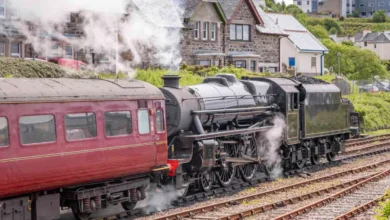
The Harzer Schmalspurbahnen (HSB) operates Germany’s largest narrow-gauge steam railway network. Steam locomotives climb to the Brocken — the highest peak in northern Germany and legendary site of witches’ gatherings. The railway also reaches Quedlinburg, a UNESCO World Heritage town.
Note: Separate tickets required (not covered by DB passes, partially covered by Deutschland-Ticket).
10. The Romantic Road by Train (Würzburg → Füssen)
The Route: Parallel to the famous Romantic Road tourist route.
| Details | |
|---|---|
| Distance | ~450 km (with connections) |
| Duration | 5-6 hours (with changes) |
| Train Type | RE/RB (regional, multiple changes) |
| Scenery | ★★★★ |
| Highlight | Medieval towns, Baroque churches, castles, Neuschwanstein finale |
No single train runs the Romantic Road, but regional connections link the highlights: Würzburg, Rothenburg ob der Tauber (bus connection), Dinkelsbühl, Augsburg, and Füssen (for Neuschwanstein).
Regional Guide: Germany by Area
Berlin and Brandenburg
| Hub | Key Connections | Notes |
|---|---|---|
| Berlin Hbf | Munich (4h), Hamburg (1h 45min), Frankfurt (4h), Cologne (4h 15min), Prague (4h), Warsaw (5h 30min) | Germany’s newest and most modern main station |
| Berlin-Spandau | Western suburbs, some ICE | Alternative to Hauptbahnhof |
| Potsdam | Berlin (30min), palaces and gardens | UNESCO World Heritage |
Berlin Highlights:
- S-Bahn ring around the city
- ICE to Dresden and Saxon Switzerland
- Night trains to Vienna, Zurich, Paris
Hamburg and the North
| Hub | Key Connections | Notes |
|---|---|---|
| Hamburg Hbf | Berlin (1h 45min), Munich (5h 30min), Cologne (4h), Copenhagen (4h 45min) | Major northern hub |
| Lübeck | Hamburg (45min) | UNESCO Hanseatic old town |
| Kiel | Hamburg (1h 15min) | Ferry port to Scandinavia |
| Rostock/Warnemünde | Berlin (2h 30min) | Baltic coast |
Northern Highlights:
- RE trains to Sylt island (via causeway)
- Ferry connections to Denmark, Sweden, Norway
- Hanseatic cities on the Baltic coast
Cologne and the Rhine-Ruhr
| Hub | Key Connections | Notes |
|---|---|---|
| Cologne Hbf | Frankfurt (1h), Brussels (1h 50min), Paris (3h 50min), Amsterdam (2h 45min) | Cathedral directly at station |
| Düsseldorf | Cologne (25min), Amsterdam (2h 20min) | Fashion and art city |
| Essen/Dortmund | Ruhr industrial heritage | Multiple stations |
| Bonn | Cologne (20min), Rhine Valley | Former capital, Beethoven’s birthplace |
Rhine-Ruhr Highlights:
- Rhine Valley scenic route south to Mainz
- Thalys/ICE to Paris, Brussels, Amsterdam
- Dense S-Bahn network connecting the Ruhr cities
Frankfurt and Hesse
| Hub | Key Connections | Notes |
|---|---|---|
| Frankfurt Hbf | All major German cities, Paris (4h), Basel (3h), Zurich (4h) | Germany’s busiest station |
| Frankfurt Flughafen | Airport station, ICE connections | Major airport hub |
| Mainz | Frankfurt (30min), Rhine Valley | Rhine-Main region |
| Wiesbaden | Frankfurt (40min) | Spa city, Rheingau wines |
Frankfurt Highlights:
- Gateway to the Rhine Valley
- Cologne-Frankfurt high-speed line (1 hour)
- International connections to France, Switzerland, Benelux
Munich and Bavaria
| Hub | Key Connections | Notes |
|---|---|---|
| Munich Hbf | Berlin (4h), Frankfurt (3h 10min), Vienna (4h), Zurich (4h 30min), Venice (6h 30min) | Bavaria’s grand central station |
| Nuremberg | Munich (1h), Berlin (3h), Frankfurt (2h) | Medieval old town, Nazi documentation center |
| Augsburg | Munich (30min), Romantic Road | Renaissance city |
| Regensburg | Munich (1h 30min) | UNESCO old town on the Danube |
Bavarian Highlights:
- Alps routes to Garmisch, Berchtesgaden, Austria
- Bayern-Ticket for unlimited regional travel
- Scenic routes to Salzburg and beyond
Stuttgart and Baden-Württemberg
| Hub | Key Connections | Notes |
|---|---|---|
| Stuttgart Hbf | Munich (2h 10min), Frankfurt (1h 20min), Paris (3h 10min), Zurich (2h 45min) | Currently major construction (Stuttgart 21) |
| Heidelberg | Frankfurt (50min) | Romantic old town, castle ruins |
| Freiburg | Basel (45min), Black Forest | Gateway to Black Forest, sustainable city |
| Konstanz | Black Forest line, Swiss border | Lake Constance |
Baden-Württemberg Highlights:
- Black Forest scenic routes
- Lake Constance circle (Germany, Switzerland, Austria)
- TGV to Paris via Strasbourg
Dresden and Saxony
| Hub | Key Connections | Notes |
|---|---|---|
| Dresden Hbf | Berlin (2h), Prague (2h 15min), Leipzig (1h 15min) | Baroque “Florence on the Elbe” |
| Leipzig | Berlin (1h 15min), Munich (3h 15min), Frankfurt (3h) | Music city, emerging culture hub |
| Chemnitz | Dresden (1h) | Industrial heritage |
Saxon Highlights:
- Saxon Switzerland (Bastei, sandstone formations)
- Cross-border to Prague on the Elbe Valley line
- Saxony-Ticket for regional exploration
International Connections
Germany’s central location makes it Europe’s railway crossroads.
High-Speed International
| Destination | Route | Duration | Operator |
|---|---|---|---|
| Paris | Frankfurt/Cologne → Paris | 3h 50min – 4h 20min | ICE/TGV |
| Paris | Munich/Stuttgart → Paris | 5h 30min – 6h | TGV |
| Brussels | Cologne → Brussels | 1h 50min | ICE/Thalys |
| Amsterdam | Cologne → Amsterdam | 2h 45min | ICE |
| Amsterdam | Frankfurt → Amsterdam | 3h 50min | ICE |
| London | Cologne → London | 4h 30min | ICE + Eurostar |
| Vienna | Munich → Vienna | 4h | ICE/Railjet |
| Vienna | Berlin → Vienna | 5h (planned faster) | ICE/Railjet |
| Zurich | Munich → Zurich | 4h 30min | EC |
| Zurich | Frankfurt → Zurich | 4h | ICE |
Scenic International Routes
| Destination | Route | Duration | Highlights |
|---|---|---|---|
| Innsbruck | Munich → Innsbruck | 1h 45min | Bavarian and Tyrolean Alps |
| Salzburg | Munich → Salzburg | 1h 30min | Alpine foothills |
| Prague | Berlin/Dresden → Prague | 4h / 2h 15min | Elbe Valley, Bohemian countryside |
| Verona/Venice | Munich → Verona/Venice | 5h 30min / 6h 30min | Brenner Pass, Dolomites |
| Interlaken | Frankfurt → Basel → Interlaken | 5h 30min | Rhine, Swiss Alps |
| Copenhagen | Hamburg → Copenhagen | 4h 45min | Across the Øresund |
Night Train Connections (Nightjet and Others)
| Route | Departure | Arrival | Operator |
|---|---|---|---|
| Munich → Rome | Evening | Morning | ÖBB Nightjet |
| Munich → Venice | Evening | Morning | ÖBB Nightjet |
| Berlin → Vienna | Evening | Morning | ÖBB Nightjet |
| Berlin → Budapest | Evening | Morning | ÖBB Nightjet |
| Berlin → Zurich | Evening | Morning | ÖBB Nightjet |
| Berlin → Brussels/Paris | Evening | Morning | ÖBB Nightjet (new) |
| Hamburg → Vienna | Evening | Morning | ÖBB Nightjet |
| Hamburg → Zurich | Evening | Morning | ÖBB Nightjet |
| Cologne → Vienna | Evening | Morning | ÖBB Nightjet |
Night Train Tips:
- Operated by Austrian ÖBB (Nightjet brand)
- Accommodation: seats, couchettes (4/6 berth), sleepers (1-3 berth)
- Book early for sleeper cabins
- Some Nightjets include car transport (Autoreisezug)
Night Trains: Sleep Your Way Across Europe
Germany is a hub for European night train travel, primarily through ÖBB’s Nightjet network.
Nightjet Routes from Germany
| Origin | Destinations | Accommodation |
|---|---|---|
| Munich | Rome, Venice, Milan, Florence, Vienna, Budapest, Zagreb, Ljubljana | Seats, couchettes, sleepers |
| Berlin | Vienna, Budapest, Zurich, Basel, Brussels, Paris, Prague, Wrocław | Seats, couchettes, sleepers |
| Hamburg | Vienna, Zurich, Basel, Innsbruck | Seats, couchettes, sleepers |
| Düsseldorf/Cologne | Vienna, Innsbruck | Seats, couchettes, sleepers |
| Frankfurt | Vienna (via Munich connection) | Various |
Accommodation Types
| Type | Description | Price Range |
|---|---|---|
| Sitzwagen (Seat) | Reclining seat in shared carriage | €30-60 |
| Couchette (6-berth) | Bunk in shared compartment, 6 people | €50-80 |
| Couchette (4-berth) | Bunk in shared compartment, 4 people | €70-110 |
| Sleeper (3-bed) | Private cabin with beds | €100-150 |
| Sleeper (2-bed) | Private cabin with beds | €130-180 |
| Sleeper (Single) | Private cabin, one bed | €180-250 |
| Sleeper Deluxe | Private cabin with shower/WC | €220-350 |
Night Train Tips
- Book 2-3 months ahead for best prices and sleeper availability
- Bring earplugs and eye mask
- Deluxe sleepers include breakfast and private bathroom
- Nightjets often have a lounge car open late
- Passport/ID may be checked at borders
Practical Tips for German Train Travel
Buying Tickets
Online (Recommended):
- bahn.de — official DB website, English available
- DB Navigator App — essential for mobile tickets, live updates, platform info
- trainline.com — compares DB, FlixTrain, and others
At the Station:
- Red DB ticket machines (touch screen, English available)
- DB Reisezentrum (ticket office) — expect queues, especially on weekends
- Some stations have DB Service Points (information and tickets)
Booking Timeline:
- Tickets open ~180 days (6 months) in advance
- Super Sparpreis fares sell out quickly for popular routes
- Best prices usually 3-8 weeks before travel
Using the DB Navigator App
The DB Navigator app is essential for German train travel:
- Journey planning: Real-time connections, platform info
- Mobile tickets: No printing needed
- Live updates: Delays, platform changes, alternatives
- Ticket wallet: Store all your tickets
- Maps: Station layouts for major stations
Station Navigation
German stations range from massive multi-level hubs (Frankfurt, Munich, Berlin) to tiny village halts.
Key Vocabulary:
- “Abfahrt” = Departure
- “Ankunft” = Arrival
- “Gleis” = Platform/Track
- “Hauptbahnhof” (Hbf) = Main/Central station
- “Bahnhof” (Bf) = Station
- “Umsteigen” = Transfer/Change
- “Verspätung” = Delay
- “Ausfall” = Cancellation
Platform Displays:
- Yellow posters = Departures
- White posters = Arrivals
- Electronic boards show real-time information
- Wagenstandanzeiger = Carriage position diagram (shows where each car stops)
The Wagenstandanzeiger (Carriage Position Display)
German platforms have detailed diagrams showing exactly where each carriage will stop. This is extremely useful:
- Find your car number on your ticket (Wagen X)
- Find that number on the platform diagram
- Stand at the corresponding section (marked A, B, C, D, etc.)
- Your car will stop right in front of you
This saves running along the platform when the train arrives.
Seat Reservations
ICE/IC/EC:
- Reservations are optional but recommended on busy routes
- Cost: €4.50 (2nd class) or €5.90 (1st class)
- Reserved seats show “reserviert” on the display above
- Unreserved seats are free to use
- If someone claims their reservation, you must move
When to Reserve:
- Friday/Sunday evenings
- Holiday periods
- Major events (Oktoberfest, trade fairs)
- Long journeys (more than 3 hours)
Regional Trains:
- No reservations possible or needed
- First come, first served
On the Train
Finding Your Seat:
- Wagen = Carriage number
- Platz = Seat number
- Fenster = Window / Gang = Aisle
- Displays above seats show reservation segments
Quiet Zones (Ruhebereich):
- ICE trains have designated quiet cars
- No phone calls, conversations minimal
- Marked by signs and symbols
Luggage:
- Overhead racks
- End-of-carriage storage (some trains)
- Large items (bikes) need reservations on ICE
- No weight limits
Food and Drink:
- ICE: Bordbistro or Bordrestaurant (varies by train)
- IC/EC: Usually bistro car
- Regional trains: No catering — bring your own
- You can bring and consume your own food on all trains
Wi-Fi and Power
| Train Type | Wi-Fi | Power Outlets |
|---|---|---|
| ICE | Free (WIFIonICE) | At most seats |
| IC | Free (newer trains) | Variable |
| EC | Variable | Variable |
| RE/RB | Variable (improving) | Variable |
Wi-Fi Reality: DB’s free Wi-Fi works, but can be slow and spotty, especially in rural areas or tunnels. Do not rely on it for critical tasks.
Delays and Punctuality
German trains have a reputation for punctuality that is… complicated.
Current Reality:
- ICE punctuality: ~70-75% on time (within 6 minutes)
- Long-distance trains often delayed by 5-20 minutes
- Regional trains generally more reliable
Dealing with Delays:
- Check DB Navigator: Real-time updates, alternative routes
- Listen to Announcements: In German and English on major routes
- Ask Staff: DB staff at major stations can help rebook
- Your Rights:
- 60+ minutes late: 25% refund
- 120+ minutes late: 50% refund
- Claim via bahn.de or at Reisezentrum
Connections:
- If you miss a connection due to a delay, your ticket is valid on the next train
- Show the conductor your ticket and explain the delay
- For ICE/IC, you can usually board any following train
Strikes (Streiks)
German railway strikes happen periodically. GDL (train drivers’ union) and EVG (railway workers’ union) occasionally strike.
During Strikes:
- Service severely reduced (sometimes 20-30% of normal)
- Check bahn.de for strike information
- Ersatzfahrplan (emergency timetable) published
- Consider FlixBus/FlixTrain or rental car as backup
- Tickets remain valid for alternative travel on strike days
Classes of Service: What to Choose
ICE Classes
| Class | Features | Who It’s For |
|---|---|---|
| 2. Klasse (2nd Class) | Comfortable seats, power outlets, Wi-Fi, ample legroom | Most travelers |
| 1. Klasse (1st Class) | Wider seats, more space, quieter, sometimes complimentary newspaper/water | Comfort seekers, business travelers |
| 1. Klasse mit Bordgastronomie | First class with at-seat meal service (select trains) | Premium experience |
Is First Class Worth It?
For journeys under 2 hours, probably not — second class is comfortable.
For longer journeys (3+ hours), first class offers:
- Larger seats with more recline
- More legroom and space
- Quieter atmosphere (fewer children, less crowding)
- Power outlets at every seat (guaranteed)
- Sometimes at-seat service
Price Difference: Usually 50-70% more than second class. On Sparpreis tickets, the gap is smaller.
IC/EC Classes
Similar to ICE, but trains are older. First class is still more spacious, but the difference is less dramatic than on ICE.
Regional Trains (RE/RB)
Most regional trains have only second class. Some have first class, but the difference is minimal (slightly wider seats). Save your money.
Common Mistakes to Avoid
1. Not Using the DB Navigator App
This app is essential. Real-time updates, platform info, mobile tickets, delay notifications. Download it before your trip.
2. Booking ICE at the Last Minute
Super Sparpreis tickets (€17.90-29.90) sell out weeks ahead. Flexpreis tickets cost €100-150+. Book early.
3. Ignoring Regional Train Options
ICE is fast but expensive. Regional trains (RE/RB) + Deutschland-Ticket can be dramatically cheaper if you have time.
4. Assuming Trains Are Always on Time
German trains are not as punctual as their reputation. Allow buffer time for connections, especially with onward transport (flights, events).
5. Missing the Train Because of Station Size
Frankfurt Hbf, Munich Hbf, and Berlin Hbf are huge. Arrive 10-15 minutes early for ICE to find your platform and carriage position.
6. Not Understanding the Reservation System
Reserved seats show “reserviert” on the display. Unreserved seats are fair game. If someone with a reservation appears, you move.
7. Forgetting to Validate Tickets (Historic)
Unlike Italy/France, German tickets do NOT need validation. But check your ticket is for the right day/train.
8. Ignoring the Länder-Tickets
For group travel within one region, Länder-Tickets (Bayern-Ticket, etc.) are extraordinary value. 5 people, all day, €45-55 total.
9. Traveling on Friday Evening or Sunday Afternoon
These are the busiest times. Trains are crowded, delays more common, and prices higher. Avoid if possible.
10. Not Checking for Strikes
German railway workers strike periodically. Check bahn.de for strike announcements before traveling, especially if there is news of labor disputes.
Traveling with Bikes
Germany is bike-friendly, and many trains accommodate bicycles.
Bike Policies
| Train Type | Bikes Allowed? | Reservation? | Cost |
|---|---|---|---|
| ICE | Only folding bikes (free) or select ICE 4 (reservation required) | Yes | €9 |
| IC/EC | Yes | Yes (mandatory) | €9 |
| RE/RB | Yes (in designated areas) | No | Free to €6 (varies by region) |
| S-Bahn | Yes (off-peak usually free) | No | Free or local transport ticket |
Bike Tickets
- Fahrrad-Tageskarte: Day ticket for your bike on regional trains
- Fahrradkarte Fernverkehr: €9 reservation for IC/EC
- ICE 4 Bikes: Limited spaces, reserve early
Tips for Cycling Travelers
- Look for the bike symbol on timetables (shows bike-friendly trains)
- Arrive early to secure space in the bike carriage
- Some popular bike routes (Rhine, Moselle) have crowded bike cars in summer
- Consider folding bikes for maximum flexibility
Traveling with Children
Germany offers excellent family travel options.
Children’s Fares
| Age | Fare |
|---|---|
| 0-5 years | Free, no ticket needed |
| 6-14 years with parents/grandparents | Free (must be listed on adult ticket) |
| 6-14 years traveling alone | 50% discount |
| 15+ years | Full fare |
Family-Friendly Features
- Kleinkindabteil: Family compartments on ICE trains (book early)
- Spielplätze: Play areas at major stations
- Wickelräume: Baby changing facilities on trains
- Kinderbetreuung: Some ICE trains have children’s activity programs on busy routes
Tips for Families
- Reserve Kleinkindabteil (family compartment) on long journeys
- Bring snacks and entertainment — restaurant cars have limited options for children
- Check the DB website for family offers and special tickets
- Avoid Friday evening and Sunday afternoon rush
Accessibility
German trains are increasingly accessible, though older infrastructure presents challenges.
ICE and IC Accessibility
- Step-free boarding: Available at modern stations with level platforms
- Wheelchair spaces: Available on all ICE and most IC trains
- Accessible toilets: On all ICE trains
- Booking assistance: Call DB Mobility Service (0806 512 512) at least one day ahead
Station Accessibility
- Major stations: Generally good accessibility, lifts, tactile guidance
- Smaller stations: Variable — some have no lifts, step-only access
- Check ahead: Use DB Navigator or bahn.de to check station accessibility
Mobility Service
DB offers free assistance for passengers with reduced mobility:
- Pre-book at least one day ahead
- Staff will help with boarding, transfers, luggage
- Call: 0806 512 512 (German) or book online
The German Railway Experience
German railways offer something distinct from their neighbors.
Efficiency Over Elegance: German trains prioritize function. The food is adequate, the seats comfortable, the timetables dense. It works — mostly.
The Newspaper Culture: First class passengers reading Frankfurter Allgemeine Zeitung. The quiet car is actually quiet. There is a certain… seriousness.
Regional Pride: The Bayern-Ticket, the Sachsen-Ticket — each region has its own tickets, its own identity. A Bavarian train feels different from a Prussian one.
Engineering Heritage: From the Rhine bridges to the Black Forest spirals, German railways showcase 180 years of engineering excellence.
The Delays: Yes, German trains are often late. The reputation for punctuality is outdated. But they still run frequently, extensively, and generally well.
The Best German Train Journeys: A Summary
| Journey | Why It’s Special |
|---|---|
| Rhine Valley (Cologne → Mainz) | 40+ castles, UNESCO World Heritage, legendary river |
| Schwarzwaldbahn (Black Forest) | Spiral tunnels, cuckoo clock villages, engineering marvel |
| Munich → Garmisch-Partenkirchen | Bavarian Alps, Zugspitze views, Ludwig’s castles nearby |
| Moselle Valley (Koblenz → Trier) | Wine country, Roman ruins, meandering river |
| Saxon Switzerland (Dresden → Bad Schandau) | Sandstone formations, Elbe Valley, cross-border to Prague |
| Berlin → Munich (ICE) | Germany’s newest high-speed line, 4 hours, 300 km/h |
| Hamburg → Copenhagen | Cross-border, Øresund crossing, Scandinavian connection |
| Harz Narrow Gauge (Steam) | Working steam trains, Brocken summit, witch legends |
| Höllentalbahn (Freiburg → Titisee) | Hell Valley, dramatic viaduct, Black Forest lake |
| Cologne → Paris (ICE/TGV) | 4 hours, two countries, high-speed international |
Summary
Germany’s railway network is vast, practical, and deeply embedded in national life.
The ICE is not the fastest train in Europe (French TGVs are quicker), nor the most glamorous (Swiss panoramic trains win that), nor the most punctual (Swiss and Japanese railways hold that honor). But the German network is perhaps the most useful — a dense web of connections reaching almost everywhere, from major cities to tiny villages.
The Deutschland-Ticket transformed budget travel. For €49/month, unlimited regional transport nationwide — metros, trams, buses, and all those RE and RB trains. It is one of Europe’s best travel deals.
The special tickets — Länder-Tickets, Quer-durchs-Land — make group travel absurdly cheap. Five friends crossing Bavaria for €50? That is the Bayern-Ticket.
And from Germany’s central position, Europe opens up. Paris in 4 hours. Amsterdam in 3. Vienna overnight on a Nightjet sleeper. Copenhagen, Prague, Venice — all directly connected.
Yes, the trains are sometimes late. Yes, the stations can be confusing. Yes, the strikes happen.
But when the ICE accelerates to 300 km/h on the Cologne-Frankfurt line, or the regional train winds through the Rhine Valley past castle after castle, or the steam locomotive climbs the Brocken through the Harz forest — you understand why Germany built one of the world’s great railway networks.
This is a country that believes in trains. And the trains, mostly, believe in getting you there.
Ready to explore?
- Book DB at bahn.de
- Download the DB Navigator app (essential)
- Check FlixTrain at flixtrain.de
- Compare options at trainline.com
Book early for Sparpreis deals. Get the Deutschland-Ticket for regional exploration. And let Germany’s railways carry you from the Baltic to the Alps, from the Rhine to the Oder.
Gute Reise!