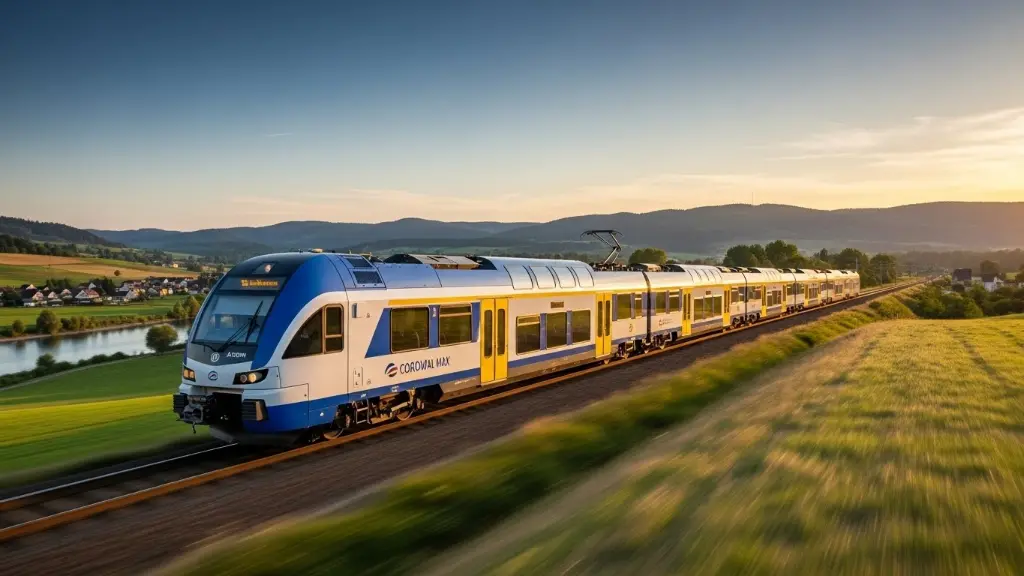
26 Coradia Max double-decker trains will boost regional capacity starting December 2026
Alstom has signed a contract to supply 26 additional Coradia Max double-decker trains to Baden-Württemberg’s rail authority, marking another significant investment in Germany’s regional rail network.
The new trains will be phased into service starting in December 2026, bringing modern, high-capacity rolling stock to one of Germany’s most economically important states.
The Deal at a Glance
| Detail | Information |
|---|---|
| Manufacturer | Alstom |
| Train Type | Coradia Max (double-decker EMU) |
| Quantity | 26 trains |
| Customer | Baden-Württemberg rail authority (NVBW) |
| Delivery Start | December 2026 |
| Purpose | Regional passenger services |
What Is the Coradia Max?
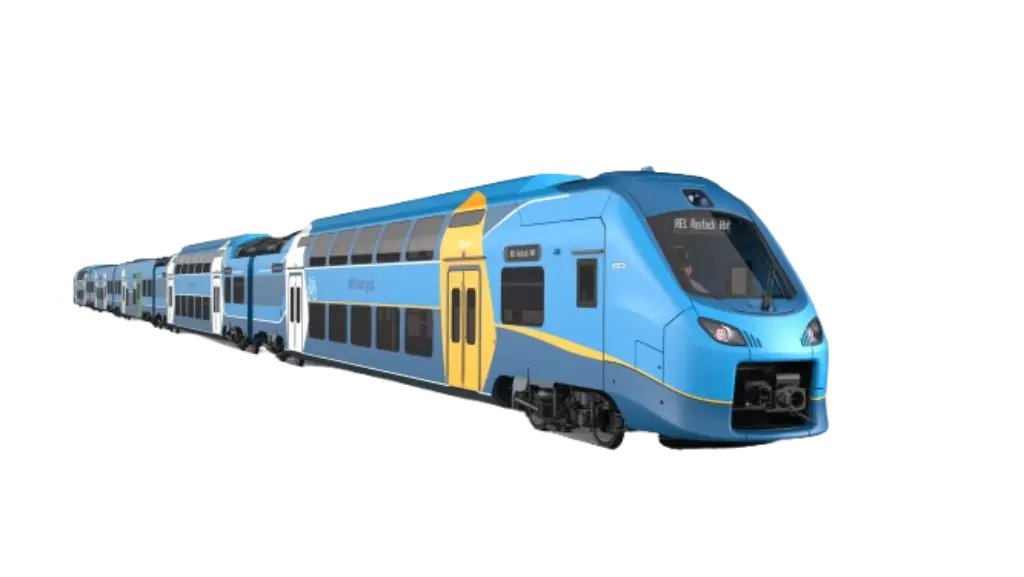
The Coradia Max is Alstom’s latest generation of double-decker electric multiple units (EMUs), designed specifically for high-capacity regional services.
Key Features
| Feature | Details |
|---|---|
| Configuration | Double-decker design for maximum passenger capacity |
| Traction | Electric (overhead catenary) |
| Speed | Up to 160 km/h |
| Accessibility | Low-floor entry areas, wheelchair spaces, accessible toilets |
| Comfort | Air conditioning, Wi-Fi, power outlets, modern passenger information systems |
| Sustainability | Energy-efficient design, regenerative braking, recyclable materials |
The Coradia Max platform represents Alstom’s answer to Germany’s growing demand for regional trains that can handle heavy commuter flows while meeting modern comfort and environmental standards.
Why Baden-Württemberg Needs New Trains
Baden-Württemberg, home to Stuttgart, Karlsruhe, Heidelberg, and Freiburg, is one of Germany’s most densely populated and economically powerful states. Its regional rail network faces significant challenges:
Growing Demand
- Population: Over 11 million residents
- Economic Powerhouse: Home to Mercedes-Benz, Porsche, Bosch, and SAP
- Commuter Flows: Heavy daily traffic between Stuttgart and surrounding cities
- Tourism: Black Forest, Lake Constance, and Rhine Valley attract millions of visitors
- University Cities: Heidelberg, Freiburg, Tübingen generate student commuter traffic
Aging Fleet
Many regional trains in Baden-Württemberg date from the 1990s and early 2000s. The new Coradia Max trains will:
- Replace older, less efficient rolling stock
- Increase passenger capacity on crowded routes
- Improve reliability and reduce maintenance costs
- Enhance passenger comfort and accessibility
- Meet stricter environmental standards
The Deutschland-Ticket Effect
Since the introduction of the €49 Deutschland-Ticket in May 2023, regional train usage has surged across Germany. Baden-Württemberg has seen particularly strong growth, putting pressure on existing capacity. New double-decker trains are essential to meet this increased demand.
Where Will the Trains Operate?
While specific route assignments have not been confirmed, Baden-Württemberg’s busiest regional corridors are likely candidates:
| Route | Current Situation |
|---|---|
| Stuttgart S-Bahn network | Heavily used suburban services |
| Stuttgart — Karlsruhe | Major intercity regional corridor |
| Stuttgart — Heilbronn | Commuter-heavy route |
| Karlsruhe — Basel | Rhine Valley traffic |
| Stuttgart — Tübingen — Reutlingen | University commuter route |
| Mannheim — Heidelberg — Stuttgart | Key economic corridor |
The double-decker configuration is particularly suited to routes with high passenger volumes but limited train frequency, allowing more travelers per service without increasing the number of trains.
Alstom’s Growing Presence in Germany
This contract reinforces Alstom’s position as a major supplier to the German rail market. The company has significant manufacturing and engineering presence in Germany following its acquisition of Bombardier Transportation in 2021.
Alstom in Germany
| Facility | Focus |
|---|---|
| Salzgitter | Train manufacturing |
| Hennigsdorf (Berlin) | Train manufacturing, engineering |
| Braunschweig | Signaling and rail control |
| Mannheim | Components and services |
The Coradia Max trains for Baden-Württemberg will be manufactured at Alstom’s German facilities, supporting local employment and supply chains.
Previous German Orders
Alstom has secured numerous German regional rail contracts in recent years:
| Customer | Trains | Type |
|---|---|---|
| DB Regio | Multiple orders | Various Coradia platforms |
| Go-Ahead | Regional services | Coradia Continental |
| LNVG (Lower Saxony) | Coradia Max | Double-decker EMUs |
| Various Länder | Ongoing | Battery and hydrogen trains |
Technical Specifications: Coradia Max
The Coradia Max platform offers flexibility and modern technology:
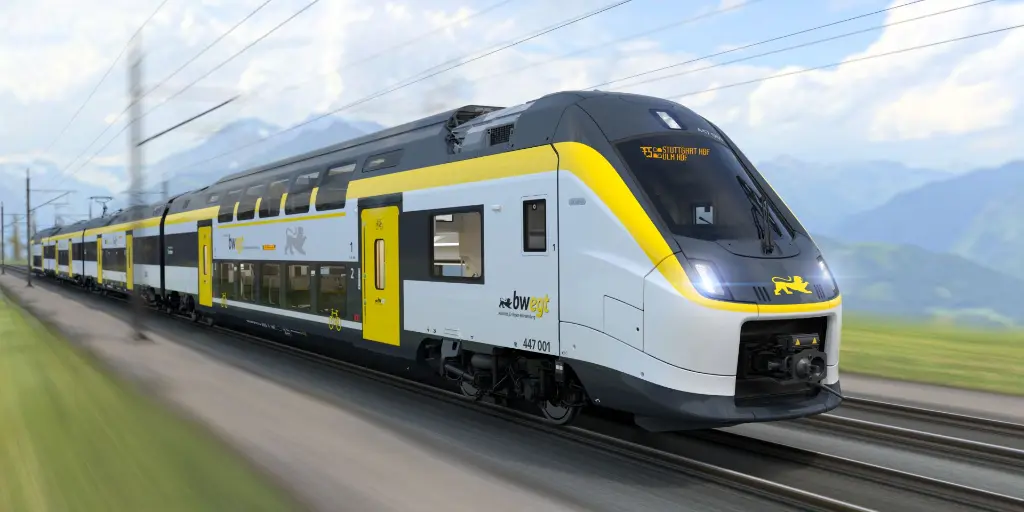
Design Philosophy
| Aspect | Approach |
|---|---|
| Capacity | Maximized through double-deck design |
| Modularity | Configurable length (3-6 cars) |
| Interoperability | Designed for German rail network standards |
| Maintenance | Predictive maintenance systems, easy component access |
Passenger Features
| Feature | Benefit |
|---|---|
| Wide doors | Fast boarding and alighting, reduced dwell times |
| Open gangways | Movement between cars, increased capacity |
| Large windows | Natural light, scenic views |
| Modern lighting | LED systems with adjustable brightness |
| Real-time information | Screens showing next stops, connections, delays |
| Quiet zones | Designated areas for peaceful travel |
| Family areas | Dedicated spaces with extra room |
| Bike storage | Spaces for bicycles (Germany’s strong cycling culture) |
Environmental Performance
| Feature | Impact |
|---|---|
| Regenerative braking | Energy recovery during deceleration |
| Lightweight construction | Reduced energy consumption |
| Efficient HVAC | Lower power usage for heating/cooling |
| LED lighting | Reduced electricity consumption |
| Recyclable materials | End-of-life sustainability |
| Noise reduction | Quieter operation for lineside communities |
Timeline and Rollout
| Milestone | Expected Date |
|---|---|
| Contract Signed | 2024 |
| Manufacturing Begins | 2025 |
| First Train Delivery | December 2026 |
| Testing and Commissioning | 2026-2027 |
| Full Fleet in Service | 2027-2028 (estimated) |
The Commissioning Process
New trains in Germany undergo rigorous testing before entering passenger service:
- Factory Acceptance Tests — Initial testing at Alstom facilities
- Dynamic Testing — Trial runs on the rail network
- Homologation — Approval by Federal Railway Authority (EBA)
- Driver Training — Familiarization for train operators
- Passenger Service — Gradual introduction on scheduled routes
Impact on Passengers
What Travelers Can Expect
| Before | After |
|---|---|
| Older trains with dated interiors | Modern, bright, comfortable carriages |
| Limited capacity on peak services | More seats, less crowding |
| Variable accessibility | Consistent step-free access |
| Inconsistent Wi-Fi/power | Reliable connectivity throughout |
| Higher maintenance delays | Improved reliability |
For Commuters
The new double-decker trains will be particularly welcome for daily commuters who currently face:
- Standing-room-only conditions on peak services
- Older rolling stock with less comfortable seating
- Less reliable trains requiring more maintenance
- Limited power outlets for working during commute
For Tourists
Visitors to Baden-Württemberg will benefit from:
- More comfortable journeys to Black Forest destinations
- Better connections around Lake Constance
- Modern trains on the scenic Rhine Valley routes
- Improved accessibility for travelers with luggage
The Bigger Picture: Germany’s Regional Rail Investment
The Baden-Württemberg order is part of a nationwide push to modernize Germany’s regional rail fleet.
Why Germany Is Investing Now
| Driver | Explanation |
|---|---|
| Climate Goals | Shift passengers from cars to trains |
| Deutschland-Ticket Success | Increased ridership demands increased capacity |
| Aging Fleet | Many trains from 1990s-2000s need replacement |
| EU Regulations | Accessibility requirements (TSI PRM) |
| Competition | Private operators raising quality expectations |
| Reliability Crisis | DB’s punctuality problems demand better equipment |
Other Recent German Train Orders
| State/Operator | Manufacturer | Trains | Type |
|---|---|---|---|
| Schleswig-Holstein | Stadler | FLIRT | Single-deck EMU |
| Bavaria | Siemens | Mireo | Various configurations |
| Lower Saxony | Alstom | Coradia Max | Double-decker EMU |
| North Rhine-Westphalia | Various | Multiple | Mixed fleet renewal |
| Baden-Württemberg | Alstom | Coradia Max | Double-decker EMU |
Challenges Ahead
While the new trains represent good news, challenges remain:
Infrastructure Constraints
New trains are only as good as the tracks they run on. Baden-Württemberg’s rail network faces:
- Capacity bottlenecks around Stuttgart
- Stuttgart 21 project delays affecting regional services
- Track maintenance backlogs causing speed restrictions
- Signaling limitations on some routes
Delivery Risks
The European rail industry has faced supply chain challenges:
- Component shortages (semiconductors, specialized parts)
- Skilled labor constraints
- Testing and approval delays
- Previous orders running behind schedule
Transition Period
Introducing new trains while maintaining existing services requires careful planning:
- Driver training on new equipment
- Maintenance facility adaptation
- Timetable adjustments
- Public communication about changes
What This Means for German Rail Travel
Short Term (2024-2026)
- Existing trains continue operating
- Anticipation builds for new fleet
- Testing of first units begins late 2026
Medium Term (2026-2028)
- Gradual introduction of Coradia Max trains
- Older trains progressively withdrawn
- Passenger experience improves on equipped routes
Long Term (2028+)
- Modern fleet fully operational
- Higher capacity supporting continued ridership growth
- Template for other German states’ modernization
For Rail Enthusiasts
The arrival of new Coradia Max trains will be of interest to train spotters and photographers:
Spotting Opportunities
| Phase | What to See |
|---|---|
| 2025 | Test trains at Alstom facilities |
| 2026 | First units on test runs in Baden-Württemberg |
| 2026-2027 | Gradual introduction on passenger services |
| 2027+ | Full fleet in regular operation |
Technical Interest
- Latest Alstom platform technology
- German engineering and manufacturing
- Modern passenger amenities
- Double-decker design evolution
Conclusion
The order for 26 Coradia Max double-decker trains represents a significant step forward for Baden-Württemberg’s regional rail network. As one of Germany’s most economically dynamic and densely populated states, the region urgently needs modern, high-capacity rolling stock to meet growing demand.
For passengers, the new trains promise:
- More capacity — Double-decker design means more seats
- Greater comfort — Modern interiors with contemporary amenities
- Better reliability — New trains mean fewer breakdowns
- Improved accessibility — Meeting current standards for all travelers
- Environmental benefits — Efficient, sustainable technology
For Germany’s rail system, the order demonstrates continued commitment to regional rail investment, even as the national network faces criticism for delays and reliability issues. New trains alone will not solve all problems, but they are an essential component of a functioning railway.
The first Coradia Max trains will enter service in December 2026. For the commuters of Stuttgart, Karlsruhe, and beyond, that date cannot come soon enough.
Stay Updated:
- Follow Alstom announcements at alstom.com
- Check Baden-Württemberg transport news at nvbw.de
- Track German rail developments at eurailpress.de
More capacity. More comfort. Coming December 2026.