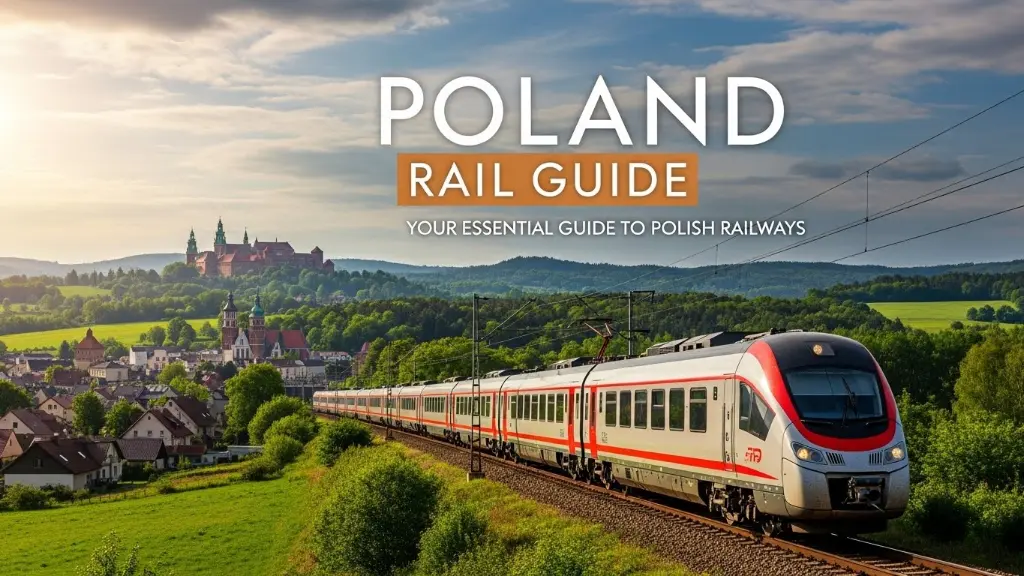
Rail Travel in Poland – Europe’s Rising Rail Star
It is the country that rebuilt its railways from the ashes — twice — and is now racing toward a high-speed future.
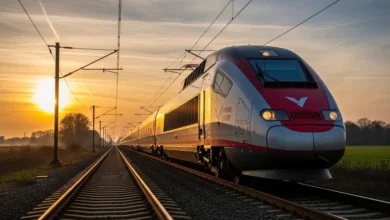
Poland operates one of Central Europe’s largest railway networks, connecting historic cities, Baltic beaches, and the wild Tatra Mountains. The flagship Pendolino trains whisk passengers from Warsaw to Kraków in 2 hours 15 minutes, while slower services wind through landscapes that have witnessed centuries of European history.
Polish trains are affordable, improving rapidly, and connect to a dozen European countries. From the medieval market squares of Kraków to the shipyards of Gdańsk, from the forests of Białowieża to the peaks of Zakopane, Poland’s railways open a country that surprises and rewards the curious traveler.
This is your complete guide to exploring Poland by train.
Poland by Train: The Overview
| Fact | Details |
|---|---|
| Total Network | ~19,300 km of railway lines |
| Main Operator | PKP Intercity (long-distance), Polregio (regional) |
| Private Operators | Leo Express, FlixTrain (limited routes) |
| Premium Service | EIP (Express InterCity Premium) — Pendolino trains |
| Maximum Speed | 200 km/h (EIP Pendolino), 250 km/h capable |
| International Connections | Germany, Czech Republic, Austria, Slovakia, Lithuania, Ukraine, Belarus |
| Eurail/Interrail | Valid on PKP Intercity and Polregio (reservation required for EIP/EIC) |
Why Train Travel Works in Poland
- Affordability: Polish trains are significantly cheaper than Western European equivalents.
- Improving Quality: Major investment is transforming the network — new trains, upgraded tracks, modernized stations.
- Key Destinations: Direct trains connect Warsaw, Kraków, Gdańsk, Wrocław, Poznań, and Łódź.
- International Gateway: Direct connections to Berlin, Prague, Vienna, and beyond.
- Historic Access: Trains reach Auschwitz-Birkenau, Malbork Castle, and dozens of UNESCO sites.
- Scenic Variety: From Baltic beaches to Tatra peaks, Polish landscapes reward slow travel.
The History: Rebuilding a Nation’s Railways
Poland’s railway history is inseparable from its turbulent national story — a tale of construction, destruction, and renewal.
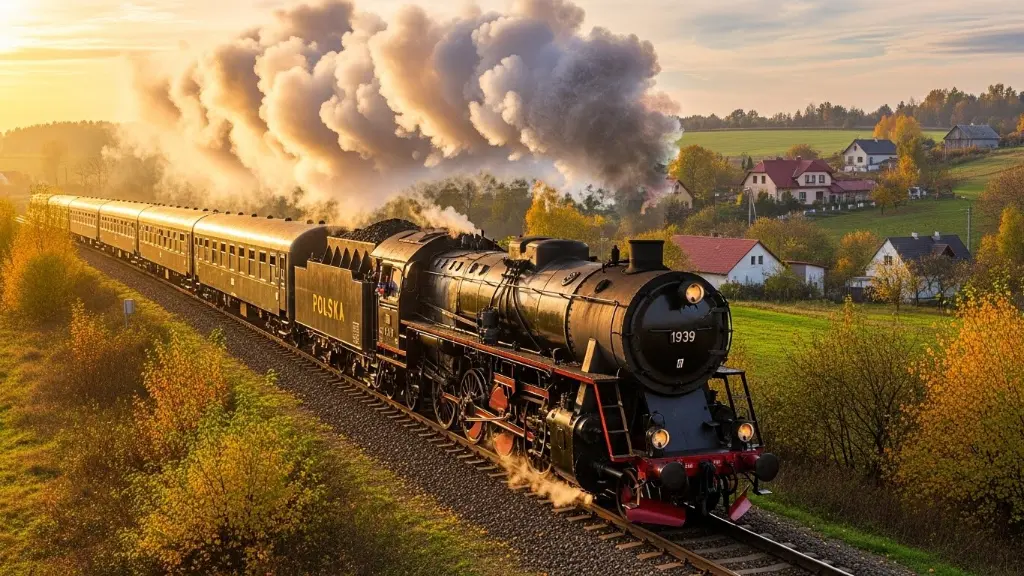
The Partition Era (1842-1918)
Poland did not exist as an independent state when railways arrived in Europe. The territory was divided between three empires: Prussia (Germany), Austria-Hungary, and Russia.
Each empire built railways for its own purposes:
- Prussian Poland: Dense network connecting to Berlin and the German industrial heartland
- Austrian Galicia: Lines linking Kraków and Lwów (now Lviv, Ukraine) to Vienna
- Russian Poland: Broad-gauge lines connecting Warsaw to St. Petersburg and Moscow
When Poland regained independence in 1918, it inherited three incompatible railway systems — different gauges, different technical standards, different operating cultures.
The Interwar Republic (1918-1939)
The new Polish Republic worked to unify its railways. Polskie Koleje Państwowe (PKP) — Polish State Railways — was established in 1926.
PKP standardized gauge and operations, built new lines connecting previously separate regions, and created an integrated national network. By 1939, Poland had a functioning modern railway system.
Then came September 1, 1939.
Destruction and Rebuilding (1939-1989)
World War II devastated Polish railways. Bombing, sabotage, and deliberate destruction left the network in ruins. Warsaw’s main station was reduced to rubble.
After the war, communist Poland rebuilt the railways as a priority. By the 1970s, PKP operated one of Eastern Europe’s densest networks. But decades of underinvestment, political priorities, and outdated equipment took their toll.
By 1989, when communism collapsed, Polish railways were extensive but aging.
Transformation and Investment (1989-Present)
The post-communist transition was difficult. PKP was restructured, divided into separate companies, and faced competition from roads and airlines.
But the 21st century brought new investment:
- 2014: EIP Pendolino service launched (Warsaw-Kraków in 2h 15min)
- 2015-present: Massive EU-funded track upgrades
- 2020s: New rolling stock, station renovations, electrification projects
- Future: High-speed rail planned (Centralny Port Komunikacyjny project)
Today, Polish railways are in the midst of their biggest transformation since the 1920s.
The Operators: Who Runs Polish Trains?
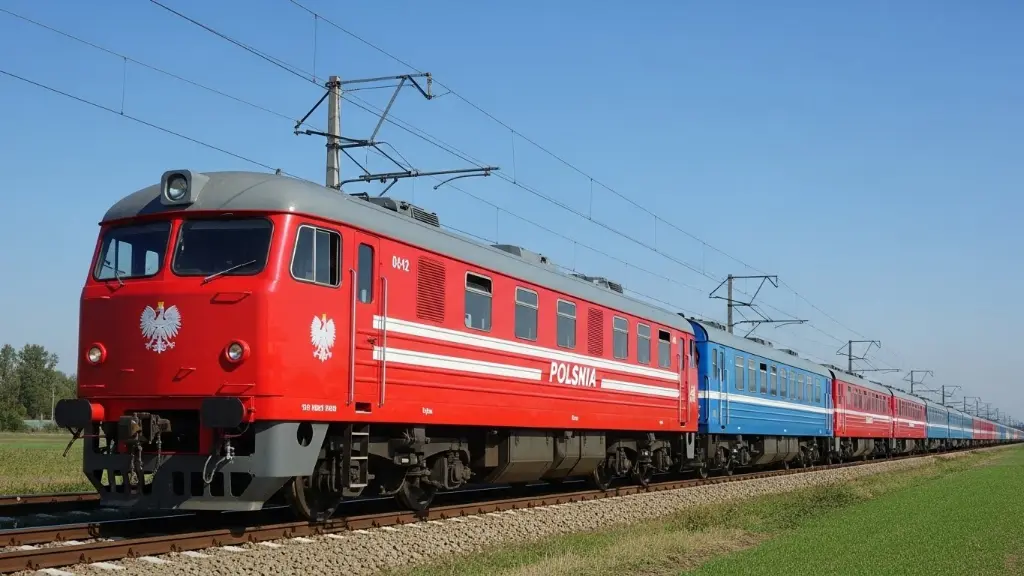
PKP Intercity (Long-Distance National Operator)
PKP Intercity is Poland’s main long-distance operator, running all EIP, EIC, IC, and TLK trains.
| Aspect | Details |
|---|---|
| Ownership | State-owned (PKP Group) |
| Network | Nationwide long-distance routes |
| Train Types | EIP (Pendolino), EIC, IC, TLK |
| Key Routes | Warsaw-Kraków, Warsaw-Gdańsk, Warsaw-Wrocław, Warsaw-Poznań |
| Eurail/Interrail | VALID (reservation required for EIP, recommended for EIC/IC) |
| Website | intercity.pl |
PKP Intercity Strengths:
- Nationwide coverage
- Improving service quality
- Competitive pricing
- New Pendolino and Dart trains
PKP Intercity Challenges:
- Some older rolling stock on secondary routes
- Delays more common than Western Europe
- Website can be confusing (improving)
Polregio (Regional Operator)
Polregio operates regional trains across Poland, connecting smaller cities and towns.
| Aspect | Details |
|---|---|
| Ownership | State-owned (majority), regional government stakes |
| Network | Regional routes in all 16 voivodeships (provinces) |
| Train Types | REGIO, interREGIO |
| Eurail/Interrail | VALID (no reservation needed) |
| Website | polregio.pl |
Polregio Strengths:
- Extensive regional coverage
- Affordable prices
- New Impuls and Elf trains on many routes
Polregio Challenges:
- Some routes still use older rolling stock
- Infrequent service on rural lines
- Slower than PKP Intercity
Koleje Mazowieckie (KM)
Regional operator for the Mazowieckie voivodeship (Warsaw region).
| Aspect | Details |
|---|---|
| Network | Warsaw suburban and regional |
| Key Routes | Warsaw commuter network, connections to Łódź area |
| Eurail/Interrail | VALID |
| Website | mazowieckie.com.pl |
Koleje Dolnośląskie (KD)
Regional operator for Lower Silesia (Wrocław region).
| Aspect | Details |
|---|---|
| Network | Lower Silesia regional routes |
| Key Routes | Wrocław connections, Sudeten Mountain routes |
| Eurail/Interrail | VALID |
| Website | kolejedolnoslaskie.eu |
Koleje Wielkopolskie (KW)
Regional operator for Greater Poland (Poznań region).
| Aspect | Details |
|---|---|
| Network | Greater Poland regional routes |
| Key Routes | Poznań connections |
| Eurail/Interrail | VALID |
SKM (Szybka Kolej Miejska)
Urban rail networks in major cities.
| City | Notes |
|---|---|
| Warsaw SKM | S-Bahn style network connecting suburbs |
| Tricity SKM | Gdańsk-Sopot-Gdynia urban railway |
Private Operators
| Operator | Routes | Notes |
|---|---|---|
| Leo Express | Kraków-Prague, some Polish routes | Czech company, expanding in Poland |
| FlixTrain | Limited Polish routes | German budget operator, check current services |
Train Types: A Complete Guide
Poland has a clear hierarchy of train types, from premium Pendolino to local stopping services.
Express InterCity Premium (EIP) — Pendolino
Poland’s flagship high-speed service.
| Feature | Details |
|---|---|
| Train | Alstom Pendolino (ED250) |
| Speed | Up to 200 km/h (capable of 250 km/h when tracks allow) |
| Routes | Warsaw-Kraków, Warsaw-Gdańsk/Gdynia, Warsaw-Wrocław, Warsaw-Katowice, Warsaw-Bielsko-Biała |
| Classes | 2nd Class, 1st Class |
| Amenities | Wi-Fi, power outlets, air conditioning, bistro car, quiet zones |
| Reservation | Mandatory |
| Best For | Fast travel between major cities |
The Pendolino is Poland’s pride — Italian-built tilting trains that represent the country’s railway ambitions. Though track limitations prevent full high-speed operation, these trains offer the fastest and most comfortable travel in Poland.
Express InterCity (EIC)
High-quality long-distance trains, slightly slower than EIP.
| Feature | Details |
|---|---|
| Train | Various (PKP Intercity Dart, older coaches) |
| Speed | Up to 160 km/h |
| Routes | Major inter-city routes nationwide |
| Classes | 2nd Class, 1st Class |
| Amenities | Varies by train — newer Dart trains have Wi-Fi, power; older stock more basic |
| Reservation | Recommended (often required on popular routes) |
| Best For | Long-distance travel when EIP unavailable or too expensive |
InterCity (IC)
Standard long-distance trains.
| Feature | Details |
|---|---|
| Speed | Up to 160 km/h |
| Routes | Secondary long-distance routes, supplement to EIC network |
| Classes | 2nd Class, 1st Class |
| Reservation | Recommended |
| Best For | Routes without EIP/EIC service |
Twoje Linie Kolejowe (TLK)
Budget long-distance trains — slower but significantly cheaper.
| Feature | Details |
|---|---|
| Train | Older coaches, locomotive-hauled |
| Speed | Up to 120 km/h |
| Routes | Long-distance routes, including overnight services |
| Classes | 2nd Class, 1st Class (limited) |
| Amenities | Basic — some compartment seating, older interiors |
| Reservation | Recommended on busy routes |
| Best For | Budget travelers, overnight journeys |
TLK trains are the budget option for long-distance travel. They are slower and less comfortable than EIP/EIC but significantly cheaper. Some TLK services are overnight trains with sleeping accommodations.
Polregio Regional Trains
interREGIO (IR)
Faster regional trains with limited stops.
| Feature | Details |
|---|---|
| Speed | Up to 120 km/h |
| Routes | Inter-regional connections |
| Reservation | Not required |
REGIO (R)
Local stopping trains.
| Feature | Details |
|---|---|
| Speed | Up to 100 km/h |
| Routes | Local connections, all stations |
| Reservation | Not required |
| Best For | Reaching small towns, budget travel |
Night Trains
Poland maintains several overnight train services.
| Feature | Details |
|---|---|
| Routes | Various long-distance routes (e.g., Gdańsk-Zakopane, Warsaw-Wrocław overnight) |
| Accommodation | Seats, couchettes (kuszetka — 6-berth), sleepers (sypialny — 2-3 berth) |
| Operator | PKP Intercity |
| Best For | Long distances, saving accommodation costs |
The Network: Key Routes and Journey Times
Poland’s railway network centers on Warsaw, with main lines radiating to all corners of the country.
From Warsaw
| Destination | Distance | EIP Time | EIC Time | Trains/Day |
|---|---|---|---|---|
| Kraków Główny | 295 km | 2h 15min | 2h 30min | 15+ |
| Gdańsk Główny | 340 km | 2h 40min | 3h 00min | 12+ |
| Gdynia Główna | 360 km | 3h 00min | 3h 20min | 10+ |
| Wrocław Główny | 350 km | 3h 30min | 4h 00min | 10+ |
| Poznań Główny | 310 km | 2h 25min | 2h 45min | 12+ |
| Katowice | 295 km | 2h 30min | 3h 00min | 10+ |
| Łódź Fabryczna | 130 km | 1h 10min | 1h 20min | 20+ |
| Lublin | 170 km | 2h 00min | 2h 30min | 8+ |
| Białystok | 195 km | 2h 00min | 2h 20min | 6+ |
From Kraków
| Destination | Distance | Best Time | Trains/Day |
|---|---|---|---|
| Warsaw | 295 km | 2h 15min (EIP) | 15+ |
| Wrocław | 270 km | 3h 00min | 8+ |
| Gdańsk | 560 km | 5h 30min | 4+ |
| Zakopane | 100 km | 2h 30min | 6+ |
| Katowice | 80 km | 1h 00min | 20+ |
| Prague | 535 km | 7-8h (via Katowice or direct) | 3+ |
From Gdańsk
| Destination | Distance | Best Time | Trains/Day |
|---|---|---|---|
| Warsaw | 340 km | 2h 40min (EIP) | 12+ |
| Kraków | 560 km | 5h 30min | 4+ |
| Poznań | 310 km | 2h 45min | 6+ |
| Szczecin | 360 km | 4h 00min | 4+ |
| Malbork | 50 km | 25min | 15+ |
From Wrocław
| Destination | Distance | Best Time | Trains/Day |
|---|---|---|---|
| Warsaw | 350 km | 3h 30min (EIP) | 10+ |
| Kraków | 270 km | 3h 00min | 8+ |
| Poznań | 165 km | 1h 40min | 10+ |
| Berlin | 350 km | 4h 30min | 4+ |
| Prague | 260 km | 4h 00min | 4+ |
The Price: What Polish Trains Cost
Polish trains are significantly cheaper than their Western European counterparts — one of Europe’s best rail travel values.
EIP (Pendolino) Pricing
| Route | Advance Price | Standard Price | 1st Class |
|---|---|---|---|
| Warsaw → Kraków | 49-99 PLN (€11-22) | 130-170 PLN (€29-38) | 170-250 PLN (€38-55) |
| Warsaw → Gdańsk | 59-109 PLN (€13-24) | 140-180 PLN (€31-40) | 180-260 PLN (€40-58) |
| Warsaw → Wrocław | 59-119 PLN (€13-26) | 150-200 PLN (€33-44) | 190-280 PLN (€42-62) |
| Warsaw → Poznań | 49-89 PLN (€11-20) | 120-160 PLN (€27-36) | 160-230 PLN (€36-51) |
EIC/IC Pricing
| Route | Advance Price | Standard Price |
|---|---|---|
| Warsaw → Kraków | 39-79 PLN (€9-18) | 100-140 PLN (€22-31) |
| Warsaw → Gdańsk | 49-89 PLN (€11-20) | 110-150 PLN (€24-33) |
| Warsaw → Lublin | 29-49 PLN (€6-11) | 60-80 PLN (€13-18) |
TLK Pricing (Budget Option)
| Route | Standard Price |
|---|---|
| Warsaw → Kraków | 49-79 PLN (€11-18) |
| Warsaw → Gdańsk | 55-85 PLN (€12-19) |
| Kraków → Zakopane | 35-50 PLN (€8-11) |
Regional Train Pricing
Polregio and regional operators use distance-based pricing.
| Example Route | Price |
|---|---|
| Kraków → Oświęcim (Auschwitz) | 10-15 PLN (€2-3) |
| Gdańsk → Sopot | 5-8 PLN (€1-2) |
| Warsaw → Łódź (Polregio) | 30-40 PLN (€7-9) |
| Wrocław → Jelenia Góra | 25-35 PLN (€6-8) |
How to Get the Best Prices
- Book Early: “Super Promo” fares (Bilety Promocyjne) appear 30 days before travel and offer 30-50% savings.
- Use the PKP Intercity App: Mobile tickets are sometimes cheaper.
- Consider TLK: For the same route, TLK can cost half the price of EIP.
- Travel Mid-Week: Friday and Sunday trains are most expensive.
- Check Polregio: For shorter distances, regional trains may be cheaper than intercity.
- Group Tickets: Groups of 2-6 get discounts on PKP Intercity.
- Youth/Senior Discounts: Under 26 and over 60 get significant reductions.
Discount Cards and Tickets
| Card/Offer | Who | Discount |
|---|---|---|
| PKP Intercity Discount 37% | Students with Polish student ID (or ISIC card) | 37% off most trains |
| Senior Discount | Over 60 (Polish residents) | 30% off |
| Large Family Card | Polish families with 3+ children | 37-49% off |
| Bilet Podróżnika | All travelers | Unlimited regional trains for a set period |
| Weekend Ticket | All travelers | Unlimited Polregio trains Fri-Sun (regional) |
Rail Passes: Are They Worth It?
Eurail / Interrail Poland Pass
| Pass Type | 3 Days | 4 Days | 5 Days | 8 Days |
|---|---|---|---|---|
| Adult (2nd class) | ~€105 | ~€125 | ~€145 | ~€195 |
| Youth (2nd class) | ~€85 | ~€100 | ~€115 | ~€155 |
What’s Included:
- All PKP Intercity trains (EIP, EIC, IC, TLK)
- All Polregio trains
- Most regional operators (Koleje Mazowieckie, Koleje Dolnośląskie, etc.)
- Reservation fees extra: EIP €7, EIC €5
What’s NOT Included:
- Leo Express (separate tickets)
- FlixTrain (separate tickets)
- Some local/urban operators
Is a Rail Pass Worth It in Poland?
Often YES — unlike Western Europe, Polish trains are cheap enough that the math is close, but passes offer convenience and flexibility.
Example Calculation (1 week, major cities):
Without pass (advance tickets):
- Warsaw → Kraków: 70 PLN (€16)
- Kraków → Wrocław: 80 PLN (€18)
- Wrocław → Poznań: 50 PLN (€11)
- Poznań → Gdańsk: 70 PLN (€16)
- Gdańsk → Warsaw: 80 PLN (€18)
- Total: €79 + ~€25 reservations = €104
With 5-Day Poland Pass:
- Pass: €145
- Reservations: €25
- Total: €170
In this case, advance tickets are cheaper. But if you:
- Travel spontaneously (cannot book ahead)
- Take more trains
- Use regional trains extensively (included, no reservation)
…the pass becomes worthwhile.
Eurail Global Pass
If visiting Poland as part of a larger European trip, the Global Pass is often excellent value:
| Pass Type | 4 Days | 5 Days | 7 Days | 15 Days |
|---|---|---|---|---|
| Adult (2nd class) | ~€295 | ~€335 | ~€410 | ~€545 |
Poland’s lower reservation fees (€5-7 vs. €10-20 in Western Europe) make Global Pass usage more economical here.
Scenic Routes: The Beautiful Journeys
Poland offers diverse scenic railways — from Baltic beaches to mountain peaks, through forests and across historic landscapes.
1. The Tatra Mountain Approach: Kraków → Zakopane
The Route: From Poland’s cultural capital to its mountain heart.
| Details | |
|---|---|
| Distance | ~150 km |
| Duration | 2h 30min – 3h 30min |
| Train Type | TLK, IC |
| Scenery | ★★★★★ |
| Highlight | Foothills, wooden villages, Tatra peaks appearing on the horizon |
The journey from Kraków to Zakopane takes you through the rolling Podhale foothills, past traditional wooden villages, and into the shadow of the Tatras — Poland’s only true Alpine mountains. As you approach Zakopane, the jagged peaks of the High Tatras fill the southern horizon.
Pro Tip: Sit on the RIGHT side for the best mountain views as you approach Zakopane.
2. The Baltic Coast: Gdańsk → Szczecin
The Route: Along Poland’s Baltic shore.
| Details | |
|---|---|
| Distance | ~360 km |
| Duration | 4-5 hours |
| Train Type | IC, EIC |
| Scenery | ★★★★ |
| Highlight | Baltic coast, Słowiński dunes, Pomeranian forests |
This journey follows the Baltic coast through historic Pomerania. The train passes through seaside resorts, near the shifting sand dunes of Słowiński National Park, and through dense coastal forests. Stops include Koszalin and Kołobrzeg (accessible by branch line).
3. The Sudeten Mountains: Wrocław → Jelenia Góra → Szklarska Poręba
The Route: Into the mountains of Lower Silesia.
| Details | |
|---|---|
| Distance | ~130 km |
| Duration | 2-3 hours |
| Train Type | Polregio, Koleje Dolnośląskie |
| Scenery | ★★★★★ |
| Highlight | Karkonosze Mountains, Jelenia Góra valley, mountain resorts |
This regional railway climbs from the Silesian lowlands into the Sudeten Mountains, offering views of the Karkonosze (Giant Mountains) — Poland’s highest range outside the Tatras. The spa towns of Cieplice and Szklarska Poręba are perfect bases for hiking.
Pro Tip: Continue to Harrachov across the Czech border for a scenic international connection.
4. The Białowieża Forest Approach: Warsaw → Białystok → Hajnówka
The Route: To the edge of Europe’s last primeval forest.
| Details | |
|---|---|
| Distance | ~250 km |
| Duration | 3-4 hours |
| Train Type | EIC + Polregio |
| Scenery | ★★★★ |
| Highlight | Podlasie plains, traditional villages, forest approach |
The journey east from Warsaw crosses the flat but beautiful Podlasie region, with its Orthodox churches, wooden villages, and endless forests. Hajnówka is the gateway to Białowieża Forest, home to Europe’s largest bison herd and the continent’s last lowland old-growth forest.
5. The Malbork Fortress Run: Gdańsk → Malbork
The Route: To the world’s largest brick castle.
| Details | |
|---|---|
| Distance | 50 km |
| Duration | 25-30 minutes |
| Train Type | EIP, EIC, Polregio |
| Scenery | ★★★ |
| Highlight | Vistula Delta, Malbork Castle silhouette |
A quick ride from Gdańsk brings you to Malbork, where the UNESCO-listed Teutonic Knights’ castle dominates the skyline. The approach from the train offers excellent views of this medieval fortress — the largest brick building in Europe.
6. The Wieliczka Salt Mine Connection: Kraków → Wieliczka
The Route: To the underground wonder.
| Details | |
|---|---|
| Distance | 15 km |
| Duration | 25 minutes |
| Train Type | Polregio, SKA (suburban) |
| Scenery | ★★ |
| Highlight | Quick access to UNESCO salt mine |
Not scenic, but essential for reaching the Wieliczka Salt Mine — a UNESCO World Heritage site with underground lakes, chapels, and sculptures carved entirely from salt.
7. The Oder Valley: Wrocław → Opole → Kraków (via Katowice alternative)
The Route: Through industrial Silesia with mountain backdrop.
| Details | |
|---|---|
| Distance | ~270 km |
| Duration | 3-4 hours |
| Train Type | EIC, IC |
| Scenery | ★★★★ |
| Highlight | Silesian industrial heritage, Beskid Mountains approach |
This route crosses Upper Silesia — Poland’s industrial heartland — before approaching the Beskid Mountains. The landscape combines industrial heritage (coal mines, steelworks) with natural beauty.
8. The Kashubian Countryside: Gdańsk → Kartuzy → Kościerzyna
The Route: Into the Kashubian lake district.
| Details | |
|---|---|
| Distance | ~60 km |
| Duration | 1-1.5 hours |
| Train Type | Polregio |
| Scenery | ★★★★ |
| Highlight | Rolling hills, lakes, traditional Kashubian villages |
The Kaszuby (Kashubia) region is Poland’s hidden gem — a landscape of forested hills, glacial lakes, and unique Kashubian culture. This regional line offers access to hiking, kayaking, and traditional villages.
9. The Dunajec Valley: Nowy Sącz → Stary Sącz → Muszyna
The Route: Through the Beskid Sądecki mountains.
| Details | |
|---|---|
| Distance | ~50 km |
| Duration | 1 hour |
| Train Type | Polregio |
| Scenery | ★★★★★ |
| Highlight | Mountain valleys, wooden churches, spa towns |
This beautiful branch line penetrates the Beskid Sądecki range, passing traditional villages and the famous wooden churches of the region. The spa town of Krynica-Zdrój is accessible by bus from Muszyna.
10. The Warsaw-Vienna Night Train
The Route: Overnight through Central Europe.
| Details | |
|---|---|
| Distance | ~720 km |
| Duration | 9-10 hours (overnight) |
| Train Type | EuroNight (Chopin) |
| Scenery | ★★★ (what you see at dawn) |
| Highlight | Moravian countryside at sunrise, arrival in Vienna |
The EuroNight “Chopin” connects Warsaw to Vienna overnight. While most of the journey is in darkness, the dawn arrival through the Austrian countryside is lovely — and you wake up in Vienna.
Regional Guide: Poland by Area
Warsaw and Mazovia (Mazowsze)
The capital region — political and transportation heart of Poland.
| Hub | Key Connections | Notes |
|---|---|---|
| Warszawa Centralna | All major Polish cities, Berlin, Vienna, Prague | Main station, underground platforms |
| Warszawa Zachodnia | Some long-distance, regional services | Western station, above ground |
| Warszawa Wschodnia | Eastern Poland, some through trains | Eastern station |
Warsaw Tips:
- Warszawa Centralna has underground platforms — allow time to navigate
- Warszawa Centralna and Warszawa Śródmieście (city center S-Bahn) are connected
- The airport has rail connection via SKM (S-Bahn) to Centralna
Warsaw Highlights:
- Day trip to Łódź (1h 10min)
- Day trip to Toruń (2h 30min — medieval gingerbread city)
- Direct trains to all major Polish cities
Kraków and Lesser Poland (Małopolska)
Poland’s cultural heart — history, mountains, and tragic memory.
| Hub | Key Connections | Notes |
|---|---|---|
| Kraków Główny | Warsaw (2h 15min), Zakopane, Wrocław, Prague | Beautiful 19th-century station, renovated |
| Kraków Płaszów | Some long-distance trains bypass Główny | Secondary station |
Kraków Highlights:
- Auschwitz-Birkenau: Train to Oświęcim (1h 45min), shuttle bus to camp
- Wieliczka Salt Mine: Train or bus (30 min)
- Zakopane: Train (2h 30min) for Tatra Mountains
- Day trip to Kraków from Warsaw is easy (4.5 hours round trip by Pendolino)
Gdańsk and Pomerania (Pomorze)
Baltic coast, shipyard history, and Hanseatic heritage.
| Hub | Key Connections | Notes |
|---|---|---|
| Gdańsk Główny | Warsaw (2h 40min), Kraków, Poznań, Berlin | Historic station, Solidarity history |
| Sopot | 15 min from Gdańsk | Beach resort, spa town |
| Gdynia Główna | 30 min from Gdańsk | Port city, modernist architecture |
Tricity Tips:
- SKM trains connect Gdańsk-Sopot-Gdynia every 10-15 minutes
- Malbork Castle: 25 minutes by fast train
- Frombork (Copernicus connection): 2 hours by regional train
Wrocław and Lower Silesia (Dolny Śląsk)
German heritage, vibrant university city, mountain access.
| Hub | Key Connections | Notes |
|---|---|---|
| Wrocław Główny | Warsaw (3h 30min), Kraków, Poznań, Berlin, Prague | Grand 19th-century station |
Lower Silesia Highlights:
- Sudeten Mountains: Trains to Jelenia Góra, Szklarska Poręba
- Książ Castle: Train to Wałbrzych, then bus
- Valley of Palaces and Gardens: Regional trains through the area
- Easy day trips to Świdnica (Peace Church, UNESCO) and Legnica
Poznań and Greater Poland (Wielkopolska)
Historic heart of Poland, university city, trade fair hub.
| Hub | Key Connections | Notes |
|---|---|---|
| Poznań Główny | Warsaw (2h 25min), Wrocław, Gdańsk, Berlin | Central station with good connections |
Greater Poland Highlights:
- Gniezno: 45 min — first capital of Poland, cathedral
- Kornik Castle: Local connections
- Direct trains to Berlin (3 hours)
Łódź
Poland’s second-largest city, film culture, post-industrial renewal.
| Hub | Key Connections | Notes |
|---|---|---|
| Łódź Fabryczna | Warsaw (1h 10min), underground modern station | Brand new underground station (2016) |
| Łódź Kaliska | Some through trains | Older station, western side |
Łódź Highlights:
- New Fabryczna station is architecturally impressive
- Fast and frequent connections to Warsaw
- Historical factory architecture in Manufaktura district
Silesia (Śląsk) and Katowice
Industrial heartland, now transforming.
| Hub | Key Connections | Notes |
|---|---|---|
| Katowice | Warsaw (2h 30min), Kraków (1h), Wrocław | Major junction, industrial history |
Silesian Highlights:
- Dense rail network connecting industrial towns
- Easy access to Kraków for day trips
- Cross-border connections to Czech Republic
Eastern Poland (Lublin, Białystok, Podlasie)
Less visited, deeply authentic, Orthodox heritage.
| Hub | Key Connections | Notes |
|---|---|---|
| Lublin | Warsaw (2h), Kraków | Renaissance old town |
| Białystok | Warsaw (2h) | Gateway to Białowieża Forest |
| Przemyśl | Kraków, Lviv (Ukraine) | Border town, multicultural history |
Eastern Poland Highlights:
- Białowieża Forest: Train to Hajnówka, then bus
- Zamość (Renaissance ideal city, UNESCO): Bus from Lublin
- Border crossings to Ukraine (current situation varies)
International Connections
Poland’s central European location provides connections to multiple countries.
Germany
| Route | Duration | Operator | Frequency |
|---|---|---|---|
| Warsaw → Berlin | 5h 30min | PKP/DB (Berlin-Warszawa Express) | 4-5 daily |
| Wrocław → Berlin | 4h 30min | PKP/DB | 3-4 daily |
| Poznań → Berlin | 3h 00min | PKP/DB | 5-6 daily |
| Gdańsk → Berlin | 6h 00min | PKP/DB | 2-3 daily |
| Kraków → Berlin | 7h 00min | Via Warsaw or Wrocław | Limited direct |
Germany Tips:
- Berlin-Warszawa Express (BWE) is comfortable with restaurant car
- Some trains are EC (EuroCity) with higher standards
- Reservations recommended but not always mandatory
- Eurail/Interrail valid
Czech Republic
| Route | Duration | Operator | Frequency |
|---|---|---|---|
| Warsaw → Prague | 7h 30min | PKP/ČD | 2-3 daily |
| Wrocław → Prague | 4h 00min | PKP/ČD | 3-4 daily |
| Kraków → Prague | 7h 00min | Leo Express, PKP/ČD | 2-3 daily |
Czech Republic Tips:
- Leo Express offers comfortable service Kraków-Prague
- Some routes via Katowice or Wrocław
- Mountain routes (via Harrachov) are scenic but slow
Austria
| Route | Duration | Operator | Frequency |
|---|---|---|---|
| Warsaw → Vienna | 7-8h day / 9h night | PKP/ÖBB | 2 day + 1 night daily |
| Kraków → Vienna | 6-7h | PKP/ÖBB | 2-3 daily |
Austria Tips:
- EuroNight “Chopin” offers overnight Warsaw-Vienna with sleeper cars
- Day trains are comfortable EC services
- Consider stopping in Brno or Bratislava en route
Slovakia
| Route | Duration | Operator | Frequency |
|---|---|---|---|
| Kraków → Bratislava | 5h 30min | Via Vienna or direct slow | Limited |
| Kraków → Košice | 5h 00min | Via Muszyna/Plaveč | 2-3 daily |
Slovakia Tips:
- Connections are improving but still limited
- Zakopane to Slovakia is better by bus over the mountains
Lithuania
| Route | Duration | Operator | Frequency |
|---|---|---|---|
| Warsaw → Vilnius | 8h (planned faster) | Currently limited, improving | Check current status |
Lithuania Reality Check:
- Direct rail service is limited due to different gauge (Russian broad gauge in Lithuania)
- Buses are currently more practical
- Future high-speed link planned
Ukraine and Belarus
Current Situation:
As of 2024, rail connections to Ukraine and Belarus are affected by the ongoing conflict and political situation. Check current status before planning travel. Historically:
- Kraków → Lviv: 5-6 hours
- Warsaw → Minsk: 10 hours
- Przemyśl is the main border point for Ukraine
Hungary
| Route | Duration | Operator | Frequency |
|---|---|---|---|
| Warsaw → Budapest | 10-11h | Via Bratislava/Vienna or Czech route | 1-2 daily |
| Kraków → Budapest | 9h | Via Košice or Vienna | Limited |
Night Trains
Poland maintains a modest but useful overnight train network.
Domestic Night Trains
| Route | Operator | Accommodation |
|---|---|---|
| Gdańsk → Zakopane | PKP Intercity | Seats, couchettes |
| Warsaw → Wrocław (night TLK) | PKP Intercity | Seats, couchettes |
| Various long-distance TLK | PKP Intercity | Seats, couchettes on some |
International Night Trains
| Route | Train Name | Operator | Accommodation |
|---|---|---|---|
| Warsaw → Vienna | EuroNight “Chopin” | PKP/ÖBB | Seats, couchettes, sleepers |
| Warsaw → Berlin → Paris | Connection via day trains | Various | Change in Berlin |
| Kraków → Prague → Vienna | Various connections | PKP/ČD/ÖBB | Limited direct night options |
Night Train Accommodation Types
| Type | Polish Name | Description | Price Range |
|---|---|---|---|
| Seat | Miejscówka | Reclining seat in open car | 30-60 PLN (€7-14) |
| Couchette (6-berth) | Kuszetka | Bunk in 6-person compartment | 70-120 PLN (€16-27) |
| Couchette (4-berth) | Kuszetka | Bunk in 4-person compartment | 90-140 PLN (€20-31) |
| Sleeper (3-berth) | Sypialny (3os) | Bed in 3-person cabin | 120-180 PLN (€27-40) |
| Sleeper (2-berth) | Sypialny (2os) | Bed in 2-person cabin | 180-280 PLN (€40-62) |
| Sleeper (single) | Sypialny (1os) | Private cabin | 250-400 PLN (€55-89) |
Practical Tips for Polish Train Travel
Buying Tickets
Online (Recommended):
| Website | Best For |
|---|---|
| intercity.pl | PKP Intercity (EIP, EIC, IC, TLK) — best prices, advance discounts |
| polregio.pl | Regional trains |
| koleo.pl | Aggregator — compares all operators, good interface |
| e-podroznik.pl | Another aggregator, sometimes better regional coverage |
PKP Intercity Website Tips:
- English version available
- Registration required for some discounts
- “Bilety Promocyjne” (promotional tickets) offer best prices
- Mobile tickets accepted on all trains
At the Station:
- Ticket machines (kasy biletowe automatyczne) — English available
- Ticket offices (kasy biletowe) — expect queues at busy times
- Can buy regional tickets on the train (small surcharge)
Booking Timeline:
- PKP Intercity tickets open 30 days before travel
- “Super Promo” tickets sell out quickly for popular routes
- Weekend trains fill faster — book ahead
Station Navigation
Polish stations range from beautifully renovated historic buildings to small rural halts.
Key Vocabulary:
- “Odjazdy” = Departures
- “Przyjazdy” = Arrivals
- “Peron” = Platform
- “Tor” = Track
- “Kasa” = Ticket office
- “Poczekalnia” = Waiting room
- “Dworzec Główny” = Main station
- “Przejście podziemne” = Underground passage
Major Station Notes:
Warszawa Centralna:
- Underground platforms — follow signs carefully
- Can be confusing — allow 10-15 minutes before departure
- Connected to Warszawa Śródmieście (suburban)
- Food court and shops upstairs
Kraków Główny:
- Renovated and modernized
- Connected to Galeria Krakowska shopping center
- Clear signage, easy navigation
Gdańsk Główny:
- Historic 19th-century building
- Recently renovated
- Close to old town
Wrocław Główny:
- Grand historic building
- Well-organized platforms
Platform Displays
Polish stations use:
- Yellow posters: Departures (Odjazdy)
- White posters: Arrivals (Przyjazdy)
- Electronic boards with real-time information
Trains are listed by:
- Departure time
- Train number and category (EIP, EIC, IC, TLK, R)
- Destination
- Platform number
On the Train
Finding Your Seat:
- Wagon = Car/carriage number
- Miejsce = Seat number
- Modern trains show car diagram on platform
Reserved vs. Unreserved:
- EIP: All seats reserved
- EIC/IC: Reservation recommended; reserved seats marked
- TLK: Mixed reservation and unreserved
- Regional: No reservations — first come, first served
Luggage:
- Generous allowances
- Overhead racks in most cars
- End-of-car storage in EIP/EIC
- No weight limits enforced
Food and Drink:
- EIP: Bistro car with coffee, snacks, hot meals, beer/wine
- EIC: Some have bistro cars
- TLK: Usually no catering
- Regional: No catering — bring your own
Wi-Fi and Power:
- EIP: Free Wi-Fi, power at all seats
- EIC (newer Dart trains): Wi-Fi, power available
- EIC (older stock): Limited or no Wi-Fi
- TLK: Rarely available
- Regional: Newer trains have power, older do not
Ticket Validation
Important: Unlike some European countries, Polish train tickets do NOT require validation. Just board with your ticket (paper or mobile).
However:
- Check your ticket shows the correct date and train
- Keep your ticket until you leave the destination station
- Inspectors (konduktorzy) check tickets during the journey
Delays and Punctuality
Polish train punctuality has improved significantly but is not Swiss-level:
| Train Type | Punctuality Rate |
|---|---|
| EIP (Pendolino) | ~85-90% within 10 minutes |
| EIC/IC | ~80% within 10 minutes |
| TLK | ~75% within 10 minutes |
| Regional | Variable |
Dealing with Delays:
- Check real-time updates on Koleo app or PKP Intercity app
- Listen for announcements (Polish, sometimes English on major routes)
- Major delays entitle you to partial refund (claim via website)
Common Causes:
- Infrastructure work (ongoing modernization)
- Weather (especially winter)
- International train connections
Weather Considerations
Winter (November-March):
- Delays more common due to snow, ice
- Stations can be cold — dress warmly
- Trains are heated but platforms exposed
- Book sleeper cars for overnight journeys
Summer (June-August):
- Popular routes fill up — book ahead
- Air conditioning on EIP/EIC; variable on older stock
- Mountain routes especially busy
Classes of Service: What to Choose
EIP (Pendolino) Classes
| Class | Features | Who It’s For |
|---|---|---|
| 2nd Class (II klasa) | Comfortable seats, 2+2 layout, power, Wi-Fi | Most travelers |
| 1st Class (I klasa) | Wider seats, 2+1 layout, more legroom, complimentary beverage, quieter | Business travelers, comfort seekers |
Is 1st Class Worth It on EIP?
The price difference is usually 30-50%. For trips over 2 hours, 1st class offers noticeably more space and a quieter atmosphere. For shorter journeys, 2nd class is comfortable enough.
EIC/IC Classes
| Class | Features |
|---|---|
| 2nd Class (II klasa) | Standard seating, compartments or open cars |
| 1st Class (I klasa) | More space, sometimes compartments with 6 seats vs. 8 |
Quality varies by train — newer Dart trains are much better than older locomotive-hauled stock.
TLK Classes
Generally 2nd class only, with older compartment seating (6 seats per compartment). Basic but serviceable for budget travel.
Regional Trains
Usually single class. Quality varies dramatically — some new Impuls/Elf trains are excellent; some older stock is tired but functional.
Common Mistakes to Avoid
1. Underestimating Warsaw’s Underground Stations
Warszawa Centralna has underground platforms that can be confusing. Allow 10-15 minutes to find your train, especially for first-time visitors.
2. Missing the Super Promo Tickets
PKP Intercity’s promotional fares are significantly cheaper but sell out quickly. Booking 2-3 weeks ahead can save 50% compared to walk-up prices.
3. Assuming All Trains Are Equal
The difference between a new Pendolino and an old TLK train is enormous. Check what rolling stock you are booking.
4. Not Checking Train Categories
“EIP” and “TLK” on the same route may have 2-hour journey time differences. Verify train type, not just destination.
5. Forgetting About Polregio
For shorter distances (under 100 km), Polregio regional trains can be cheaper and just as fast as PKP Intercity.
6. Ignoring the Koleo App
Koleo is an excellent Polish train app that aggregates all operators, provides real-time delays, and enables mobile ticketing. Essential for navigating Polish rail.
7. Booking Last-Minute for Popular Routes
Warsaw-Kraków and Warsaw-Gdańsk on Friday evenings and Sunday afternoons fill up quickly. Book ahead.
8. Expecting Western European Standards Everywhere
While EIP and new EIC trains are excellent, some regional routes still use older equipment. Set expectations accordingly.
9. Missing Auschwitz-Birkenau Station Details
Oświęcim station is 2 km from the Auschwitz museum. Shuttle buses and local buses connect, but plan time for the connection.
10. Not Checking International Train Status
International services (especially to eastern neighbors) can change due to political situations, maintenance, or border issues. Verify current schedules before booking.
Traveling to Auschwitz-Birkenau by Train
This deserves special attention, as it is one of Poland’s most important visitor destinations.
Getting There
| From | Train to Oświęcim | Duration | Trains/Day |
|---|---|---|---|
| Kraków | Direct regional (Polregio) | 1h 45min – 2h | 8-12 |
| Kraków | Via Katowice (faster but change) | 1h 20min + change | Various |
| Warsaw | Via Kraków or Katowice | 4-5 hours | Various |
The Journey
- Trains to Oświęcim depart from Kraków Główny
- Get off at Oświęcim station
- The station is ~2 km from the Auschwitz I museum
- Shuttle buses and local buses connect station to museum
- Walking takes ~25-30 minutes
Practical Tips
- Book museum entry in advance at auschwitz.org
- Free shuttle buses run between Auschwitz I and Birkenau (3 km apart)
- Allow 4-6 hours for a meaningful visit
- Return trains run until evening — check schedule
- Last train back to Kraków is typically around 20:00-21:00
Organized Tours vs. Independent Travel
Train + Independent:
- More flexible
- Cheaper
- Requires more planning
- Must book museum entry separately
Organized Tour (from Kraków):
- Bus transport included
- Guide included
- Museum entry arranged
- More expensive, less flexibility
Both approaches work. Independent train travel is straightforward for those comfortable navigating.
Traveling with Bikes
Poland is increasingly bike-friendly, and train bike policies are reasonable.
Bike Policies
| Train Type | Bikes Allowed? | Reservation? | Cost |
|---|---|---|---|
| EIP | Limited spaces | Required | 9.50 PLN (~€2) |
| EIC/IC | Yes, in bike spaces | Recommended | 9.50 PLN |
| TLK | Yes | Not required | 5.30 PLN |
| Regional | Yes | Not required | Free – 5.30 PLN |
Tips for Cyclists
- Look for the bike symbol (rower) when booking
- Bike spaces are limited on EIP — book early
- Regional trains are more flexible
- Some stations have bike storage or rental
Future Developments: What’s Coming
Poland is investing heavily in railway modernization.
Centralny Port Komunikacyjny (CPK)
A massive planned transportation hub including:
- New central airport between Warsaw and Łódź
- New high-speed rail network radiating from the hub
- Warsaw-Łódź in 25 minutes (currently 1h 10min)
- Kraków, Wrocław, Poznań, Gdańsk at high-speed
- Target completion: 2030s (subject to delays)
Ongoing Improvements
| Project | Status | Impact |
|---|---|---|
| Rail Baltica | Under construction | High-speed Warsaw-Vilnius-Tallinn |
| CMK Upgrade | Ongoing | Faster Warsaw-Kraków (potentially under 2 hours) |
| E30 Corridor | Ongoing | Faster Warsaw-Berlin-EU connections |
| Electrification | Ongoing | More routes with electric traction |
| Station Renovations | Ongoing | Modernizing major stations |
| New Rolling Stock | Ongoing | More Pendolino and Dart trains |
What This Means for Travelers
- Journey times will continue improving
- Service quality rising
- More frequent departures on major routes
- Better international connections
- Some construction disruptions during upgrades
The Polish Railway Experience
Polish railways offer something distinct from their Western European counterparts.
Value for Money: Polish trains offer some of Europe’s best value. A 2-hour journey on a modern Pendolino for €15-20 is remarkable.
Improving Quality: The gap between Polish and Western European railways is narrowing rapidly. New Pendolino and Dart trains rival anything in Germany or France.
Historic Weight: Polish railways pass through landscapes heavy with history. The train to Oświęcim follows tracks that once carried deportees. The stations of Gdańsk witnessed the birth of Solidarity. This is not just transportation — it is a journey through the 20th century.
The East-West Bridge: Poland is where Western and Eastern Europe meet on rails. German efficiency merges with Eastern European character. The Berlin-Warszawa Express is more than a train — it is a link between two Europes.
Warmth and Hospitality: Polish hospitality extends to the railways. Conductors are generally helpful, fellow passengers often friendly, and the dining car conversation can be memorable.
The Best Polish Train Journeys: A Summary
| Journey | Why It’s Special |
|---|---|
| Warsaw → Kraków (EIP) | Poland’s flagship route, 2h 15min, modern Pendolino |
| Kraków → Zakopane | Into the Tatra Mountains, wooden villages, peak views |
| Warsaw → Gdańsk (EIP) | Baltic-bound, Solidarity history awaits |
| Wrocław → Szklarska Poręba | Sudeten Mountains, spa towns, scenic climbing |
| Gdańsk → Malbork | Quick ride to the world’s largest brick castle |
| Warsaw → Białystok → Hajnówka | Gateway to primeval forest, Orthodox heritage |
| Baltic Coast (Gdańsk → Szczecin) | Coastal journey through Pomerania |
| Warsaw → Vienna (EuroNight) | Overnight through Central Europe, wake in Vienna |
| Warsaw → Berlin (BWE) | The East-West connection, comfortable express |
| Dunajec Valley (Nowy Sącz area) | Mountain valleys, wooden churches, hidden Poland |
Summary
Poland’s railways are a country in transition — in the best sense.
The Pendolino slices through the Polish countryside at 200 km/h, connecting Warsaw to Kraków in time for lunch. New stations gleam with renovation. Apps and mobile tickets work seamlessly.
And yet.
Old TLK trains still rumble through the night, their compartments carrying students home on crowded Friday evenings. Small-town stations preserve the atmosphere of another era. The journey east from Warsaw crosses a landscape that grows quieter, more forested, more mysterious with each kilometer.
Poland offers extraordinary value. For the price of a fast-food meal in Paris, you can ride a modern high-speed train. For a few euros more, you can sleep in a couchette from Gdańsk to Zakopane, waking to the Tatra Mountains.
The network reaches everywhere that matters: the medieval heart of Kraków, the shipyards of Gdańsk where Solidarity began, the salt mines of Wieliczka, the terrible grounds of Auschwitz-Birkenau, the primeval forest of Białowieża.
From Poland, trains continue west to Berlin and beyond, south to Prague and Vienna, and — soon — north to the Baltic states. This is Central Europe’s crossroads, and the railways reflect that position.
Yes, some trains are old. Yes, delays happen. Yes, the website can be confusing.
But when the Pendolino accelerates out of Warsaw Centralna, or the mountain train climbs toward Zakopane, or the night train rattles through the Polish darkness toward Vienna — you understand why Poland is investing billions in its railways.
This is a country that has rebuilt its railways twice — after 1918 and after 1945. It is building them again now, faster and better than ever.
The best is yet to come.
Ready to explore?
- Book PKP Intercity at intercity.pl
- Check all operators at koleo.pl
- Download the Koleo or PKP Intercity app for mobile tickets and real-time info
Book ahead for promotional prices. Check train categories carefully. And let Poland’s railways carry you from the Baltic to the Tatras, from the shipyards to the salt mines, through history and into the heart of Central Europe.
Szczęśliwej podróży! (Happy travels!)