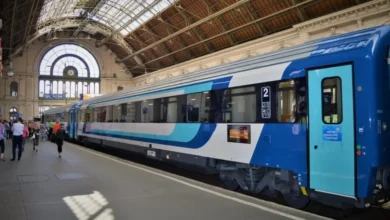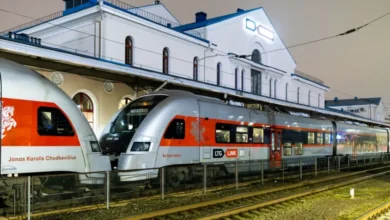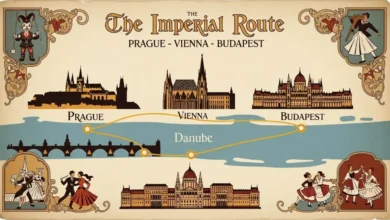
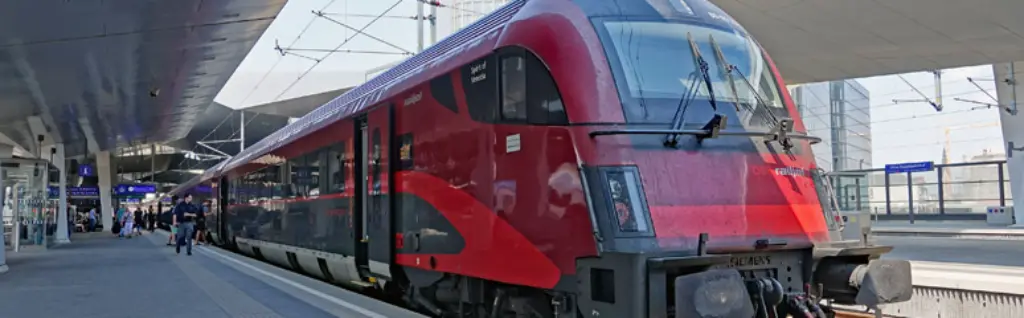
For the first time in decades, a direct train will connect the Czech and Danish capitals — transforming travel between Central and Northern Europe
In 2026, railway history will be made when the first direct passenger train in generations departs Prague bound for Copenhagen. The new ComfortJet service will bridge two European capitals that have long been separated by the inconvenience of multiple connections, lengthy journey times, and the frustrating reality that flying seemed the only sensible option.
No more.
The Prague-Copenhagen ComfortJet will offer travelers something remarkable: a single train, one ticket, no changes — crossing four countries, spanning nearly 900 kilometers, and connecting the Gothic spires of Bohemia to the cycling boulevards of Scandinavia.
This is how European rail travel is supposed to work. And in 2026, it finally will.
The Historic Connection at a Glance
| Detail | Information |
|---|---|
| Route | Prague (Czechia) → Copenhagen (Denmark) |
| Service Name | ComfortJet |
| Launch Date | 2026 |
| Operator | RegioJet (Czech private operator) |
| Distance | Approximately 870-900 km |
| Countries Traversed | Czechia, Germany, (Denmark via Fehmarn or ferry) |
| Significance | First direct Prague-Copenhagen service in modern era |
| Service Type | Long-distance international express |
Why This Route Matters
The Current Situation: A Journey of Frustration
Today, traveling by train from Prague to Copenhagen requires patience, planning, and multiple platform changes:
| Current Option | Connections | Journey Time | Complexity |
|---|---|---|---|
| Via Berlin | 2-3 changes | 9-11 hours | High |
| Via Hamburg | 2-3 changes | 10-12 hours | High |
| Night train combinations | Multiple | 12+ hours | Very high |
| Flight | Direct available | 1h 30min + airport time | Low but soulless |
The lack of a direct train has pushed travelers toward flights — quick but environmentally costly, convenient but disconnected from the landscapes between these two great cities.
What Changes in 2026
From 2026, the direct service will eliminate the need for 2-3 changes, offering a single ticket and a relaxed through travel experience. Rail will finally become a practical and competitive option against flights, providing a seamless journey from Central to Northern Europe.
The Symbolic Significance
The Prague-Copenhagen ComfortJet represents more than just a new train service. It symbolizes:
| Aspect | Meaning |
|---|---|
| European Integration | Connecting Central Europe to Scandinavia seamlessly |
| Rail Renaissance | Private operators filling gaps national railways left |
| Sustainable Travel | Viable alternative to short-haul flights |
| Market Demand | Travelers want direct trains — operators are responding |
| Historic Reconnection | Reviving routes that existed before aviation dominated |
The Route: Prague to Copenhagen
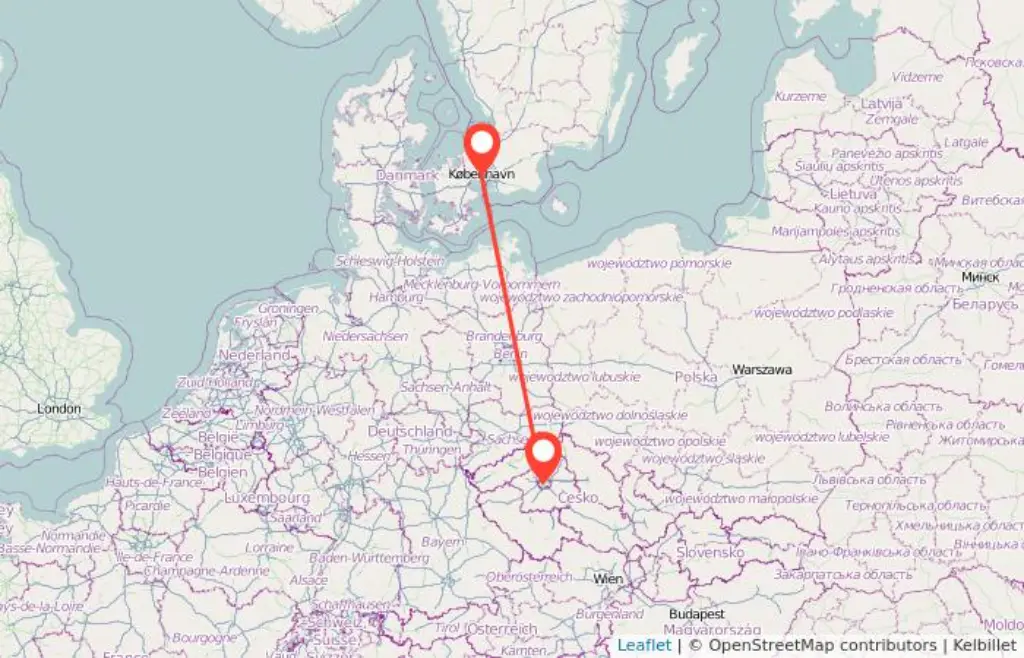
The Geography
The journey from Prague to Copenhagen crosses the heart of Northern Europe:
| Section | From → To | Distance | Highlights |
|---|---|---|---|
| Bohemia | Prague → Czech-German border | ~120 km | Elbe Valley, Bohemian countryside |
| Saxony | Border → Dresden | ~40 km | Saxon Switzerland, Dresden stop |
| Saxony to Brandenburg | Dresden → Berlin | ~190 km | German plains, Berlin stop |
| Northern Germany | Berlin → Hamburg | ~290 km | North German Plain |
| To Denmark | Hamburg → Copenhagen | ~330 km | Fehmarn crossing or ferry |
| Total | Prague → Copenhagen | ~870-900 km | Four countries, one train |
Likely Routing Options
Two main routing possibilities exist:
Option A: Via Fehmarn Belt (Future)
The Fehmarn Belt Fixed Link, currently under construction, will eventually provide a direct rail tunnel between Germany and Denmark. However, with ComfortJet launching in 2026, initial services will likely use:
Option B: Via Rødby-Puttgarden Ferry (Current)
This classic route loads trains onto ferries for the Baltic crossing — a unique experience where passengers can disembark and enjoy the sea crossing from the ferry deck.
Key Stops Along the Route
| Station | Country | Significance |
|---|---|---|
| Praha hlavní nádraží | Czechia | Historic Prague main station, journey start |
| Dresden Hauptbahnhof | Germany | Saxon capital, Baroque architecture |
| Berlin Hauptbahnhof | Germany | German capital, Europe’s largest station |
| Hamburg Hauptbahnhof | Germany | Major hub, gateway to Scandinavia |
| Odense | Denmark | Hans Christian Andersen’s birthplace (possible stop) |
| København H | Denmark | Copenhagen Central, journey end |
RegioJet: The Operator Behind ComfortJet
Who Is RegioJet?
RegioJet is a Czech private railway operator that has revolutionized train travel in Central Europe through low fares, high-quality service, and aggressive expansion.
| Aspect | Details |
|---|---|
| Founded | 2009 |
| Headquarters | Brno, Czech Republic |
| Parent Company | Student Agency Group |
| Business Model | Low-cost, high-quality rail service |
| Domestic Routes | Prague-Brno-Ostrava, Prague-Vienna, others |
| International Routes | Prague-Vienna, Prague-Kraków, Prague-Budapest, expanding |
| Fleet | Refurbished coaches, modern amenities |
| Signature | Yellow trains, onboard stewards, free refreshments |
RegioJet’s Competitive Approach
RegioJet stands out with pricing significantly lower than national railways, free onboard service including coffee, tea, and newspapers, and personal steward service throughout the journey. They offer multiple comfort classes from budget to business, an easy online booking system, and maintain a strong punctuality record.
International Expansion
RegioJet has steadily expanded beyond Czech borders:
| Route | Launch | Status |
|---|---|---|
| Prague → Vienna | 2017 | Established, popular |
| Prague → Kraków | 2018 | Direct service to Poland |
| Prague → Budapest | 2020 | Connecting to Hungary |
| Prague → Rijeka (seasonal) | Various | Summer Adriatic service |
| Prague → Berlin | Existing | Key corridor |
| Prague → Copenhagen | 2026 | The new flagship |
The Copenhagen service represents RegioJet’s most ambitious international expansion yet — extending reach into Scandinavia and establishing a true pan-European network.
The ComfortJet Experience
What to Expect Onboard
Based on RegioJet’s established service standards, ComfortJet passengers can anticipate:
| Feature | Details |
|---|---|
| Seating Classes | Standard, Relax, Business options |
| Seat Configuration | Comfortable spacing, tables, power outlets |
| Free Refreshments | Coffee, tea, water, newspapers |
| Onboard Stewards | Personal service throughout journey |
| Entertainment | Wi-Fi, streaming portal |
| Catering | Hot meals and snacks available for purchase |
| Quiet Zones | Designated silent areas |
| Family Areas | Space for traveling with children |
| Luggage | Generous allowance, no extra fees |
| Accessibility | Wheelchair-accessible carriages |
Comfort Classes Explained
Standard class offers comfortable seating with basic amenities and free refreshments, ideal for budget travelers. Relax class provides extra legroom, enhanced recline, and priority boarding for comfort seekers. Business class delivers premium seats, included meals, and lounge access where available, catering to business travelers.
The Long-Distance Difference
For an 8+ hour journey, RegioJet’s service model is particularly well-suited:
| Need | ComfortJet Solution |
|---|---|
| Staying Hydrated | Free drinks throughout journey |
| Working Remotely | Power outlets, Wi-Fi, tables |
| Eating | Onboard catering, hot meals available |
| Relaxation | Comfortable seats, entertainment options |
| Rest | Reclinable seats, quiet zones |
| Movement | Space to walk, stretch in aisles |
Journey Time and Schedule
Expected Timing
The total journey time is estimated at 8-10 hours, depending on routing and stops, with an average speed of ~100 km/h. Initial departure frequency is likely 1-2 daily services, with possibilities for morning departures arriving in the afternoon or evening departures for an overnight travel element.
Comparative Journey Times
| Route | ComfortJet | Current Best Rail | Flight (city to city) |
|---|---|---|---|
| Prague → Copenhagen | ~8-10 hours | 9-12 hours (with changes) | 4-5 hours (including airport) |
While flight time is shorter, when factoring airport transfers, security, and boarding, the train becomes genuinely competitive for those who value:
- Productive travel time
- Environmental responsibility
- City-center to city-center convenience
- Comfort and space
- The journey experience itself
Sample Schedule (Speculative)
| Time | Station | Activity |
|---|---|---|
| 07:00 | Praha hl.n. | Departure |
| 09:00 | Dresden Hbf | Brief stop |
| 10:45 | Berlin Hbf | Stop (passengers can board/alight) |
| 12:30 | Hamburg Hbf | Stop |
| 15:00 | Ferry/Fehmarn | Baltic crossing |
| 17:00 | København H | Arrival |
Note: Actual schedule to be confirmed by RegioJet
The Baltic Crossing: A Unique Feature
The Traditional Route: Train Ferry
Until the Fehmarn Belt tunnel opens (expected 2029), trains between Germany and Denmark use a unique hybrid system:
| Element | Description |
|---|---|
| German Terminal | Puttgarden (northern tip of Fehmarn island) |
| Danish Terminal | Rødby (Lolland island) |
| Crossing | Scandlines ferry |
| Duration | ~45 minutes |
| Experience | Train rolls onto ferry; passengers can explore ship |
The Ferry Experience
Passengers may disembark onto the ferry deck to enjoy onboard facilities like restaurants, shops, and observation decks. The Baltic Sea views and passing ships create a unique appeal, making this one of the last train-ferry crossings in Europe before passengers return to the train prior to arrival.
The Future: Fehmarn Belt Tunnel
The Fehmarn Belt Fixed Link is an immersed rail and road tunnel, the longest of its kind in the world at 18 km. Expected to open in 2029, it will save approximately 1 hour compared to the ferry. While ComfortJet launches in 2026 likely using the ferry, services will transition to the tunnel post-2029, enabling faster and more frequent travel.
Ticket Pricing and Booking
Expected Price Structure
Based on RegioJet’s pricing philosophy (significantly below national railways), anticipated fares:
| Class | Expected Price Range | Notes |
|---|---|---|
| Standard | €29-59 | Early booking lowest |
| Relax | €49-89 | Extra comfort premium |
| Business | €79-129 | Full premium experience |
Comparison with Alternatives
ComfortJet (2026) offers direct, comfortable travel for €29-129 with a journey time of 8-10 hours. Current rail options cost €80-180+, take 9-12 hours, and involve stressful changes. Budget airlines range from €30-150 but offer a basic experience, while legacy airlines cost €100-300+ for a standard experience, both taking about 4-5 hours total including airport time.
Booking Channels
Tickets will be available via the RegioJet Website (regiojet.com), the RegioJet App, at Train Stations counters, through selected Travel Agencies, and on Aggregators like Trainline and Omio.
Booking Tips
Book early for the lowest fares 2-3 months ahead. Choose flexible dates for cheaper mid-week travel. Return tickets offer a small discount. Use RegioJet Credit for future discounts and take advantage of student/youth discounts for additional savings.
What This Means for European Rail Travel
Filling the Gap
The Prague-Copenhagen ComfortJet addresses a glaring hole in European rail connectivity:
| Gap | ComfortJet Solution |
|---|---|
| Central Europe → Scandinavia | Direct connection established |
| Czech Republic → Denmark | No longer requires German rail expertise |
| Private Operator Expansion | Proves private railways can serve international routes |
| Price Competition | Undercuts traditional operators |
The Private Operator Revolution
RegioJet’s Copenhagen service exemplifies a broader trend where private operators like Leo Express, Flixtrain, Italo, Iryo, and Westbahn are expanding across Europe, creating a pan-European rail network that national railways never built.
Impact on Travel Patterns
This new service will likely lead to flight substitution, attracting new travelers who wouldn’t fly. Intermediate markets like Dresden and Berlin gain new options, while tourism growth and business travel are expected to increase due to easier, productive access.
Cities Along the Route: What to See
Prague (Praha)
The journey’s starting point — one of Europe’s best-preserved historic cities.
| Highlight | Description |
|---|---|
| Prague Castle | World’s largest ancient castle complex |
| Charles Bridge | Gothic bridge lined with Baroque statues |
| Old Town Square | Astronomical Clock, Gothic churches |
| Jewish Quarter | Historic synagogues and cemetery |
| Beer Culture | World’s best beer at world’s lowest prices |
| Best For | History, architecture, nightlife, culture |
Dresden
Saxony’s capital, risen from wartime destruction to Baroque splendor. Highlights include the Frauenkirche, Zwinger Palace, Semperoper, and the stunning Elbe Riverfront.
Berlin
Germany’s capital offers history and culture with landmarks like the Brandenburg Gate, Berlin Wall Memorial, Museum Island, and the Reichstag. Its diverse neighborhoods like Kreuzberg and Mitte make it perfect for history, nightlife, and art.
Hamburg
Germany’s gateway to the sea features the Elbphilharmonie, the UNESCO-listed Speicherstadt, the legendary Reeperbahn, and the bustling Port of Hamburg with its Sunday Fish Market.
Copenhagen (København)
The journey’s destination — Scandinavian design, hygge, and progressive living.
| Highlight | Description |
|---|---|
| Nyhavn | Colorful harbor houses, the iconic Copenhagen image |
| Tivoli Gardens | Historic amusement park in city center |
| Little Mermaid | The famous harbor statue |
| Christiania | Free town within the city |
| Cycling Culture | Experience the world’s best cycling city |
| New Nordic Cuisine | Noma legacy, world-class dining |
| Best For | Design, food, cycling, progressive culture |
Practical Travel Tips
Before You Travel
Book early for best prices 2-3 months ahead. Ensure you have valid ID for all four countries. Download the RegioJet app for mobile tickets. Plan any onward connections if stopping en route. The currency varies: Czech Koruna (Prague), Euro (Germany), and Danish Krone (Copenhagen), though cards are widely accepted.
Packing for the Journey
Bring a neck pillow for the long trip, a power bank to supplement outlets, headphones for entertainment, and snacks and a water bottle. Dress in layers as temperatures vary, and bring entertainment like a book or tablet. An eye mask is useful for rest.
Onboard Strategies
Arrive early to settle in. Introduce yourself to the steward. Explore the train to find quiet or café cars. Use the free refreshments. Don’t forget to take photos during the ferry crossing. Set multiple alarms to ensure you don’t miss your stop.
At the Baltic Crossing
Leave the train to experience the ferry. Go to the upper deck for sea views and fresh air. Note the return time to avoid missing the train’s departure. Buy Danish treats like pastries and coffee on board. Take photos documenting this unique train-on-a-boat experience.
Rail Passes and the ComfortJet
Eurail/Interrail Validity
| Question | Expected Answer |
|---|---|
| Will Eurail work? | Uncertain — RegioJet is a private operator |
| Current RegioJet Policy | Eurail NOT valid on existing RegioJet services |
| Likely ComfortJet Policy | Eurail probably NOT valid, but confirm |
| Alternative | Book ComfortJet directly — often cheaper anyway |
Why Direct Booking Often Wins
For many travelers, booking ComfortJet directly will be simpler and cheaper than using a rail pass. RegioJet fares (€29-129) are often lower than the total cost of a rail pass plus reservation fees, offering flexibility and included amenities without the extra hassle.
The Competition: How Others Will Respond
Deutsche Bahn’s Position
DB currently offers multiple-change journeys via ICE/EC. Their response will likely focus on improving connections rather than matching prices. Cooperation with RegioJet on ticketing is possible, and infrastructure adjustments will be necessary to accommodate the new service.
DSB (Danish Railways)
DSB operates Copenhagen-Hamburg services. With RegioJet entering their territory, they may improve service, compete on price, or cooperate. The connection traffic could ultimately benefit DSB’s regional services.
Airlines
Airlines currently dominate the market. They view rail as a moderate threat appealing to a different segment. Their response may include maintaining frequencies or lowering fares, leveraging their speed advantage against the train’s environmental and comfort benefits.
Environmental Impact
Rail vs. Air: The Carbon Comparison
| Mode | Prague-Copenhagen CO2 (per passenger) |
|---|---|
| Train | ~25-35 kg |
| Flight | ~150-180 kg |
| Train Advantage | 80-85% lower emissions |
The Climate Argument
The EU’s climate goals encourage rail over short-haul flights. Growing consumer awareness and corporate travel policies support sustainable travel. The flight shame movement and younger travelers’ preferences are driving a cultural shift toward ground transport.
ComfortJet as Climate Action
Each passenger choosing ComfortJet over flying saves approximately 125-150 kg CO2 per journey, equivalent to driving ~600 km in an average car. Multiplied across thousands of passengers annually, this creates a meaningful positive impact.
Historical Context: Trains Between Prague and Scandinavia
The Golden Age (Pre-WWII)
In the early 20th century, through coaches connected Prague, Berlin, and Copenhagen. The interwar period saw international expresses like the famous “Nord Express” linking capitals with prestige services, taking a similar travel time to today’s, albeit with different technology.
The Iron Curtain Years (1945-1989)
The Cold War division placed Czechoslovakia behind the Iron Curtain, restricting cross-border travel. East and West developed separate systems, and the Berlin division further complicated transit, limiting services significantly.
Post-1989 Recovery
Since the 1990s, borders opened, but rail links were slow to develop. EU expansion in the 2000s improved connectivity, while the 2010s focused on high-speed domestic routes. By the 2020s, private operators began filling international gaps, leading to the current renaissance.
2026: The Renaissance
The ComfortJet represents a return to the pre-war vision of a connected European railway network — where a traveler could board a train in one capital and step off in another, crossing countries as seamlessly as crossing streets.
Future Possibilities
Network Expansion
If Prague-Copenhagen succeeds, RegioJet could consider expanding to Stockholm, Oslo, or Amsterdam. Connections like Warsaw-Copenhagen and Vienna-Copenhagen could also become viable market access points.
Service Improvements Post-Fehmarn
When the Fehmarn Belt Tunnel opens (2029):
| Improvement | Impact |
|---|---|
| Faster Journey | ~1 hour time saving |
| More Frequency | No ferry capacity constraints |
| Better Reliability | Weather-independent crossing |
| Night Train Potential | Overnight services become more viable |
The Broader Vision
This service hints at a future with a Night Train Revival, a Seamless Europe connected by single operators, a Climate Transition replacing regional flights, and Private Innovation driving competition and improvement.
Who Should Take This Train?
Ideal Passengers
Eco-conscious travelers will value the lower carbon footprint. No-fly travelers find a practical alternative. Train enthusiasts get a new route experience. Budget travelers enjoy competitive pricing and free refreshments. Working travelers benefit from Wi-Fi and tables. Families appreciate the space and comfort. Multi-city trippers can stop en route. Senior travelers enjoy the comfort and accessibility. Students find affordable international travel.
When to Choose Flight Instead
Choose flying if you are under extreme time pressure, have tight onward connections, face physical limitations with long seated journeys, or find flights cheaper during peak price periods.
Conclusion: A New Chapter in European Rail
In 2026, when the first ComfortJet glides out of Prague’s hlavní nádraží bound for Copenhagen, it will carry more than passengers.
It will carry the promise of a connected Europe — one where capitals are linked not just by budget airlines and business flights, but by trains that respect the land they cross and the time of those who travel.
For too long, Prague and Copenhagen have been artificially separated. Both are jewels of European culture: Prague with its medieval heart and Habsburg grandeur, Copenhagen with its Scandinavian design and progressive soul. Yet traveling between them by train meant navigating a maze of connections, operators, and timetables.
ComfortJet changes everything.
For Travelers:
- A direct journey for the first time in generations
- Competitive pricing from a proven low-cost operator
- Comfort and service throughout an 8+ hour experience
- The chance to see Dresden, Berlin, and Hamburg along the way
- An environmentally responsible choice
For European Rail:
- Proof that private operators can build international networks
- Competition that improves service across the market
- A template for future trans-European routes
- Progress toward a flight-free future for medium distances
For the Planet:
- Every passenger choosing rail over air saves ~150 kg of CO2
- Demonstration that sustainable travel can be practical and affordable
- Contribution to European climate goals
The Iron Curtain fell 35 years ago. But the true reconnection of Europe happens train by train, route by route, passenger by passenger.
In 2026, Prague to Copenhagen becomes possible in a single journey, on a single train, with a single ticket.
The Golden Age of European rail travel isn’t in the past.
It’s just getting started.
Booking Information:
- RegioJet at regiojet.com
- Service details expected 2025
- Bookings likely to open early 2026
Stay Updated:
- RegioJet announcements at regiojet.com/news
- European rail news at railtech.com
- Railway Gazette at railwaygazette.com
Prague to Copenhagen. Direct. 2026. ComfortJet.