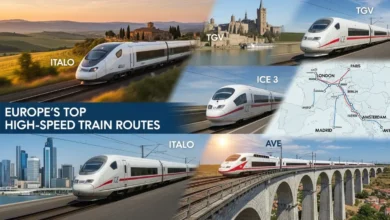
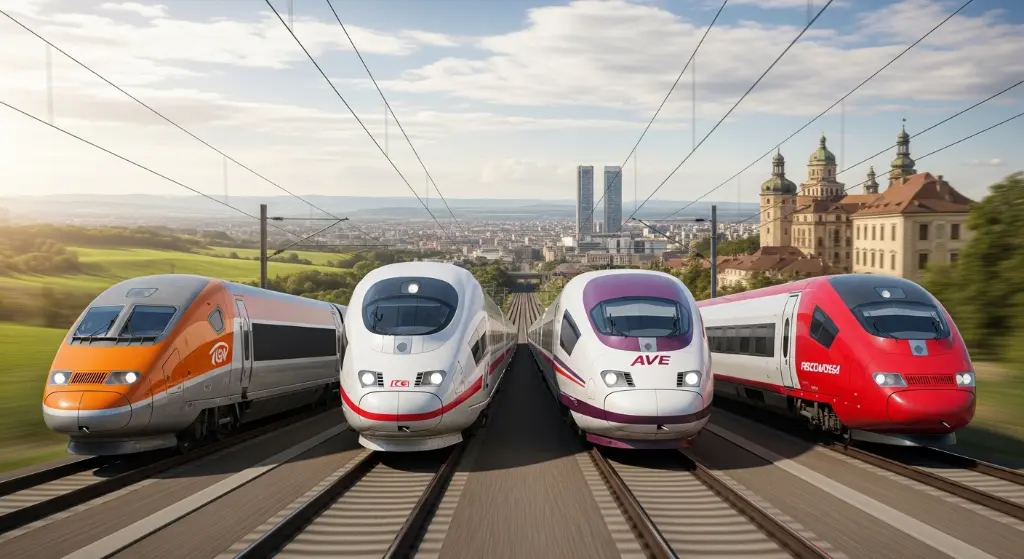
Europe’s high-speed rail network is powered by four iconic train brands: France’s TGV, Germany’s ICE, Spain’s AVE, and Italy’s Frecciarossa. Each represents the pinnacle of rail innovation in its country — but which one truly offers the best experience?
Let’s compare speed, comfort, reliability, and onboard experience to see how these high-speed giants stack up.
Speed Comparison
- TGV (France): Up to 320 km/h
- ICE (Germany): Up to 300 km/h
- AVE (Spain): Up to 310 km/h
- Frecciarossa (Italy): Up to 300 km/h
In real-world travel, journey time depends more on route design and stops than maximum speed. All four brands offer competitive city-to-city times that rival short-haul flights.
Comfort and Cabin Experience
Frecciarossa often stands out for its premium interior design and executive-class cabins. Italy’s high-speed trains feel modern and refined, especially on the Rome–Milan corridor.
TGV trains offer comfortable seating and quiet carriages, particularly on business-heavy routes like Paris–Lyon.
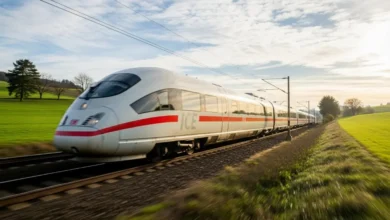
ICE is known for spacious layouts and smooth rides across Germany’s extensive rail network.
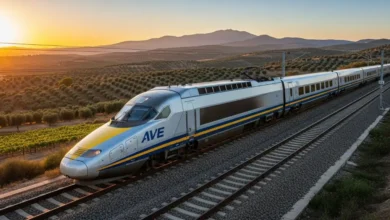
AVE delivers a comfortable and punctual service between Spanish cities, with strong reliability on the Madrid–Barcelona line.
City-Center Advantage
All four high-speed brands operate from central stations, eliminating airport transfers and reducing total travel time. This is one of the reasons high-speed rail is reshaping European mobility, as explained in High-Speed Trains in Europe – The Complete Guide.
Environmental Impact
Electric high-speed trains produce significantly fewer emissions than airplanes. For travelers focused on reducing their footprint, rail travel supports the broader shift toward Sustainable Travel in Europe.
Which Train Is Best for Business Travel?
For business-class experience and premium seating, Frecciarossa and TGV often receive top ratings. ICE offers strong Wi-Fi connectivity across Germany, while AVE balances comfort with punctual performance.
Which Train Is Best for Tourists?
If scenic value matters, ICE routes through Bavaria and TGV routes toward southern France offer impressive landscapes. AVE connects historic Spanish cities efficiently, while Frecciarossa combines art cities like Rome, Florence, and Milan in just a few hours.
High-Speed Rail vs Flying
When comparing these trains to short-haul flights, total journey time often favors rail — especially under 1,000 kilometers. See a deeper comparison in Night Trains vs Flying: What Really Saves Time?.
The Verdict
There is no single “best” high-speed train in Europe. TGV excels in speed and cross-border reach. ICE offers network depth. AVE is highly punctual. Frecciarossa delivers premium comfort.
The real winner? Europe’s integrated high-speed rail system — giving travelers multiple world-class options that outperform short-haul aviation in comfort, sustainability, and convenience.
Explore the best routes in our guide to Best High-Speed Train Routes in Europe.