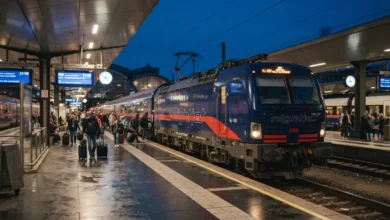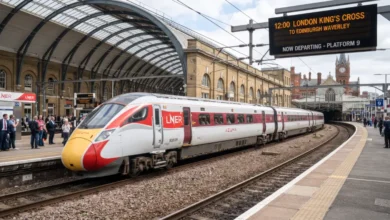
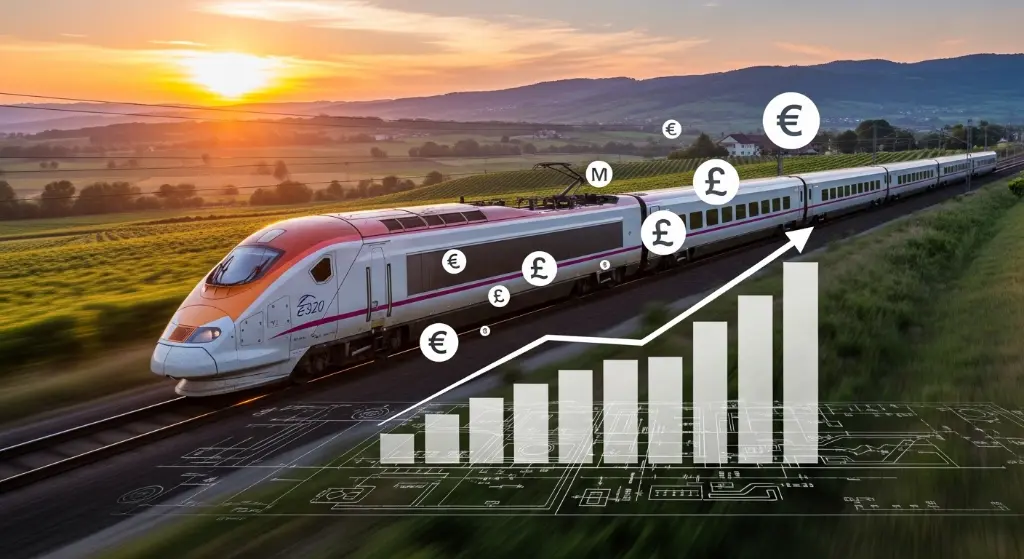
Across Europe, governments are pouring billions of euros into rail infrastructure. High-speed corridors are expanding, night trains are returning, and cross-border connections are being modernized at record speed.
But why is rail suddenly such a priority — and what does it mean for travelers?
Climate Goals Are Driving Investment
The European Union has committed to reducing greenhouse gas emissions dramatically over the coming decades. Transportation accounts for a significant share of emissions, and short-haul flights are among the most carbon-intensive forms of travel per kilometer.
Rail — especially electric high-speed trains — offers a cleaner alternative. Investing in rail supports the shift toward Sustainable Travel in Europe and aligns with long-term climate strategies.
High-Speed Rail Is Competing With Aviation
Modern high-speed trains can reach 300–320 km/h, making them competitive with flights on routes under 1,000 kilometers. When factoring in airport transfers and security procedures, trains often save time door-to-door.
See how major routes compare in Train vs Plane: Route-by-Route Travel Time Comparison in Europe.
Strengthening Cross-Border Connectivity
European rail investment is not limited to domestic lines. Governments are funding new cross-border corridors to improve connectivity between major capitals and economic hubs.
Projects linking cities like Paris, Berlin, Vienna, Milan, and Madrid are part of a broader effort to create a seamless continental rail network.
Revival of Night Trains
Night trains, once in decline, are making a comeback. Governments see overnight rail as a sustainable replacement for short-haul flights while offering travelers time-efficient city-to-city travel.
Explore how overnight rail is transforming mobility in Why Night Trains Are Replacing Short-Haul Flights.
Economic Growth and Regional Development
Rail infrastructure stimulates local economies. Faster connections between cities increase tourism, improve labor mobility, and strengthen trade relationships within the EU.
High-speed corridors also reduce congestion at airports and highways, easing pressure on overburdened transport systems.
Digitalization and Modern Passenger Experience
Investment is not only about tracks and trains. Governments and rail operators are modernizing ticketing systems, improving onboard Wi-Fi, upgrading stations, and integrating rail with urban transit networks.
This modernization makes train travel more attractive, particularly for younger and sustainability-conscious travelers.
The Long-Term Vision: A Rail-First Europe
Rather than banning flights outright, European policymakers are creating conditions where rail becomes the logical first choice for medium-distance travel.
As infrastructure improves and new routes open, high-speed rail could redefine how Europeans — and visitors — move across the continent.
To understand how this transformation began, explore our complete overview in High-Speed Trains in Europe – The Complete Guide.