For decades, the low-cost airline industry dominated European travel, making it cheap and easy to hop from Paris to Berlin or Vienna to Rome in a couple of hours. But a quiet revolution has been building on the rails, and by 2026, it has become a full-blown movement.
Across Europe, travelers are increasingly swapping cramped airplane seats and stressful airport security lines for the gentle rhythm of the rails. Night trains are no longer a nostalgic relic of the past; they are the vanguard of a modern, sustainable, and surprisingly convenient travel revolution.
But why is this modal shift happening now? Here are the five core reasons why night trains are rapidly replacing short-haul flights across the continent.
1. The Environmental Imperative: Beating “Flight Shame”
The single biggest driver of the night train renaissance is environmental awareness. The concept of Flygskam (flight shame), which originated in Sweden, has gone mainstream across Europe.
Travelers are increasingly aware of their carbon footprint, and the numbers are stark:
- A short-haul flight emits approximately 255 grams of CO2 per passenger per kilometer.
- A modern electric night train emits as little as 14 to 30 grams of CO2 per passenger per kilometer.
By choosing a night train over a flight, a traveler can reduce their carbon emissions for that journey by up to 90%. For eco-conscious millennials and Gen Z travelers, this isn’t just a preference; it’s a moral imperative. Night trains allow travelers to explore the continent while aligning with their values of sustainable, low-impact tourism.
2. Government Policy and the “Flight Ban” Momentum
Governments and the European Union are actively intervening to level the playing field, which has historically been skewed in favor of aviation (which enjoys tax exemptions on jet fuel and no VAT on tickets).
- France’s Short-Haul Flight Ban: France has implemented laws banning domestic short-haul flights on routes where a direct train alternative of under 2.5 hours exists (e.g., Paris to Bordeaux, Paris to Lyon).
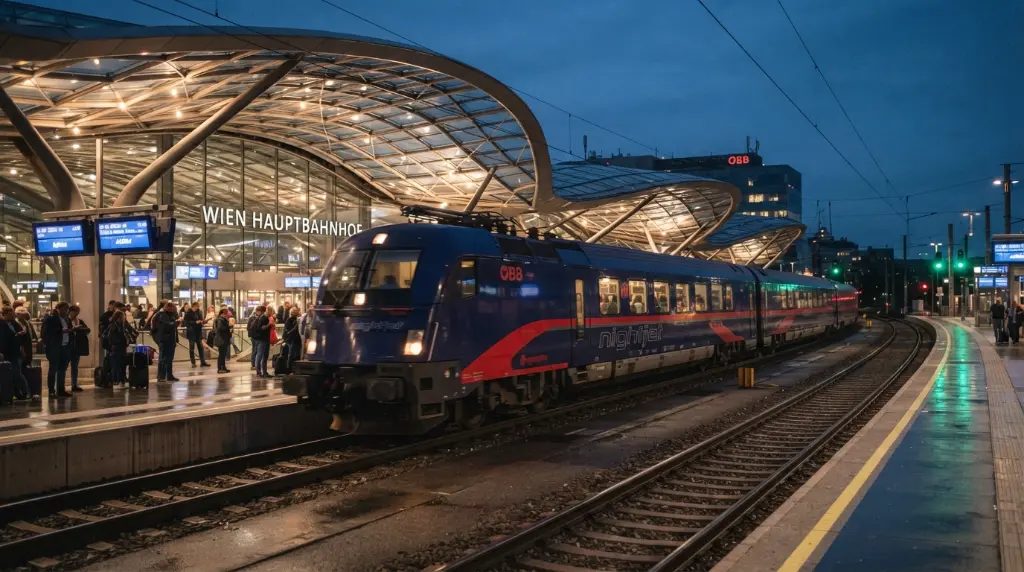
- Austria’s Rail Push: The Austrian government has actively worked to replace the heavily subsidized Vienna-Salzburg shuttle flights with expanded, high-frequency ÖBB Railjet and Nightjet services.
- The EU Green Deal: The European Commission is heavily investing in the Trans-European Transport Network (TEN-T), providing billions in funding specifically to revive and expand cross-border night train connections, making them a cornerstone of EU climate policy.
As flying becomes more regulated and taxed, rail is being positioned as the preferred, state-supported alternative.
3. The “City-Center to City-Center” Convenience
Let’s do the math on a typical short-haul European trip, for example, from Berlin to Munich (approx. 500 km):
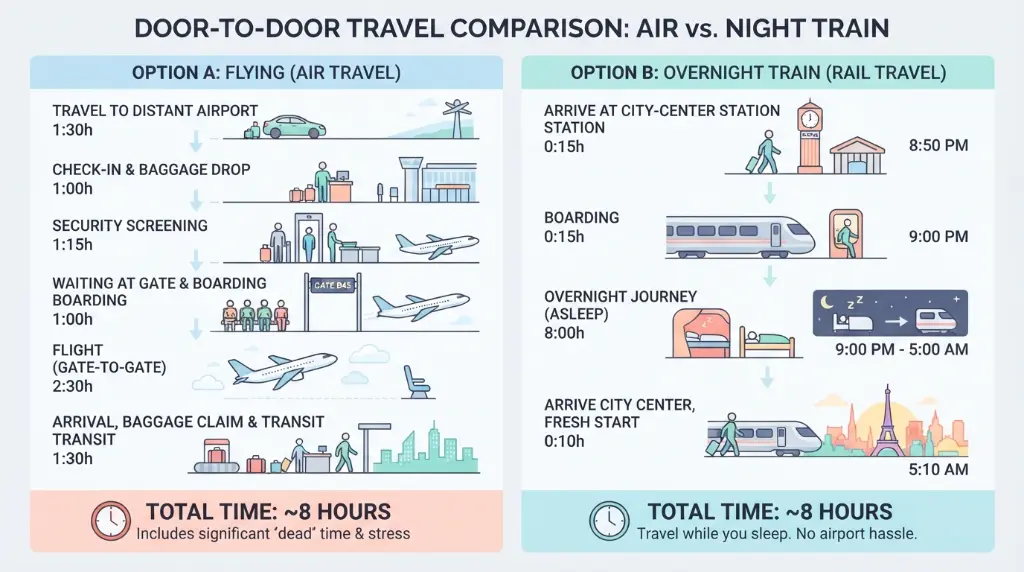
The Flight Experience:
- Travel to Berlin Brandenburg Airport (BER): 45 mins
- Arrive 2 hours before departure for security/bag drop: 2 hours
- Flight time: 1 hour 10 mins
- Deplane and collect luggage: 45 mins
- Travel from Munich Airport (MUC) to city center: 45 mins
- Total “Lost” Time: ~5.5 hours of active, stressful travel.
The Night Train Experience:
- Walk to Berlin Hauptbahnhof (city center): 15 mins
- Board the train, find your cabin, and relax: 15 mins
- Sleep while the train travels through the night: 8 hours
- Wake up in the heart of Munich: 0 mins of extra travel.
- Total “Lost” Time: Zero. You sleep through the journey and wake up at your destination, ready to start your day.
Furthermore, you save the cost of one night’s accommodation, which often makes the night train cheaper than a budget flight + a hotel.
4. A Renaissance in Rolling Stock and Comfort
The night trains of the 1990s were often cramped, outdated, and unreliable. The night trains of 2026 are a different breed entirely. Massive investments in new rolling stock have made rail travel genuinely desirable.
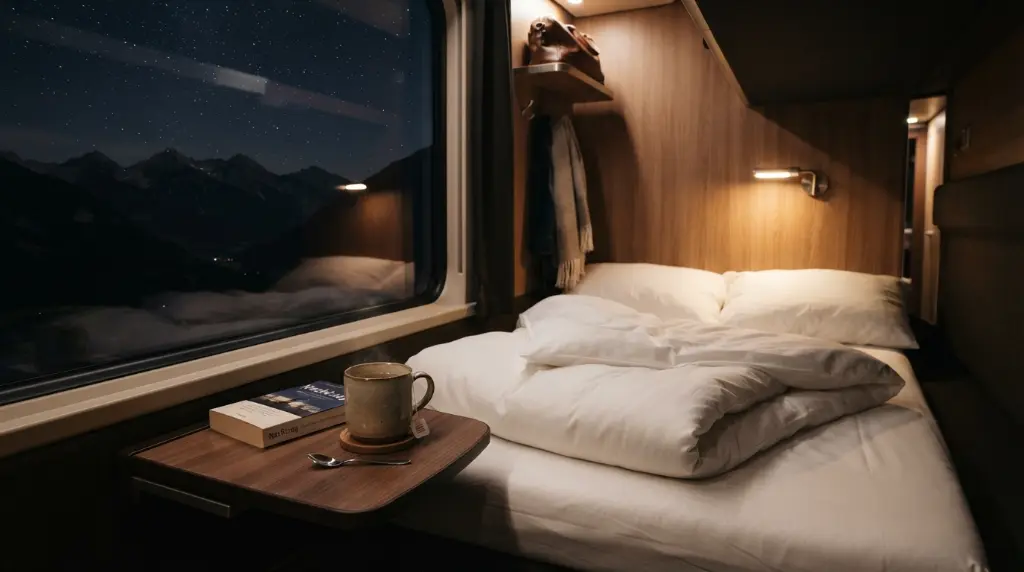
- ÖBB Nightjet Next Generation (NJNG): Austria has rolled out brand-new, state-of-the-art trains featuring “Mini-Cabins” (perfect for solo travelers, complete with a private shower and toilet), improved soundproofing, better climate control, and modern USB-C charging ports at every berth.
- European Sleeper: This innovative open-access operator has successfully launched routes like Brussels – Berlin – Prague, offering a modern, eco-friendly alternative with a focus on community and comfort.
- Midnight Trains (Sweden): Aiming to bring “hotel-on-wheels” luxury to routes like Stockholm to Berlin and Amsterdam, proving that night travel can be a premium experience.
These new trains address the historical pain points of night travel: noise, lack of privacy, and poor temperature control.
5. The Hidden Economics: Baggage and Transparency
Budget airlines made their name on €19 tickets, but the “ancillary fees” quickly add up. By the time you pay for a carry-on bag, a checked suitcase, seat selection, and a bottle of water, that €19 flight often costs €80–€120.
Night trains offer a much more transparent and often cheaper economic model:
- Generous Luggage Allowance: Unlike airlines, Amtrak and most European rail operators (like ÖBB and SNCF) allow you to bring large suitcases onboard for free. There are no hidden baggage fees.
- No Dynamic “Airport Transfer” Costs: A cheap flight to a secondary airport (like Paris Beauvais or London Stansted) can require a €30–€50 shuttle bus just to reach the city. Night trains deposit you directly in the main central station.
- The “Two-in-One” Value: As mentioned, a sleeper ticket combines your transportation and your hotel bill into a single, predictable cost.
The Challenges That Remain
While the trend is overwhelmingly positive, the night train revolution still faces hurdles:
- Infrastructure Bottlenecks: Europe’s rail network is fragmented. Different countries use different signaling systems and track gauges, meaning trains often have to stop at borders to change locomotives, causing delays.
- Capacity Issues: Because night trains are so popular, sleeper cabins on prime routes (like Zurich to Rome) sell out months in advance.
- Track Access Charges: In some countries, it is still cheaper for rail operators to pay fees to run a train than to operate it profitably, requiring ongoing government subsidies.
However, the EU is actively working on a “Single European Railway Area” to harmonize these rules and reduce border delays.
The Verdict: Is the Short-Haul Flight Doomed?
Short-haul flights won’t disappear entirely, especially for island nations (like the UK to Ireland) or routes with no viable rail infrastructure (like across the Mediterranean).
However, for the dense, interconnected landmass of continental Europe, the writing is on the wall. For journeys under 1,000 kilometers, the night train is rapidly becoming the smarter, greener, and more enjoyable choice. It transforms travel time from a stressful chore into a restful, scenic, and memorable part of the vacation itself.
Frequently Asked Questions (FAQ)
Q: Are night trains more expensive than budget flights?
A: Not necessarily. When you factor in the cost of airport transfers, baggage fees, and a night in a hotel, a night train sleeper cabin is often competitively priced or even cheaper than flying.
Q: How far in advance should I book a night train?
A: Due to high demand, it is highly recommended to book night train tickets 3 to 6 months in advance, especially for summer travel or popular routes like the ÖBB Nightjet to Italy.
Q: Are night trains safe for solo travelers?
A: Yes. Operators like ÖBB offer the option to book “single-gender compartments” in couchettes. Sleeper cabins also feature internal locks, and train staff patrol the carriages regularly throughout the night.
Q: Can I use my Interrail or Eurail pass on night trains?
A: Yes, your pass covers the travel portion of the journey. However, you must pay a mandatory reservation fee for a bed or seat, which varies depending on the train and cabin type.
Final Thoughts
The return of the night train is one of the most positive travel trends of the 2020s. It proves that we don’t have to sacrifice convenience or comfort to travel sustainably. The next time you are planning a trip from Paris to Vienna, or Amsterdam to Zurich, skip the airport. Pack a small bag, book a sleeper cabin, and let the rails carry you to your next adventure while you sleep.
Have you made the switch from flying to night trains? Share your favorite route or tips for sleeping on the rails in the comments below!