Two crashes in ten months
Spain’s rail safety failure is not bad luck — and “human error” is not an explanation
This is an analysis, not a news report. Facts are as of 28 October 2026, 18:00 CET; casualty figures are provisional and will change. We do not name or blame individuals: the questions below are about systems, incentives and decisions.
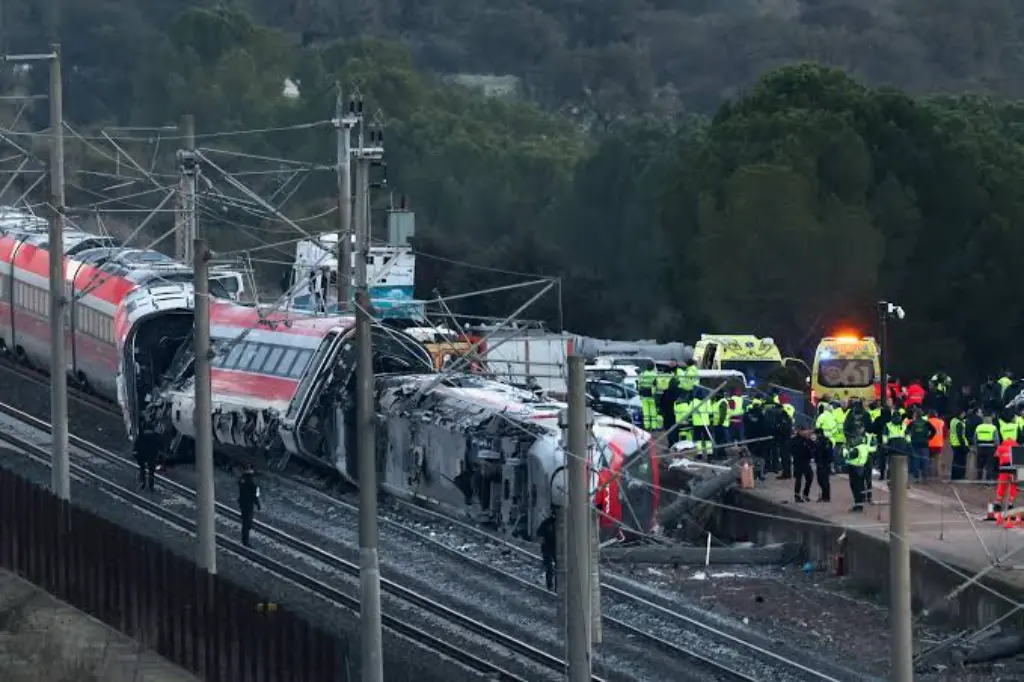
On 18 January 2026, an Alvia train and a Frecciarossa collided near Adamuz in Córdoba province. 46 people died.
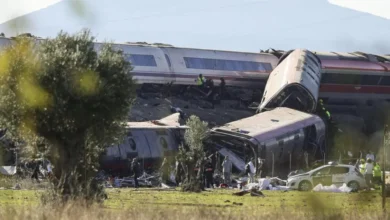
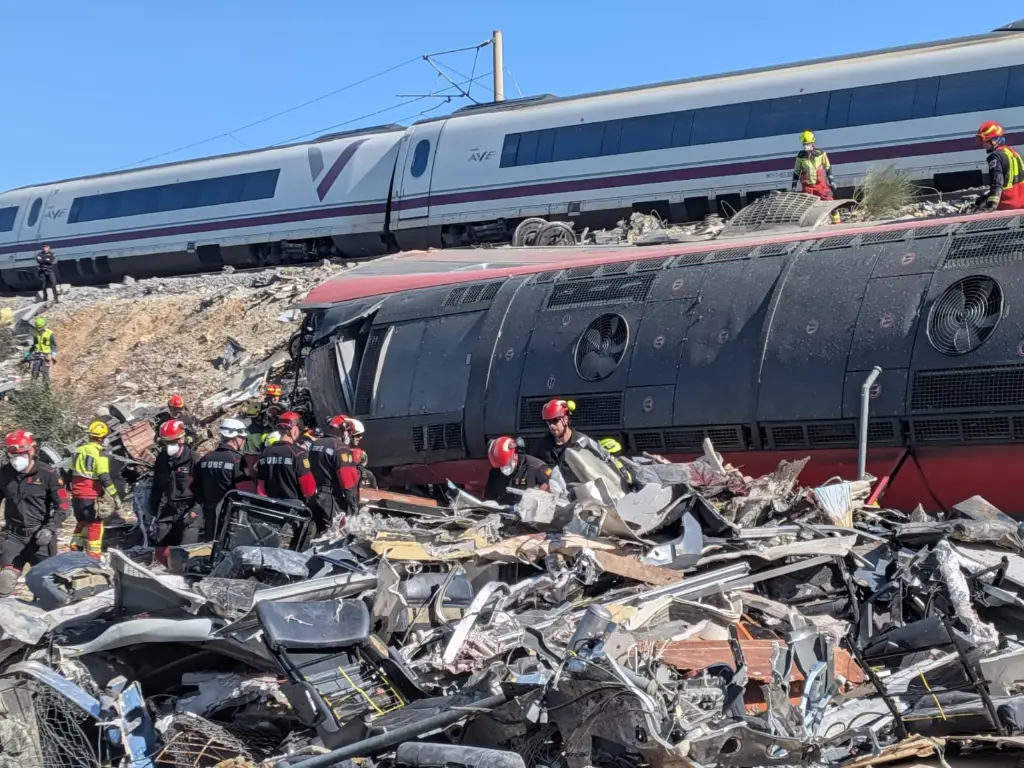
On 28 October 2026, an AVE hit a stationary Iryo train near Urda in Toledo province. At least 64 people died — Spanish media reported 68 by the evening. Fifty-eight were hospitalised, fifteen in critical condition.
Two fatal collisions. Same corridor — the Madrid–Sevilla high-speed line. Ten months apart.
The official language after the second one was telling. The transport minister called the decision to let traffic resume “inexplicable”. The prime minister said it was “not acceptable for Spain to suffer two high-speed accidents in a year.” Both statements are true. Neither is an explanation.
And an explanation is exactly what Spain now owes the families of the 110 people who died on that line in 2026.
1. What the facts already show
Take the two accidents separately, and each looks like a chain of failures. Take them together, and a pattern appears.
Adamuz (18 January). A collision between two trains on a line where, months later, investigators were still examining a possible track defect — a weld failure — as a contributing factor. Adif, the infrastructure manager, publicly defended itself by saying the track irregularities detected were “within safety limits”.
Urda (28 October). A failure of the LZB signalling system left an Iryo train stopped on the line. Its driver reportedly contacted the control centre at 08:38. Ten minutes later, an AVE travelling at more than 100 km/h struck the stationary train. Traffic had been authorised to resume under “marcha a vista” — running by sight at a maximum of 40 km/h. The minister described the decision as taken “with a red light and the train stopped.”
Read those two paragraphs again. In January, the defence was that the infrastructure was within limits. In October, trains were moving despite a signalling failure. In both cases, the system did not stop — it found a way to keep running.
That is not a coincidence. That is a culture.
2. The “human factor” alibi
Within hours of the Urda collision, the phrase “human error” was already circulating. It always does. It is the most convenient phrase in transport safety, because it ends the conversation: a person made a mistake, the person is responsible, the system is fine.
Spain’s rail unions were having none of it. The Sindicato Ferroviario called the rush to blame the human factor “irresponsible” and demanded a full audit of the line (El Confidencial, 28 Oct 2026). They know what the public is rarely told: an operator’s mistake is only possible if the system around that operator permits it.
A control-centre operator does not decide to run trains on a failed signalling system in a vacuum. They do it:
- because the procedure allows it (“marcha a vista” exists precisely to keep traffic moving);
- because the pressure to restore service is enormous — every hour of closure costs money and makes headlines;
- because staffing levels in control centres and maintenance depots have been squeezed for years;
- because nobody above them is accountable when a degraded operation goes wrong.
“Human error” is not the opposite of “system failure”. It is usually the last link in a chain that the system built.
3. The maintenance bill nobody wants to pay
Spain has the largest high-speed network in Europe: over 4,000 km, second in the world after China. It is a genuine achievement, and it was built with enormous political capital — every region wanted its AVE, every government wanted its inauguration.
But high-speed lines are not monuments. They are machines that need constant, expensive upkeep: track geometry, welds, catenary, signalling, rolling stock, and — above all — people.
The incentives run the other way:
- New lines produce ribbon-cuttings. Maintenance produces invoices. Politicians are rewarded for the former.
- Adif carries a debt in the region of €17 billion. Debt service competes with maintenance budgets.
- Signalling is invisible. The LZB system on the Madrid–Sevilla line is decades-old technology; replacing it with modern ERTMS is expensive, slow and politically thankless.
- Staffing is invisible. A control centre that is adequately staffed looks exactly like one that is not — until the night it isn’t.
Spain has spent thirty years proving it can build a railway. It has not yet proved it can keep one safe.
4. The regulator without teeth
Spain has a rail safety regulator, the AESF, and an accident investigation body, the CIAF. Both exist. Neither has the profile, the resources or the enforcement power that the scale of the Spanish network would justify.
The pattern is familiar across Europe: investigations take years, reports are published long after the political moment has passed, and recommendations are not binding. A safety authority that can recommend but not require is a safety authority that can be ignored.
Meanwhile, the political response follows a fixed script:
- Expressions of grief, national mourning, flags at half-mast.
- A visit to the site by the prime minister and the transport minister.
- A promise to “investigate to the end” and “act with determination if there has been negligence.”
- A refusal to resign.
- A slow drift back to normality, with the structural questions unanswered.
By the afternoon of 28 October, the transport minister had already ruled out resigning and described the accident as “inverosímil” — unbelievable. That word is doing a lot of work. If the accident is unbelievable, then nobody could have been expected to prevent it. If nobody could have prevented it, nobody is responsible. The system is absolved by adjective.
5. What real accountability would look like
It is easy to demand “answers”. It is harder to say what answers would actually change anything. Here is a list that would:
1. An independent audit of the Madrid–Sevilla corridor — published, not summarised.
Not a ministry press release: the full technical findings on track condition, signalling failures, maintenance records and staffing over the past five years.
2. A hard rule on degraded operation.
If the signalling system fails, trains stop. Not “run by sight at 40 km/h”; not “resume when the controller judges it safe”. A rule with no discretion is the only rule that survives commercial pressure.
3. A funded, dated ERTMS/LZB replacement programme.
With annual public reporting on progress, and a penalty mechanism that applies to the infrastructure manager, not to the passenger.
4. Publication of maintenance and staffing data.
Kilometres of track renewed, signalling failures per 1,000 train-km, vacancies in control centres and maintenance depots — by line, every quarter. If the data is embarrassing, that is the point.
5. A safety regulator with the power to stop traffic.
Not to advise, not to recommend: to order a line closed when conditions require it, without ministerial approval.
6. Accident investigations that report within twelve months.
With a legal obligation for the infrastructure manager and operators to respond publicly to every recommendation, and to explain any they reject.
7. No new high-speed inauguration until the safety backlog is cleared.
This is the uncomfortable one. Spain’s political class has treated the AVE as a national project; pausing new lines to fix the existing ones would be politically costly. It is also the only measure that would force the system to reorder its priorities.
None of this requires new technology. It requires political courage, which is precisely the resource that has been in shortest supply.
6. What this means for travellers
We are a travel publication, not a regulator. But our readers use these trains, and honesty is part of the service.
- The statistical risk of a train journey in Spain remains very low. Millions of trips pass without incident; two disasters do not make rail travel dangerous in general.
- But the specific risk on a degraded line is not abstract, and it is not evenly distributed. When a signalling system fails, the difference between a delay and a disaster is a procedure.
- Expect disruption on the Madrid–Sevilla corridor in the coming weeks; check operator information before travelling (Renfe, Iryo, Ouigo all publish service updates).
- Do not spread unverified claims about causes or casualties. In the first hours of a disaster, the most reliable information is the slowest.
- If you are travelling in the region, consider that emergency services and hospitals are under strain; flexibility costs little and helps.
And if you care about this railway: ask your MEP, your MP, your operator the seven questions above. Safety improves when someone is watching.
7. The uncomfortable conclusion
Spain built one of the wonders of European transport — and then behaved as though building it was the end of the story.
The two crashes of 2026 are not a plot twist in that story. They are what the story was always risking: a system optimised for expansion, speed and political visibility, with safety treated as a compliance exercise rather than a culture.
The trains will run again on the Madrid–Sevilla line. There will be a ceremony, eventually. Somebody will cut a ribbon.
The question is whether the next ten months look like the last ten — or whether Spain decides that a railway is not a thing you build once, but a thing you maintain, staff, inspect and fund every single day.
At least 110 people died this year on one line. They are no longer able to ask that question. The rest of us are.
Sources
- Rai News, live coverage of the Urda collision (28 Oct 2026) — https://www.rainews.it/maratona/2026/10/cronaca-incidente-collisione-spagna-scontro-tra-treni-precipitano-vagoni-almeno-10-morti-e-numerosi-feriti-a0b68a32-ce3f-4ab6-b519-3441d9cb78c8.html
- El Confidencial, El Sindicato Ferroviario tilda de “irresponsable” culpar al factor humano (28 Oct 2026) — https://www.elconfidencial.com/espana/2026-10-28/sindicato-ferroviario-error-humano-auditoria-choque-ave-toledo_4454616/
- La Sexta, Puente califica de “inexplicable” la decisión de retomar la marcha “con luz roja y el tren parado” (28 Oct 2026) — https://www.lasexta.com/noticias/sociedad/puente-califica-inexplicable-decision-retomar-marcha-luz-roja-tren-parado-accidente-inverosimil_202610286ae201c0b55c427e2eb617f0.html
- RTVE, Un informe refuerza la hipótesis de un fallo en la vía en el accidente de Adamuz (Sept 2026) — https://www.rtve.es/play/videos/telediario-1/informe-refuerza-hipotesis-fallo-soldadura-via-accidente-adamuz/17211568/
- RTVE, ADIF defiende que las alteraciones de la vía detectadas en el accidente de Adamuz estaban dentro del límite de seguridad (4 Sept 2026) — https://www.rtve.es/noticias/20260904/adif-cumplieron-todas-medidas-seguridad-linea-alta-velocidad-accidente-adamuz/17213146.shtml
- El País, accident coverage (Urda, 2026) — https://elpais.com/noticias/accidente-ferrocarriles-urda-2026/
- El Mundo, Puente califica el accidente como “inverosímil”, descarta dimitir (28 Oct 2026) — https://www.elmundo.es/espana/2026/10/28/6ae1ea81e4d4d8483e8b456e.html
- New York Times, live coverage (28 Oct 2026) — https://www.nytimes.com/live/2026/10/28/espanol/espana-choque-trenes
Casualty figures are provisional. This analysis will be updated if the official investigation contradicts any of the facts above.