🚨 Train Crashes and Railway Failures Shake Spain — Full Timeline, Causes, and Aftermath
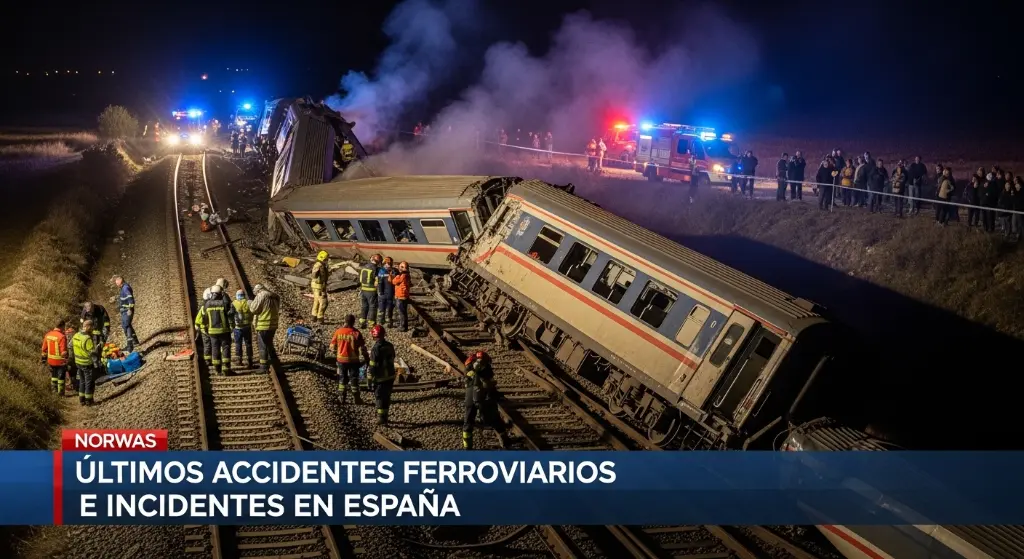
Spain has been hit by a series of serious railway accidents in early 2026, sparking national shock, political debate, and urgent calls for rail safety reforms. The incidents — including a catastrophic high‑speed crash in Andalusia and a commuter derailment in Catalonia — represent one of the darkest moments for Spanish rail travel in recent history.
🚆 Catastrophic High‑Speed Train Collision in Adamuz (18 January 2026)
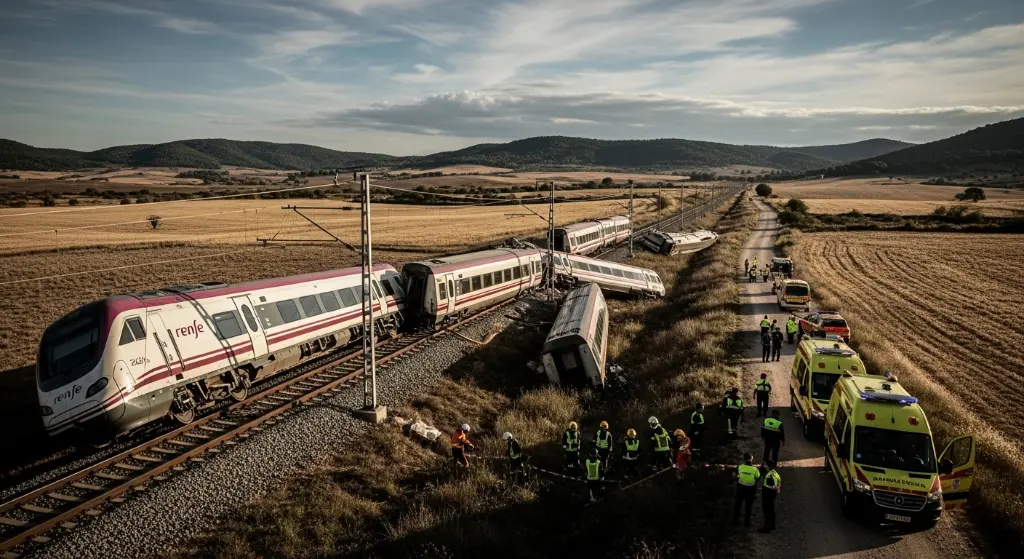
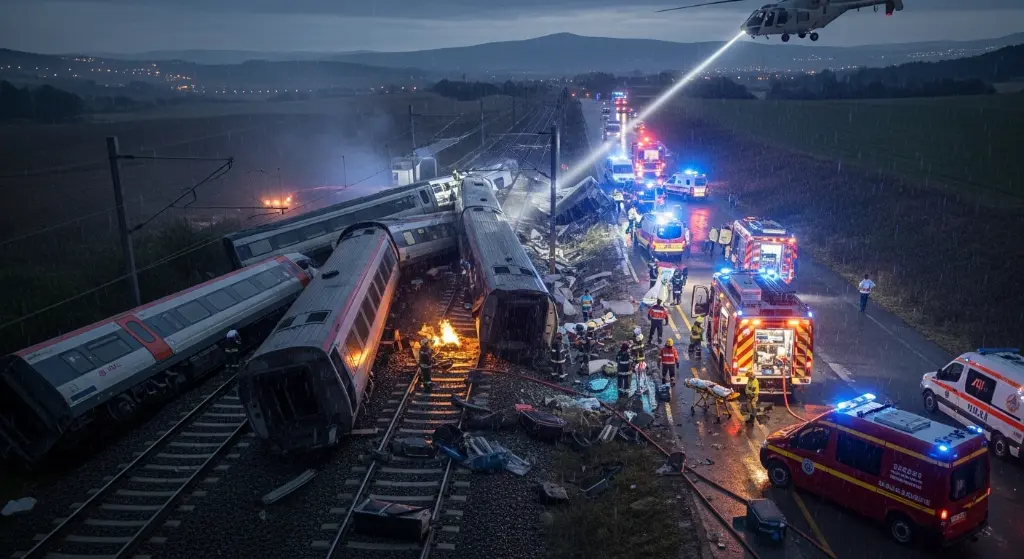
The most devastating accident occurred on the evening of 18 January 2026, when two high‑speed passenger trains collided on the Madrid–Seville line near Adamuz in the province of Córdoba.
📍 What Happened:
At about 19:43 CET, an Iryo high‑speed train (train 6189) from Málaga to Madrid derailed on a straight section of track and crossed onto the opposite line. Seconds later, it collided with a Renfe Alvia 2384 train traveling from Madrid to Huelva.
🧑🚒 Casualties & Injuries:
- 46 people were killed, including passengers and crew.
- 292 others were injured, with dozens in serious or critical condition.
- Both trains carried hundreds of people at the time — about 478 passengers in total.
This was Spain’s worst rail disaster since the 2013 Santiago de Compostela derailment and one of the deadliest in the country’s history.
📊 Impact on Services:
Rail traffic on the key Madrid–Andalusia high‑speed corridor was suspended for days as rescue, recovery, and investigation teams worked at the site.
🔍 Investigation & Cause — Track Fracture Theory
Early investigations by Spain’s Railway Accident Investigation Commission (CIAF) revealed a pre‑existing fracture in the rail at the crash site, which may have initiated the derailment. In the first 24 hours after the collision, investigators documented a break in the rail joint that could have destabilized the train before the collision occurred.
Experts found that notches and damage on the train’s wheels matched the broken rail, suggesting the fracture was present before the accident. CIAF cautioned that further analysis is needed before a definitive cause is confirmed.
Officials, including Transport Minister Óscar Puente, have denied claims that the section of track was outdated, stressing it had been renovated recently — though internal documents and external analysis suggest a hybrid weld of old and new rail may have been involved.
📌 Investigation Status:
As of mid‑February 2026, investigators were still awaiting judicial authorization to access train black boxes and independent lab testing, slowing progress toward final conclusions.
🚆 Commuter Train Derailment in Gelida (20 January 2026)
Just two days after the Adamuz tragedy, a Rodalies de Catalunya commuter train derailed near Gelida (Catalonia) due to a landslide caused by heavy rainfall.
📍 Location: Between Gelida and Sant Sadurní d’Anoia on the R4 line.
🧑🚆 Casualties & Injuries:
- 1 train driver was killed.
- At least 37 passengers were injured, including several seriously.
Heavy weather — specifically a retaining wall collapse triggered by severe rain — was identified as the root cause, highlighting how extreme weather events can impact rail infrastructure.
🚃 Minor Collision with a Crane Arm
Amid these more serious crashes, a regional train in southeastern Spain collided with the articulated arm of a crane protruding onto the track. While this incident did not result in a derailment, several passengers were injured and services were briefly halted.
This accident occurred during what observers on social media have described as a “black week” for Spanish railways, with multiple incidents in just a few days — a sharp contrast to previous years with far fewer reported events.
🧠 Public Reaction, Strikes, and Safety Reforms
The wave of accidents sparked strong reactions:
- Rail workers’ unions initially called nationwide strikes, citing the “unacceptable deterioration of the railway system” and demanding accountability.
- Later, after negotiations with the government, major unions suspended strike plans when authorities agreed to boost safety measures.
- The Transport Ministry announced a €1.8 billion investment in rail maintenance through 2030, hiring thousands of workers and promising improved safety protocols.
These reforms include tracking working hours more closely, enhanced inspection procedures, and expanded maintenance operations — steps aimed at restoring confidence in Spain’s rail network.
📊 Rail Network Context and Crisis Response
Spain’s high‑speed rail system is among the largest in Europe, with almost 4,000 km of AVE and other high‑speed lines and millions of passengers each year.
Following the Adamuz crash and the commuter derailment:
- Safety inspections were intensified nationwide.
- Certain high‑speed routes temporarily reduced speeds or underwent maintenance work.
- Infrastructure renovation projects — including major lines like Madrid–Barcelona — were accelerated, although passengers have faced service disruptions and longer travel times as a consequence.
According to Spanish media reports, facing rising incidents and aging rolling stock, authorities estimate that hundreds of trains will require renewal and major infrastructure investments in regions such as Catalonia through 2030.
📌 Summary of Key Incidents in Spain — Early 2026
| Date | Location | Type | Casualties |
|---|---|---|---|
| 18 Jan 2026 | Adamuz (Córdoba) | High‑speed train collision | 46 dead, 292 injured |
| 20 Jan 2026 | Gelida (Catalonia) | Commuter derailment | 1 dead, 37+ injured |
| Jan 2026 | SE Spain | Regional train crane collision | Minor injuries |
Spain Railway Accidents 2026: Full Timeline with Maps and Data
Spain has experienced multiple railway accidents in early 2026, including the catastrophic Adamuz high-speed crash and the Gelida commuter derailment. Here’s a detailed timeline with maps, fatalities, causes, and investigation status for each incident.
Timeline & Map Overview
Interactive Map: [Map placeholder showing locations: Adamuz (Córdoba), Gelida (Catalonia), Southeastern crane incident]
| Date | Location | Type | Cause | Fatalities | Injuries | Investigation Status |
|---|---|---|---|---|---|---|
| 18 Jan 2026 | Adamuz, Córdoba | High-Speed Collision | Rail fracture suspected | 46 | 292 | Ongoing (CIAF, black box analysis pending) |
| 20 Jan 2026 | Gelida, Catalonia | Commuter Derailment | Landslide due to heavy rain | 1 | 37+ | Completed preliminary report, further analysis ongoing |
| Jan 2026 | Southeastern Spain | Crane Collision | Crane arm intrusion onto track | 0 | Minor injuries | Investigation completed, safety measures implemented |
| Late Jan 2026 | Murcia / Cartagena Region | Minor Commuter Incidents | Infrastructure/Weather related | 0 | 6 minor injuries | Investigated, preventive measures applied |
Fatalities by Incident
- Adamuz: 46 deaths
- Gelida: 1 death
- Southeast Crane Incident: 0 deaths
- Murcia/Cartagena Minor Incidents: 0 deaths
Causes Overview
- Track failure: Adamuz high-speed crash
- Weather-related landslide: Gelida commuter derailment
- Equipment intrusion: Southeastern crane collision
- Infrastructure/Weather: Murcia/Cartagena minor incidents
Government Response & Compensation
- Spain announced €20 million in compensation for families of Adamuz victims, including payouts and tax relief.
- Transport Ministry pledged €1.8 billion toward rail safety and maintenance through 2030.
- Additional 3,650 staff to be hired for inspections and infrastructure upkeep.
- Rail unions suspended major strikes after negotiations with government and implementation of safety measures.
Investigation Highlights
Investigations are being conducted by Spain’s CIAF and local authorities:
- Adamuz: black box data and track metallurgical analysis ongoing
- Gelida: retaining wall and weather conditions analyzed
- Southeastern incident: safety protocols reviewed, minor operational changes made
- Murcia/Cartagena: preventive measures implemented after minor injuries
Visual Timeline
January 18, 2026: Adamuz high-speed collision (46 dead, 292 injured)
January 20, 2026: Gelida commuter derailment (1 dead, 37+ injured)
Late January 2026: Southeastern Spain crane collision (minor injuries)
Late January 2026: Murcia/Cartagena minor commuter incidents (6 minor injuries)
Public Reaction and Debate
- Media and commentators criticized long-term focus on expansion over maintenance, citing infrastructure neglect.
- Some unions called for accountability and criminal liability; smaller strikes continue despite suspension of major national strike.
- Public trust in Spanish railways has been shaken, highlighting systemic issues despite Spain’s high-speed rail pride.
📰 Additional important news about rail accidents in Spain – January-February 2026
🚉 More incidents in the same week of rail accidents
In addition to the tragic events in Adamuz and Gelida, two more serious rail incidents occurred across Spain in the same week in January: including a collision between a train and a crane arm in the Murcia region, which caused damage and minor injuries to passengers, although it did not lead to a train derailment—the fourth rail accident in less than seven days.
📍 Location: Near the port city of Cartagena, Murcia region
👥 Victims: 6 people suffered minor injuries
🚆 The incident did not lead to a derailment, but it did disrupt train traffic on the line.
💸 Compensation and aid for victims of the Adamuz disaster
The Spanish government has announced a large compensation package for the families of the victims of the January 18th tragedy: €20 million in aid for the victims and their loved ones.
📊 The package includes:
- €216,000 for each victim’s family (a combination of government funds, insurance, and assistance)
- €2,400 to €84,000 for those injured, depending on the severity of their injuries
- The aid is to be paid out in the coming months, including €72,000 in tax relief for the victims’ families.
This is one of the first official actions by the government towards the families of the victims of this tragedy—it is intended to demonstrate that the government is taking responsibility for the consequences of the disaster.
🧑⚖️ Railway workers suspend strike after agreeing on safety measures
Following a series of accidents and mass protests by railway workers, Spain’s largest unions agreed to cancel planned strikes after the government promised:
✔ increased funding for rail safety
✔ investments in infrastructure maintenance
✔ hiring an additional 3,650 workers by the end of 2030
✔ improved working conditions and duty hours for train drivers
This is the result of negotiations that took place after the Adamuz and Gelida disasters, with the Ministry of Transport committing to €1.8 billion in track safety and maintenance spending in the coming years.
📌 Not all unions backed down—smaller groups announced they would continue protests, but the main wave of strikes was halted.
🗣️ Political Criticism and Public Debate
Commentators and media outlets view these incidents as symptomatic of broader problems in Spain’s railway system:
The government has been criticized for focusing for years on building new lines and expanding the network rather than maintaining and preserving existing tracks, which may have contributed to catastrophic breakdowns, even though Spain’s high-speed rail network is one of the largest in Europe and the longest in terms of length.
Some experts emphasize that the railway, once a source of national pride, is now facing its most serious crisis of confidence in decades.
References & Sources
- Adamuz Train Derailment Wikipedia
- Gelida Train Derailment Wikipedia
- Reuters: Rail Worker Strikes and Safety Measures
- Euronews: Compensation for Adamuz Victims
- Reuters: Crane Collision in Spain
- The Guardian: Analysis on Rail Safety and Crashes
- English Radio News: Adamuz Crash
This updated timeline and dataset provide a complete view of Spain’s recent rail incidents, their causes, government response, public reaction, and the ongoing efforts to restore safety and confidence in the railway system.
Spain Railway Incidents & Reactions – Latest Developments
Rail workers’ unions end strike after Spain agrees to new safety measures
4 days ago
Spain to grant €20 million in compensation to victims of deadly high-speed train crash
14 days ago
Train collides with crane arm in Spain’s fourth rail accident in a week
21 days ago
Spain is rightly proud of its high-speed trains. But pride alone doesn’t ensure safety
14 days ago