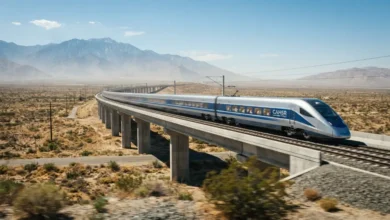
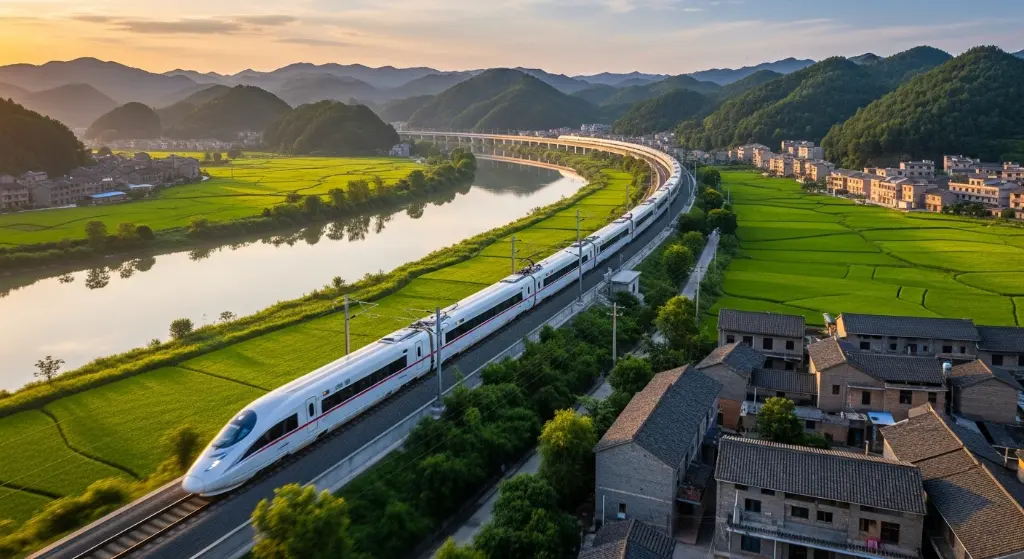
In just 15 years, China has achieved an engineering miracle. It has built the world’s largest high-speed rail network—spanning over 45,000 kilometers (28,000 miles). That is enough track to circle the equator.
Known locally as “Gaotie” (高铁), these trains are sleek, punctual, and terrifyingly fast. They have effectively killed the domestic short-haul airline industry by offering a travel experience that is often faster, more comfortable, and reliable.
But for a foreigner, navigating the Chinese system—with its strict ID checks and massive stations—can be intimidating.
Here is your comprehensive guide to riding the Red Dragon’s rails.
The Speed: “G” vs. “D” Trains
Not all white trains in China are the same. When booking, you will see a letter prefix before the train number. This letter determines your speed and price.
| Prefix | Train Type | Speed | Description |
|---|---|---|---|
| G (Gaotie) | High-Speed | 300 – 350 km/h | The flagship trains (Fuxing/Harmony). Fewest stops. Most expensive. |
| D (Dongche) | Bullet Train | 200 – 250 km/h | Slightly older or regional lines. More stops. Cheaper than G. |
| C (Chengji) | Intercity | 200 km/h | Short distances between neighboring cities (e.g., Beijing to Tianjin). |
| Z / T / K | Conventional | 120 – 160 km/h | The old “Green Trains.” Overnight sleepers. Very cheap, very slow. |
The Star: The “Fuxing” Class
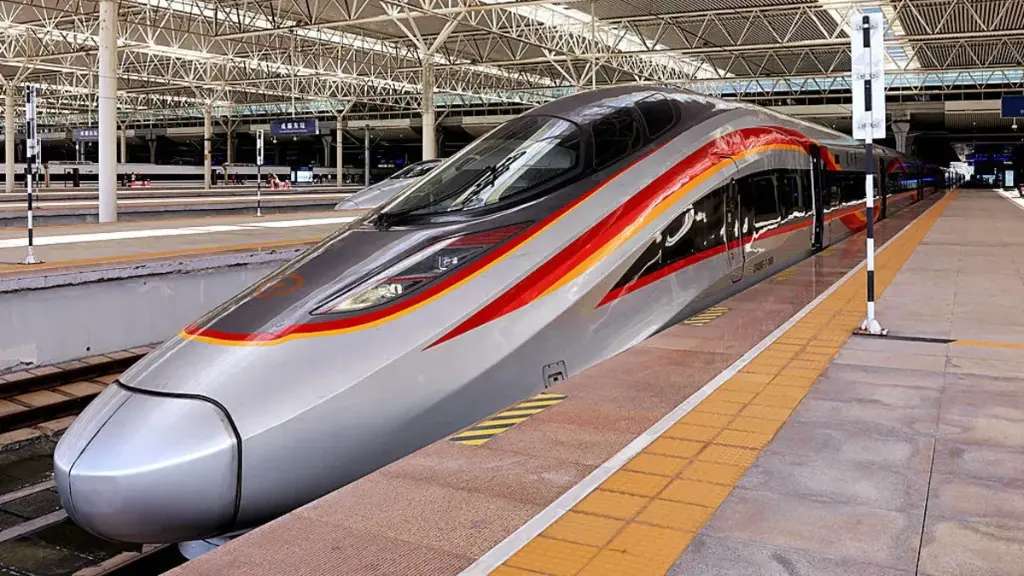
The newest “G” trains are the Fuxing (Rejuvenation) series. They operate at 350 km/h (217 mph). They are completely designed in China, feature Wi-Fi (requires a Chinese number), and offer superior legroom.
Train vs. Plane: The “Golden Route” Test
The route from Beijing to Shanghai is the busiest travel corridor in China. Here is why the train usually wins.
| Feature | G-Train (Fuxing) | Airplane |
|---|---|---|
| Travel Time (Station/Gate) | 4h 18m | 2h 15m (Flight time) |
| Total Time (Door-to-Door) | ~5h 00m | ~5h 30m (Security + Transfer + Taxi) |
| Punctuality | 98% On Time | Frequently delayed (Air traffic control) |
| Phone Use | Full 5G signal entire trip | Airplane mode / No signal |
| Legroom | Massive | Cramped |
Verdict: For distances under 1,000km (620 miles), the High-Speed Rail is almost always superior to flying.
The Classes: What Does Luxury Look Like?
Chinese High-Speed trains offer a wider range of classes than Europe or Japan.
1. Second Class (The Standard)
- Layout: 3 seats | Aisle | 2 seats.
- Vibe: Similar to Economy on a plane, but with much more legroom.
- Price: Very affordable.
- Cons: Can be noisy. 3-seat rows can feel crowded.
2. First Class (The Upgrade)
- Layout: 2 seats | Aisle | 2 seats.
- Vibe: Similar to Domestic First Class in the USA. Wider seats, footrests, quieter cabin.
- Price: Usually 40-50% more than Second Class.
- Verdict: Worth it for trips over 3 hours.
3. Business Class (The VIP Experience)
- Layout: 1 seat | Aisle | 2 seats (or sometimes 1-1).
- Vibe: Lie-flat airline seats.
- Perks: Private VIP lounge at the station, free snacks/drinks, slippers, massive shell seat that turns into a bed.
- Price: Expensive (often same price as a flight), but an incredible experience.
Buying Tickets: The Foreigner’s Challenge
This is the hardest part. You generally cannot just walk up to a machine and buy a ticket because machines require a Chinese ID card.
Method 1: Trip.com (Recommended for Tourists)
The easiest way for non-Chinese speakers.
- Pros: English interface, accepts international credit cards, excellent customer support.
- Cons: Small service fee (usually $3-$5).
- Process: Book on the app -> Receive confirmation -> Go to station.
Method 2: Railway 12306 App (Official)
The official government app now has an English version (“Railway 12306”).
- Pros: No service fee.
- Cons: The verification process is buggy. It often rejects foreign credit cards. The interface is not user-friendly.
Important: No Paper Tickets!
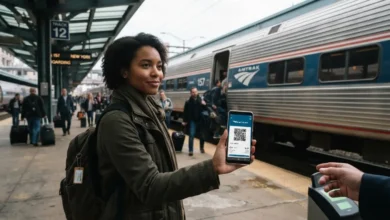
China uses an E-Ticket system. You do not need to print anything. You enter the station and the train gate by scanning your Passport at the manual lane (or the automated gate if it supports foreign passports, which is becoming more common).
The Station Experience: Controlled Chaos
Chinese train stations are not like European stations; they are like airports.
- Arrive Early: Get there at least 45-60 minutes before departure.
- Security Check: You must put your bags through an X-ray and walk through a metal detector at the entrance. Knives, scissors, and aerosol sprays are banned.
- The Waiting Hall: It is massive. Find your Gate number on the big screen.
- Boarding: Gates open 15 minutes before departure and close 3 minutes before. Do not be late.
Food on Board: High-Tech Delivery
You have three options for food:
- The Trolley: Attendants walk by selling boxed meals (bento), fruit, and Haagen-Dazs.
- Hot Water: Every carriage has a dispenser. Do as the locals do: Bring instant noodles. It is a ritual.
- Waimai (Delivery): If you have WeChat Pay/Alipay, you can order food from restaurants at the next station. The crew will pick up your KFC or Beef Noodles from the platform and deliver it to your seat.
Summary
China’s Gaotie is an infrastructure marvel that puts most other countries to shame. It is fast, incredibly stable (you can balance a coin on the windowsill at 350km/h), and reasonably priced.
Final Tip: Always bring your physical passport. You cannot travel with just a photo or copy on your phone.
Ready to race the wind? Book your Business Class seat on the Fuxing and enjoy the future of travel.