
Nazi Gold Train Mystery: The Legendary Lost Train of Lower Silesi
For more than 80 years, one of Europe’s most enduring railway legends has centred on a single missing train. Somewhere in the mountains of southwestern Poland, an armoured Nazi train said to be loaded with gold, art and looted treasures is believed to have vanished in the final months of World War II.
Known as the Nazi Gold Train or the Wałbrzych Gold Train, the story sits at the intersection of railway history, wartime secrecy and modern treasure hunting. Despite decades of searches, ground-penetrating radar scans and official investigations, no confirmed train has ever been found. Yet the legend refuses to die.

What Is the Legendary Gold Train?
According to the most common version of the story, in late 1944 or early 1945 a heavily guarded German train left Breslau (today’s Wrocław) carrying gold bars, jewellery, artworks and other valuables taken from banks, museums and private collections. The train is said to have travelled southwest toward the Owl Mountains (Góry Sowie) near Wałbrzych and then disappeared.
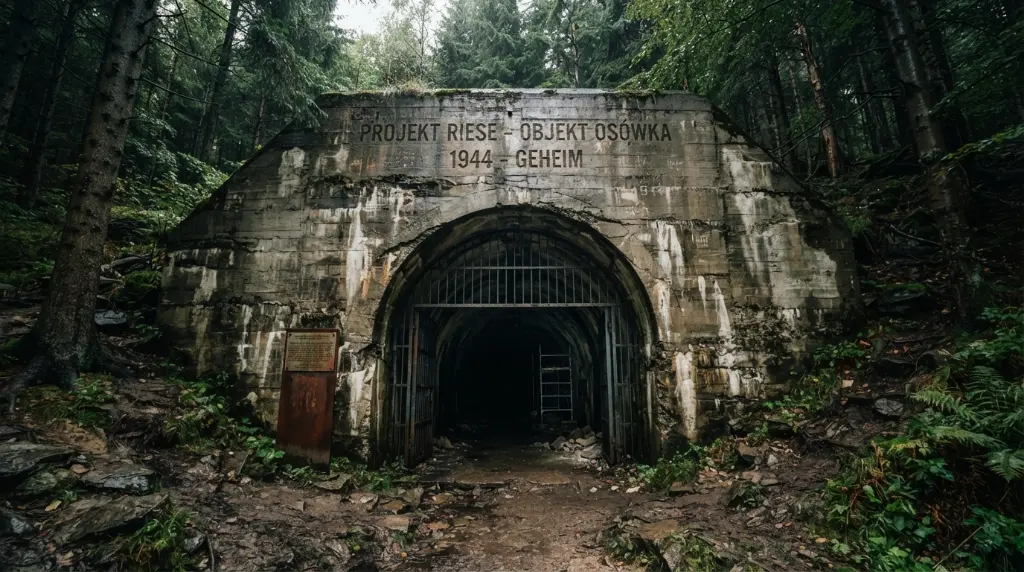
Local accounts claim it entered a concealed railway tunnel or siding and was sealed inside as the Red Army advanced. Some versions place it near Książ Castle; others point to unfinished tunnels belonging to the vast Nazi construction project known as Project Riese.
Historians note that while armoured trains and hidden sidings were real features of wartime logistics, there is no solid documentary evidence that this particular treasure train ever existed in the form described by the legend.
Why Railways and Tunnels Were Central to the Story
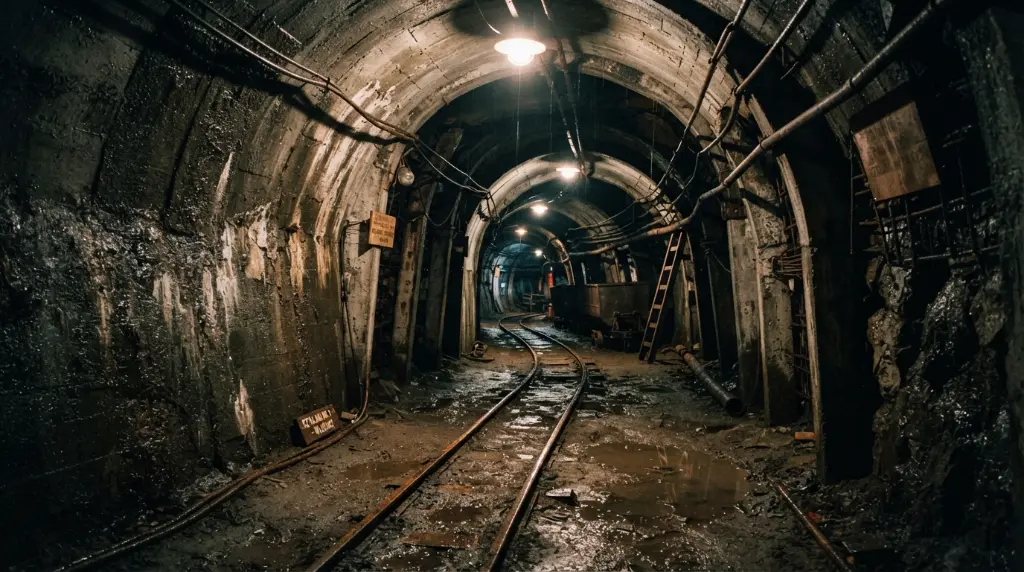
During World War II, railways were the primary means of moving troops, weapons and valuable cargo across Europe. Armoured trains, temporary sidings and underground facilities were used extensively, especially in the final chaotic months of the war.
In Lower Silesia the Nazis undertook one of their largest secret construction programmes — Project Riese (“Giant”). Between 1943 and 1945, tens of thousands of forced labourers carved more than 9 km of tunnels and chambers into the hard rock of the Owl Mountains and the area around Książ Castle. The exact purpose of Riese remains debated (possible headquarters, underground factories or storage), but the network of unfinished tunnels provided the perfect setting for a missing-train legend.
The idea that a train could be driven into a tunnel and sealed was not entirely far-fetched in 1945. Many railway lines were destroyed, rerouted or deliberately blocked as the front collapsed.
The Geography of the Legend
Almost every version of the story places the Gold Train in the Wałbrzych area of Lower Silesia, specifically:

- Near the railway line between Świebodzice (Freiburg in Schlesien) and Wałbrzych (Waldenburg)
- In the vicinity of Książ Castle
- Inside or near the unfinished tunnels of Project Riese in the Owl Mountains
The rugged terrain, dense forests and surviving wartime infrastructure have kept the search area both intriguing and extremely difficult to investigate thoroughly.
Modern Searches and Renewed Interest
The legend remained largely local until 2015, when two men claimed to have located the train using ground-penetrating radar. The announcement triggered worldwide media coverage, a surge of tourists to Wałbrzych, and official investigations. Excavations and surveys followed, but nothing conclusive was found.
In the years since, further teams of explorers, historians and engineers have continued the hunt. As recently as 2025–2026, Polish authorities have granted permissions for new fieldwork and scanning in selected forested areas between Wałbrzych and Świebodzice. Claims of possible wagon-sized anomalies continue to appear, yet no verified train or treasure has been recovered.
Most professional historians and archaeologists remain sceptical. They point to the lack of contemporary documents, the chaotic nature of the Nazi retreat, and the fact that many similar wartime “treasure train” stories across Europe have proven to be myths or exaggerations.
Why the Mystery Still Captivates
The appeal of the Gold Train goes far beyond the possibility of finding gold. It combines several powerful elements:
- The romance and danger of wartime railways
- The unfinished underground world of Project Riese
- Unanswered questions about the scale of Nazi looting
- The human fascination with lost treasures and sealed secrets
For railway enthusiasts the story is especially compelling. It highlights how trains were not merely transport — they were strategic assets, mobile vaults and, in some cases, deliberate instruments of concealment.
Visiting the Area Today
Even without a confirmed gold train, the region offers outstanding railway and wartime heritage:
- Książ Castle – one of Poland’s largest castles, with underground sections linked to Project Riese
- Project Riese complexes (Osówka, Rzeczka, Włodarz and others) – open to visitors, with guided tours through the tunnels
- Wałbrzych and the surrounding Owl Mountains – hiking trails, surviving railway infrastructure and local museums dedicated to the legend
The combination of dramatic scenery, real wartime engineering and an unsolved mystery makes the area a unique destination for anyone interested in railway history.



Frequently Asked Questions
Has the Nazi Gold Train ever been found?
No. Despite multiple searches and media claims since 2015, no confirmed train or significant treasure has been recovered.
Is the story considered true by historians?
Most professional historians treat it as an urban legend. While the wartime context makes such a train theoretically possible, there is no reliable documentary proof.
What was Project Riese?
A massive, unfinished Nazi underground construction project in the Owl Mountains and around Książ Castle, built with forced labour between 1943 and 1945.
Can tourists visit the search areas?
Yes. Several Riese complexes are open as tourist attractions, and the wider Wałbrzych region welcomes visitors interested in the legend and wartime history.
Why does the legend persist?
Because it combines real historical elements (armoured trains, secret tunnels, Nazi looting) with the powerful idea of a still-hidden treasure. As long as the tunnels remain incomplete and the documents incomplete, the story will continue.
Whether the Gold Train ever existed in the dramatic form of the legend may never be fully settled. What is certain is that the railways of wartime Europe held far more secrets than we will ever recover — and the mountains of Lower Silesia still guard some of the most intriguing of them.
For more on Europe’s railway history and wartime infrastructure, explore our related articles on major rail projects and historic routes.