Japan Rail Pass 2026: Is It Still Worth It for Europeans?
Forget everything you think you know about train travel. While Europe continues to refine intercity connections, Japan has elevated the rail journey itself into a destination. In 2026, a mix of moderate fare adjustments, network expansions and experience-focused upgrades is making Japan Rail (JR) more compelling than ever for European travellers who prioritise punctuality, comfort and seamless long-distance travel.
This is no longer just about getting from Tokyo to Kyoto. It’s about why the journey often becomes the most vivid and memorable part of the entire trip.
What Exactly Is the Japan Rail Pass in 2026?
The Japan Rail Pass (JR Pass) is still the single most convenient ticket for most international visitors. It grants unlimited travel on the vast majority of trains operated by the six JR Group companies, including:
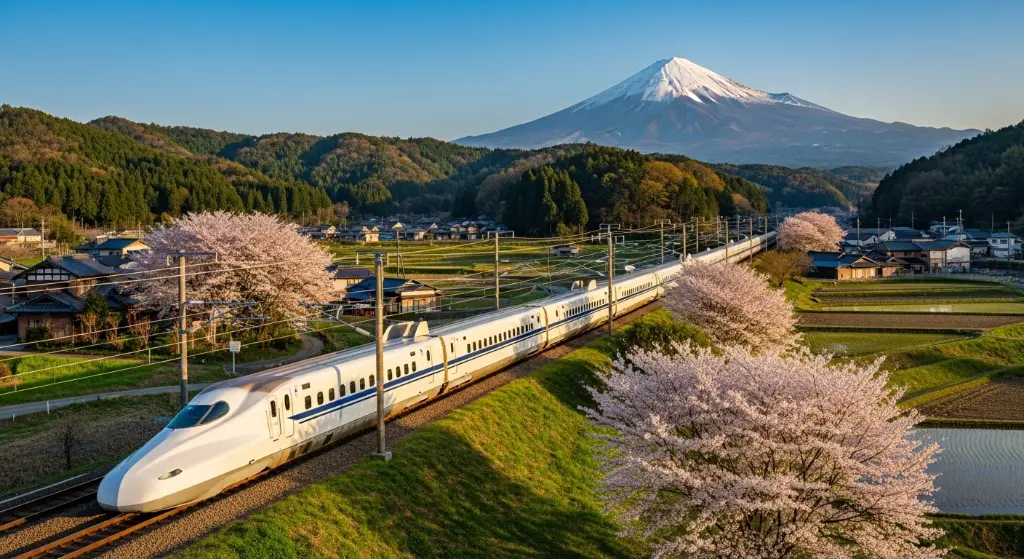
- Most Shinkansen bullet trains (exceptions: Nozomi and Mizuho services on certain lines)
- Limited Express (Tokkyu), Express, Rapid and Local trains
- Selected JR buses and ferries
You choose a validity period of 7, 14 or 21 consecutive days. Once activated at a major JR office, almost the entire JR network becomes available without buying individual tickets.
Key Changes Happening in 2026
- Nationwide base fare increase (March 2026) – the first general rise since 1987. A ride on Tokyo’s famous Yamanote Line, for example, moved from approximately ¥150 to ¥160. The increase is modest and intended to fund infrastructure modernisation and safety.
- JR Pass prices remain unchanged until 1 October 2026 – the tourist-focused pass is not affected by the March base-fare rise. From 1 October 2026, prices for purchases made through overseas agencies will increase (details in the table below). Official online purchases may keep the lower price for a limited period.
- Tokaido Shinkansen (Tokyo–Osaka–Kyoto) individual fares stay the same.
- Local network improvements – a new station, Toyooka Daruma, opens on the Shinetsu Main Line in Gunma Prefecture. The Riku-U West Line is scheduled to resume full service after years of suspension.
- Experience-focused upgrades – the Enoshima Electric Railway introduced a new train in 2026 with rearranged seats and adjusted straps so every passenger can enjoy the coastal views.
Japan Rail Pass Prices 2026 (Ordinary Class)
| Duration | Price until 30 September 2026 | Price from 1 October 2026 (overseas agencies) |
|---|---|---|
| 7 days | ¥50,000 | ¥53,000 |
| 14 days | ¥80,000 | ¥84,000 |
| 21 days | ¥100,000 | ¥105,000 |
Green Car (first-class) versions cost significantly more (from ¥70,000 for 7 days). Children aged 6–11 pay half price. Always check the official Japan Rail Pass website for the latest figures before purchasing.
Is the JR Pass Still Worth It in 2026? The Real Calculation
This is the question almost every European traveller asks. The honest answer: it depends entirely on your itinerary.
Quick real-world example:
- Tokyo → Kyoto one-way Shinkansen ≈ ¥14,000
- Return trip ≈ ¥28,000
- 7-day Ordinary JR Pass (pre-October price) = ¥50,000
One Tokyo–Kyoto–Tokyo return already covers more than half the cost of the pass. Add Hiroshima, Kanazawa, Nagano or a journey into the Japanese Alps and the pass almost always becomes cheaper — and far more convenient — than buying individual tickets.
When the JR Pass is usually worth it:
- You plan to travel long distances between multiple regions (Tokyo – Kyoto – Osaka – Hiroshima – Kanazawa, etc.)
- You will use the Shinkansen more than once or twice
- You value the freedom of boarding almost any JR train without queueing for tickets
When it is usually not worth it:
- You stay mainly in one city (Tokyo or Kyoto) with only short day trips
- You rely mostly on local subways, private railways or IC cards such as Suica or Pasmo
- Your itinerary is very limited or slow-paced
Always calculate your exact routes with a JR Pass cost calculator before buying. The 2023 price hike already made the pass less automatic; the small 2026 adjustment reinforces the need to do the maths.
Japan Rail vs European Networks: What Feels Different
If you are used to Deutsche Bahn, SNCF, Trenitalia, ÖBB or Renfe, here is what will stand out:
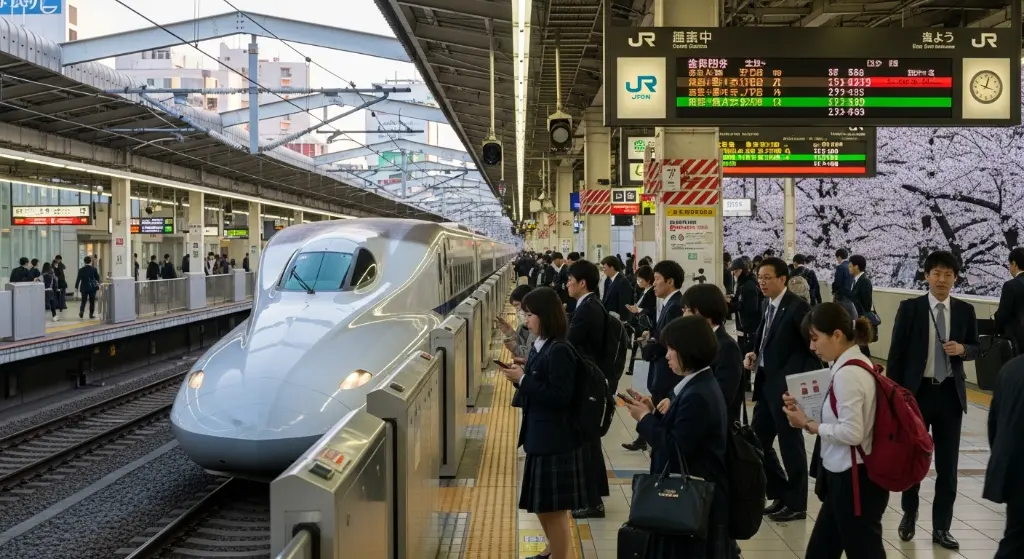
- Punctuality as a religion – Japanese trains are timed to the second. Delays of more than a minute are rare and usually accompanied by formal apologies.
- Seat reservations – free with the JR Pass on Shinkansen and most Limited Express trains. Strongly recommended during peak seasons and holiday periods.
- Quiet culture – phone calls are generally avoided. The atmosphere is noticeably calmer than on most European long-distance services.
- Stations as destinations – major hubs such as Tokyo Station, Osaka or Kyoto are vast, immaculately clean complexes filled with high-quality food halls (depachika), shopping and clear English signage.
- Two-ticket system – for Shinkansen and Limited Express you normally need a base fare ticket + express ticket. With the JR Pass the staff simply issue a special reservation slip that covers both.
Practical Guide: How to Use the JR Pass for the First Time
- Plan your itinerary first – decide whether the pass actually saves money for your specific route.
- Buy the Exchange Order (or online voucher) before leaving Europe – the nationwide JR Pass must be purchased outside Japan (or via the official online service for eligible nationalities).
- Exchange and activate it on arrival – take the voucher to a major JR ticket office at the airport or main station. You choose the start date at that moment.
- Reserve seats in advance – do it at the counter or through official apps. You will receive a reservation slip.
- Download the right apps – Japan Travel by Navitime or Google Maps work excellently for real-time platform numbers, transfers and walking routes inside stations.
Looking Ahead: Maglev and the Future of Japanese Rail
Beyond 2026, Japan continues to push the boundaries of high-speed rail. The Chuo Shinkansen maglev line (eventually linking Tokyo, Nagoya and Osaka) remains one of the most ambitious projects in the world. For travellers this constant innovation means that a journey on Japan Rail is never merely transport — it is a front-row seat to a culture that treats precision, shared space and the beauty of the journey as equally important.
From the near-silent acceleration of a Shinkansen piercing the landscape to the gentle coastal ride of the Enoshima line, Japan Rail offers one of the purest and most memorable travel experiences available anywhere.
Frequently Asked Questions (2026)
Is the Japan Rail Pass still worth it after the 2023 and 2026 price increases?
Yes — but only for itineraries with significant long-distance travel. For city-focused trips it is usually better to use IC cards and individual tickets.
Can I buy the JR Pass inside Japan?
No. The nationwide pass must be purchased outside Japan (or online via the official channel before arrival).
Does the JR Pass cover the Nozomi and Mizuho Shinkansen?
No. These fastest services are excluded. You can still use Hikari, Sakura, Kodama and other Shinkansen trains.
Do I need seat reservations with the JR Pass?
They are free and highly recommended, especially on popular routes and during peak periods. Unreserved cars exist but can be crowded.
What happens if I lose my JR Pass?
It is treated like a valuable ticket. Report it immediately; replacement is possible in limited cases but not guaranteed.
Ready to decide? Calculate your exact itinerary against current JR Pass prices, then buy the Exchange Order before you leave Europe. For more European rail inspiration, check our guides on the 2026 Night Train Boom, the Japanese Shinkansen cost analysis and why ÖBB Nightjet remains one of the best ways to travel Europe.