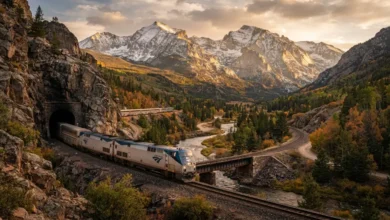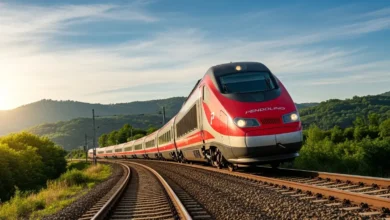
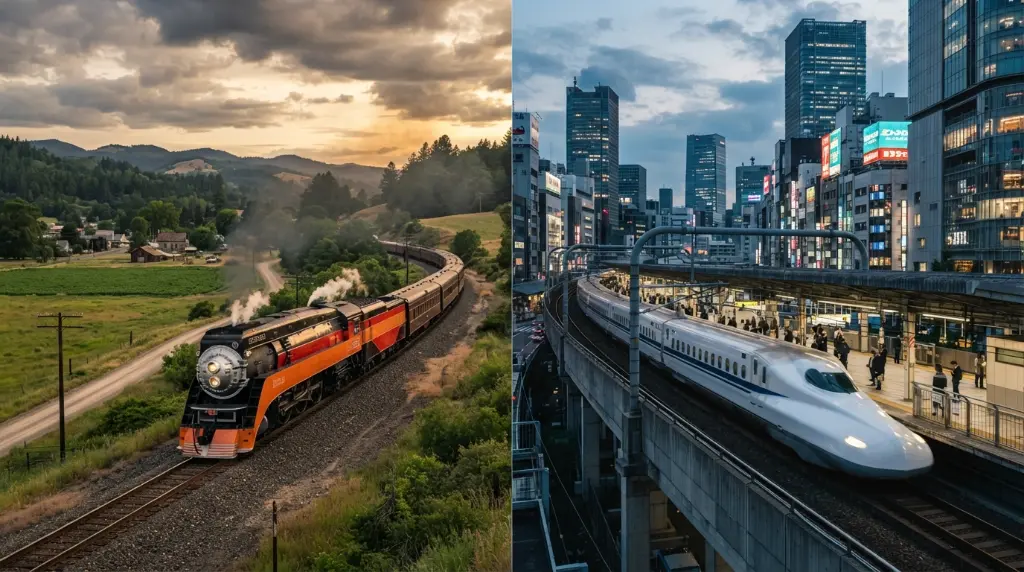
For travellers used to the TGV, ICE, Frecciarossa or Shinkansen, the American rail system can come as a surprise. The question almost everyone asks is simple: Does the USA actually have bullet trains?
The short answer in 2026 is: not yet in the true international sense — but the picture is finally changing.
What Counts as High-Speed Rail?
Internationally, true high-speed rail is generally defined as services that regularly operate at 250 km/h (155 mph) or faster on dedicated tracks. Most European and Asian systems far exceed this threshold.
In the United States the situation is more nuanced. The country has “higher-speed” services and several projects aiming for genuine high-speed operation, but a nationwide network comparable to Europe or Japan does not yet exist.
What Exists Today (2026)
Amtrak Acela (Northeast Corridor)
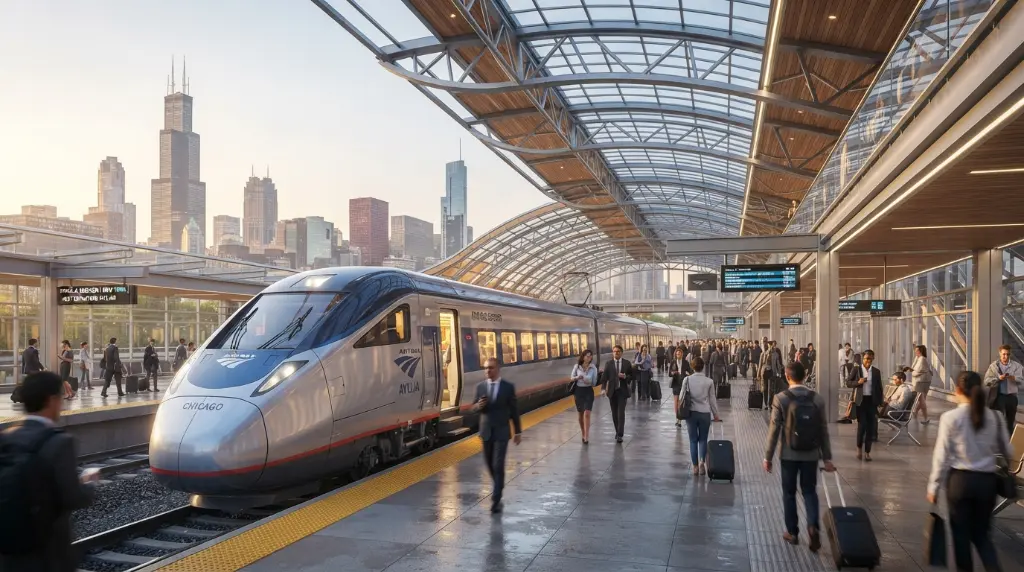
The closest thing the US currently has to high-speed rail is Amtrak’s Acela service between Boston, New York and Washington, D.C.
- Top speed: 240 km/h (150 mph) on limited sections
- Average speed: significantly lower due to older infrastructure, curves and shared tracks
- Classified as “higher-speed” rather than true high-speed rail
- Business and First Class only
It is comfortable, frequent and far better than driving or flying on the Northeast Corridor, but it is not a bullet train in the European or Japanese sense.
Brightline (Florida)
The private operator Brightline runs modern trains between Miami and Orlando at up to 200 km/h (125 mph). It offers a premium experience with city-centre stations, but again falls short of true high-speed standards.
Projects Under Construction or Development
1. Brightline West (Las Vegas – Southern California)
This is currently the most advanced true high-speed project in the United States.
- Designed top speed: over 320 km/h (200 mph)
- Electric, dedicated track
- Expected journey time: roughly 2 hours between Las Vegas and the Los Angeles area
- Status in 2026: under active construction
Many observers expect Brightline West to become the first operational true high-speed rail line in the US.
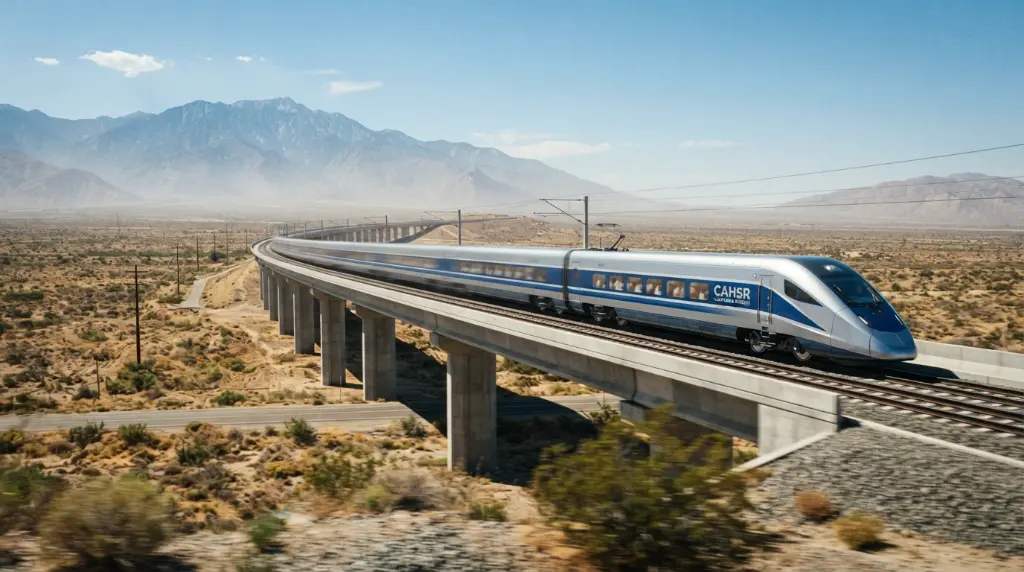
2. California High-Speed Rail (San Francisco – Los Angeles)
The most ambitious (and controversial) project in the country.
- Planned top speed: 350 km/h (220 mph)
- Initial Operating Segment focused on the Central Valley
- Status in 2026: civil works well advanced (dozens of structures completed, significant guideway finished), track-laying expected to begin
- Full Phase 1 still many years away and subject to ongoing funding and political challenges
Progress is real, but the project has faced major delays and cost increases since it was first approved.
Other proposals
Various plans exist for Texas, the Cascadia corridor, the Midwest and the Southeast, but none are as advanced as Brightline West or the California project in 2026.
Why Does the US Lag Behind Europe and Asia?
- Geography and density – American cities are often farther apart and more sprawling than European ones.
- Freight priority – Most tracks are owned by private freight companies. Passenger trains frequently lose out to long freight consists.
- Car and aviation culture – Decades of investment in highways and domestic aviation reduced political urgency for high-speed rail.
- Funding and politics – Large infrastructure projects in the US often face fragmented funding, legal challenges and changing administrations.
What This Means for Travellers
If you are coming from Europe or Asia, adjust your expectations:
- Outside the Northeast Corridor, long-distance Amtrak trains are more like scenic land cruises than high-speed services.
- Delays on long-distance routes are common because trains share tracks with freight.
- The experience can still be excellent — especially on scenic routes such as the California Zephyr or Coast Starlight — but it is a different product from a TGV or Shinkansen.
The Bottom Line in 2026
The United States does not yet have a true nationwide bullet-train network. Acela remains the best current option and is genuinely useful in the Northeast. Brightline West is the project most likely to deliver the first genuine high-speed service, while California High-Speed Rail continues to make physical progress despite ongoing challenges.
Momentum is stronger than it has been for decades, but Europe and Asia remain far ahead in both speed and network density.
For now, if you want the classic high-speed rail experience — city centre to city centre at 300 km/h with near-perfect punctuality — Europe (and Japan) are still in a different league.
Frequently Asked Questions
Is Acela a bullet train?
It is the closest the US currently has, but most definitions classify it as higher-speed rather than true high-speed rail.
When will the first true US high-speed line open?
Brightline West is widely regarded as the most likely candidate, though exact opening dates remain subject to construction progress.
Is California High-Speed Rail still being built?
Yes. Significant civil construction is complete or underway in the Central Valley, with track work expected to advance in the coming years.
Can I use European-style rail passes in the USA?
No. Amtrak offers its own USA Rail Pass (segment-based), which is very different from Interrail or Eurail.
The American rail landscape is evolving. Until the first true high-speed lines open, the contrast with Europe remains one of the strongest reasons many travellers prefer exploring the Continent by train.