The Decline of Railways in Spain
Spain built the largest high-speed rail network in Europe — and, at the same time, allowed much of its ordinary railway to wither. This is the story of how that happened, what it cost, and what it means if you travel by train in Spain today.
The paradox in one paragraph
In 2025 Spain had more than 4,000 km of high-speed line — the longest network in Europe and the second longest in the world after China (Ministry of Transport, May 2025). In the same year, rail carried just 3.47% of the country’s freight (ACE, July 2026), against an official target of 10% by 2030. Entire provinces have no passenger train at all. Commuter networks in Madrid, Barcelona, Valencia and Málaga are among the most crowded in Europe and, in 2024–2026, among the most disrupted.
Spain did not choose between the two rails. It built the glamorous one and neglected the ordinary one. The result is a network that looks spectacular on a map of high-speed lines and hollow on a map of everywhere else.
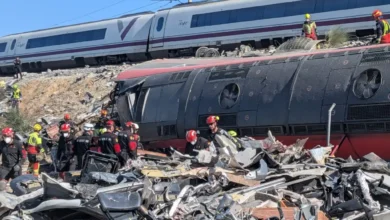
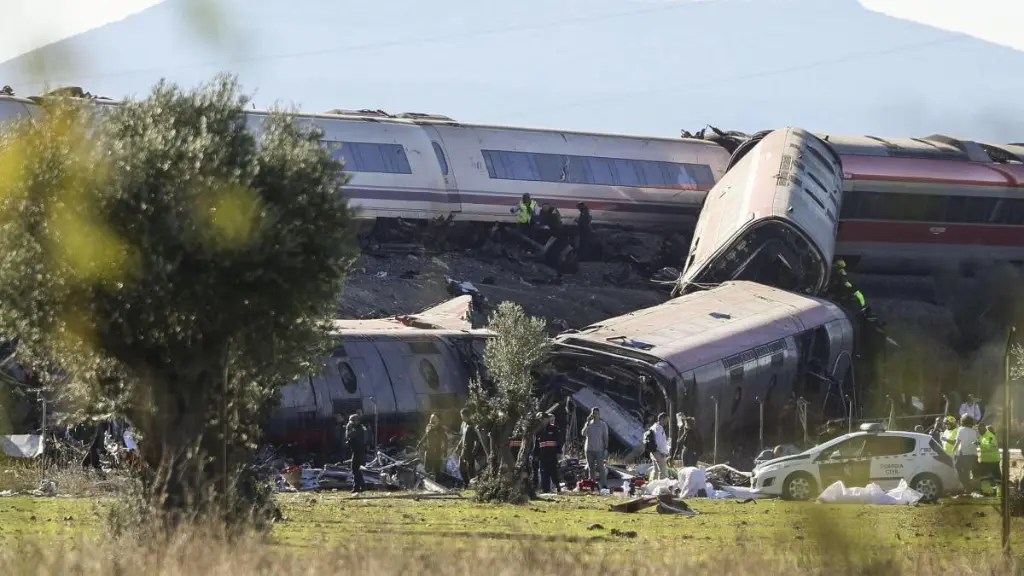
Update — 28 October 2026, 18:00 CET. This article was written before today’s disaster and has been revised. A collision between a Renfe AVE and an Iryo train near Urda (Toledo) on the Madrid–Sevilla high-speed line killed at least 64 people (Spanish media reported 68 by late afternoon) and injured more than a hundred, 58 of them hospitalised and 15 in critical condition. It is the second fatal high-speed accident in Spain in ten months, after the collision at Adamuz (Córdoba) on 18 January 2026, which killed 46 people. Figures are provisional and will change; we will update them as official information is confirmed. See section 7 for what is known and what is not.
1. The numbers that tell the story
| Indicator | Spain | Context |
|---|---|---|
| High-speed network | > 4,000 km (2025) | Largest in Europe; 2nd in the world after China |
| Rail share of freight | 3.47% (2025) | EU average roughly 17–18%; target 10% by 2030 |
| Lines closed on 31 Dec 1984 | 914 km | Under the 1984 Council of Ministers decision |
| Lines that lost passenger service then | 603 km | Kept only for freight |
| Freight-only lines abandoned to commercial fate | 299 km | Later largely dismantled |
| Original 1982 closure study | 37 sections, ~3,500 km | Scaled back after political pressure |
| Cost-recovery threshold for closure | 23% | Lines earning less than 23% of costs |
| Greenways built on former rail lines | ~3,300 km | “Vías Verdes” programme |
| First high-speed line | Madrid–Sevilla, 1992 | 471 km, opened for Expo ’92 |
2. How Spain closed its railways: the 1985 decision
The single most important date in modern Spanish railway history is not the opening of the first AVE. It is 31 December 1984, the last night on which trains ran on 914 kilometres of line that were closed by a Council of Ministers agreement of 30 September 1984 (Vía Libre).
The mechanism was brutally simple. Renfe, the state operator, was told it no longer had to maintain services on lines whose revenue did not cover 23% of their operating costs. An earlier study based on 1982 data had proposed suspending services on 37 sections totalling about 3,500 km. Local pressure — and resistance inside Renfe itself — cut that down, but the principle survived: the railway would be run as a business, and unprofitable lines would go.
What happened next is a study in how closures cascade:
- 914 km closed outright that night. Some had effectively been without trains for years already (Ripoll–Sant Joan, Jaén–Camporreal, Cinco Casas–Tomelloso, Calatayud–Caminreal).
- 603 km lost passenger services but kept running freight, at the discretion of Renfe’s commercial judgement.
- 299 km were already freight-only and were handed over to “commercial fate” — meaning they would survive only as long as they were profitable.
The tracks were not immediately lifted. The 1984 agreement guaranteed maintenance “in case of military logistics needs or a possible reopening.” In practice, that was the beginning of a long, quiet demolition:
- Gibraleón–Ayamonte, rescued at the last minute by the Andalusian government, lost all services in September 1987 when the region stopped covering the deficit.
- Castejón–Soria lost passenger trains in 1996, although it was never on the 1985 list; it remains nominally open but with no traffic and no maintenance.
- Reus–Roda de Bará in Catalonia died without warning in 1992.
- In 1996 a new agreement allowed Renfe to lift tracks and dispose of land on lines that had been closed for eleven years. The Ruta de la Plata (Plasencia–Astorga) and Valladolid–Ariza lost their last freight.
And then the high-speed programme finished the job in some places: the old Madrid–Ciudad Real line disappeared when the AVE replaced it, and the urban section of the Córdoba–Almorchón line in Córdoba was lost to the new railway.
There is an irony worth remembering: the Segovia–Medina line was closed in 1993 — right after a full track renewal — and was later partly rebuilt as a test track for variable-gauge trains, before becoming part of the route towards Galicia.
3. The narrow-gauge collapse and the forgotten corridors
Spain’s narrow-gauge network (ancho métrico) was once a dense web in the north: Asturias, Cantabria, the Basque Country, and the mining valleys. FEVE, the state narrow-gauge operator, kept a rump of it alive; many other lines were closed in the 1960s and 1970s, long before 1985.
The four great “dinosaurs” of Spanish railway nostalgia are almost extinct:
- Santander–Mediterráneo — a planned cross-country line from the Cantabrian coast to the Mediterranean that was never completed and is now largely gone.
- Valladolid–Ariza — closed and partly dismantled.
- Ruta de la Plata — the old silver route from Plasencia to Astorga, closed and lifted.
- Guadix–Almendricos — the Andalusian desert line, closed.
Decades of election promises to reopen them have produced almost nothing except feasibility studies. Urban growth and new roads have swallowed parts of the old alignments. In many cases the only preserved corridor is a greenway — which is better than nothing, but is not a railway.
4. The high-speed bubble: Madrid at the centre of everything
Spain’s high-speed programme began with Madrid–Sevilla in 1992, built for Expo ’92 and the Olympics year, and has since expanded to Valencia, Barcelona, Málaga, Galicia, Asturias, Murcia and the Basque Country, with branches to Valladolid, León, Huesca and beyond.
Three features of the Spanish model matter for understanding the decline:
It is radial. Almost everything is designed to connect Madrid with the provinces. Travelling between two regional capitals often means going through Madrid, or not going at all. Barcelona–Valencia, Sevilla–Málaga and Bilbao–Zaragoza are the exceptions, and they are recent.
It is expensive per kilometre. Spain’s terrain — mesetas, sierras, river gorges — means tunnels and viaducts. The AVE was justified politically as much as economically: it was a symbol of modernity, and every region wanted its own.
It sucked money and attention from the conventional network. Adif and Renfe are public companies with large debts; the high-speed lines are expensive to maintain, and the political capital invested in new AVE openings has rarely been matched by investment in the commuter and regional services that most people actually use.
The result is a network where the flagship is world-class and the everyday is fragile.
5. Freight: the collapse to 3.47%
Rail freight in Spain is a case study in structural failure. In 2025 it closed the year at 3.47% of the freight market — a tenth of a point better than 2024, but still far from the 10% target for 2030 (ACE).
Why so low?
- Gauge. Spain uses the Iberian gauge (1,668 mm) on most of its conventional network, which isolates it from the standard-gauge European network. The high-speed lines are standard gauge, but freight needs costly gauge-changing wagons or terminals.
- Geography and distance. Spanish freight runs are relatively short by rail standards, and the mountains make them slow.
- Ports and industry structure. Much freight moves along the coast, where road is cheaper.
- Investment bias. High-speed passenger lines attracted the money; freight terminals, yards and connections were neglected.
The consequence is a self-reinforcing loop: low volumes mean low frequency, low frequency means poor service, poor service means shippers choose trucks.
6. The commuter crisis: Cercanías and Rodalies
The part of the Spanish railway most people actually use is the commuter network — Cercanías in Madrid and most cities, Rodalies in Catalonia, Cercanías AM for the narrow-gauge lines. It is also the part that has suffered most from decades of underinvestment.
The symptoms are familiar to anyone who has commuted in Madrid or Barcelona in recent years:
- Overcrowding on the busiest corridors.
- Ageing rolling stock and repeated breakdowns.
- Infrastructure failures — signal faults, catenary problems, track defects.
- Cancellations on a scale that has become political news.
In 2025 the problems became a national story. Cracks found in Talgo 730 trains (the “Alvia” sets) forced Renfe to withdraw units and cut services on several routes. The delivery of the new Talgo S-106 (Avril) trains — ordered to modernise the fleet — had already been delayed for years, and the dispute between Renfe and Talgo over penalties was only settled in 2026, with the fine for delays deferred to 2032 (El Debate, July 2026).
Then came the blackout. On 28 April 2025, a nationwide electricity failure stopped trains across Spain, stranded passengers and exposed how dependent the railway is on a stable grid and on contingency plans that had not been tested at that scale.
None of this means Spanish trains are unusable or that travelling by rail in Spain is unsafe in any ordinary sense — millions of journeys pass without incident. But 2026 has shaken the assumption that high-speed rail in Spain is immune to disaster, and the investigation into the Urda collision will determine whether the problem was a single human error, a systemic failure, or both. See section 7.
7. The two disasters of 2026
This section was added after publication. It is written with the caution the subject requires: the Urda investigation is hours old, and nothing below should be read as a conclusion about blame.
Adamuz, Córdoba — 18 January 2026
An Alvia train operated by Renfe and a Frecciarossa service operated by Iryo collided near Adamuz, in the province of Córdoba, on the Madrid–Sevilla high-speed line. 46 people died and 123 were injured. It was the deadliest railway accident in Spain since the 2013 Santiago de Compostela derailment, which killed 80 — and it was followed, ten months later, by a second one on the same corridor.
Urda, Toledo — 28 October 2026
At about 08:48, on the same Madrid–Sevilla high-speed line, near Urda and Los Yébenes in the province of Toledo:
- A Renfe AVE carrying 397 passengers collided with an Iryo train carrying 147 — 544 people in total.
- According to the reconstruction reported by Spanish media and the transport ministry, a failure of the LZB signalling system had affected the line. The Iryo train was stopped, and its driver reportedly contacted Adif’s control centre at about 08:38, ten minutes before the collision.
- Traffic was reportedly allowed to resume under “marcha a vista” — running by sight, with a maximum speed of 40 km/h. The AVE struck the stationary Iryo train at a speed reported to be over 100 km/h.
- Carriages derailed; some fell down an embankment. Rescue services, including the military emergency unit, worked through the day; not all bodies had been recovered by the afternoon.
- The death toll was at least 64 by mid-afternoon — the regional government reported 40 victims on the Iryo train and 24 on the AVE — with Spanish media reporting 68 later in the day. 58 people were hospitalised, 15 of them in critical condition; more than a hundred were treated.
- Spain declared three days of national mourning. The election campaign was suspended, Copa del Rey football matches were postponed, and blood donations were urgently requested.
What is known: that a signalling failure preceded the collision; that a stopped train was struck by a moving one; that the control centre authorised the resumption of traffic.
What is not known: why traffic was allowed to resume while the LZB fault was unresolved; whether the “marcha a vista” protocol was followed correctly; who took the decision; and whether the accident is a case of individual error, systemic failure, or both. The Guardia Civil and the national rail accident commission are investigating, and the control-centre operator has been questioned. The transport minister, Óscar Puente, called the resumption of traffic “inexplicable”; the prime minister, Pedro Sánchez, said it was “not acceptable for Spain to suffer two high-speed accidents in a year” and promised that “if there has been negligence, it will be known.”
Why this belongs in an article about decline
It would be easy — and wrong — to draw a straight line from budget cuts to a specific crash. Safety investigations rarely produce such simple answers. But there is a pattern worth naming:
- Spain’s high-speed network is modern, fast and heavily used, and it is operated with staffing and maintenance budgets that have been under pressure for years.
- The LZB system is a legacy signalling technology; its failure modes and the procedures around them depend on people in control centres, not only on hardware.
- The same political economy that built new lines while neglecting commuter networks also tends to under-invest in the invisible parts — signalling, maintenance, training, oversight.
The decline described in this article is not only about closed branch lines. It is also about the invisible railway: the signal boxes, the maintenance depots, the controllers, the procedures. Those are the parts that do not get ribbon-cuttings.
8. Liberalisation: who won, who lost
In 2021 Spain became one of the first European countries to open its high-speed network to competition:
- Ouigo España (SNCF) started Madrid–Barcelona in 2021.
- Avlo (Renfe’s low-cost brand) followed.
- Iryo (a consortium including Trenitalia and Air Nostrum) launched in 2022.
The result was dramatic: fares fell, frequencies rose, and high-speed ridership grew strongly. For travellers, Spain became one of the best-value high-speed markets in Europe.
But liberalisation also sharpened the divide. Competition concentrated on the profitable Madrid–Barcelona, Madrid–Valencia and Madrid–Sevilla corridors. Regional and commuter services — which lose money by design and are funded by the state — were left outside the party. The operators compete where the money is, and the state pays where it isn’t.
9. Railway deserts and the “España vaciada”
Spain is one of the most sparsely populated countries in Western Europe, and its interior is emptier than most. Railway closures hit exactly those areas: Soria, Teruel, Extremadura, parts of Castilla y León, Aragón and Castilla-La Mancha.
Today several provincial capitals have no passenger railway at all, or only a nominal service. The phrase “España vaciada” — the emptied Spain — is used in politics and journalism to describe this, and rail is one of its symbols: a village that lost its station in 1985 never got it back.
The high-speed network has not solved this. AVE stations in empty countryside — Guadalajara–Yebes, Cuenca–Fernando Zóbel, Requena–Utiel, Villena — are famous for being far from the towns they serve and for having car parks larger than their passenger numbers. They are monuments to a planning model, not to accessibility.
10. Who pays: debt, subsidies and the political cycle
The Spanish railway is expensive to run and politically attractive to inaugurate.
- Adif (infrastructure) and Renfe (operations) are state-owned and carry substantial debt — Adif’s alone is in the region of €17 billion, and the combined public-enterprise debt is cited at over €40 billion in official reports.
- High-speed construction has been co-financed by EU funds, which made it cheaper for Spain to build than to maintain.
- Fares on high-speed services are now among Europe’s lowest thanks to competition, but the infrastructure is not paid for by fares.
- Regional governments have repeatedly taken over loss-making services (Catalonia’s Rodalies, Valencia’s Cercanías) only to discover that the money and the rolling stock were not part of the transfer.
The political cycle reinforces the pattern: new lines are visible, maintenance is invisible. Cutting a ribbon is better politics than replacing a signalling system.
11. The second life: greenways, heritage lines and rail tourism
Not everything ended in demolition.
- Vías Verdes: around 3,300 km of former railway converted into walking and cycling routes, with over 130 itineraries. The programme, run by the Spanish Railways Foundation, is one of the best examples in Europe of turning closure into public space.
- Heritage railways: narrow-gauge and museum lines (the Tren de la Fresa to Aranjuez, the Ferrocarril de Sóller in Mallorca, the Ponferrada–Villablino mining line, and many others) keep the older railway alive as tourism.
- Renfe’s tourist trains: the Transcantábrico, El Expreso de La Robla and similar services sell the romance of the narrow-gauge north — at prices that have little to do with public transport.
For a traveller, these are not substitutes for a working railway. But they preserve skills, infrastructure and memory — and they are often the only trains left in places that once had dozens.
12. What this means for travellers
If you are planning a rail trip in Spain, the decline is not abstract. It shapes what is possible:
Where the railway works well:
- High-speed corridors (Madrid–Barcelona, Madrid–Sevilla, Madrid–Valencia, Madrid–Málaga, Madrid–Galicia, Madrid–Asturias). Book early for the cheapest fares; competition between Renfe/Avlo, Ouigo and Iryo has made prices volatile.
- Commuter networks in Madrid, Barcelona, Valencia, Bilbao, Sevilla and Málaga — cheap, frequent, and the best way into city centres.
- The narrow-gauge north (Renfe Cercanías AM, formerly FEVE): slow, scenic, and still running along the Cantabrian coast.
Where it doesn’t:
- Cross-country routes that avoid Madrid are rare. Barcelona–Valencia and Sevilla–Málaga exist; many other pairs require a change in the capital.
- Rural and interior Spain has large gaps. Buses fill some of them, but not all, and not always at useful times.
- Freight-dominated corridors and abandoned lines are gone for good; do not expect a train where the track has been lifted.
Practical tips:
- Use Renfe’s own site for Cercanías and Media Distancia, and comparison sites for high-speed.
- Check whether your destination has a station at all before building an itinerary around it — this is the single biggest planning mistake in Spain.
- For scenic routes, the narrow-gauge north and the greenways are the best value; for speed, the AVE.
- Allow time for disruption on commuter services: the network is congested and maintenance is behind schedule.
13. Timeline
| Year | Event |
|---|---|
| 1941 | Renfe created as a state monopoly |
| 1960s–70s | First wave of narrow-gauge and branch-line closures |
| 1982 | Study proposes closing 37 sections, ~3,500 km |
| 30 Sep 1984 | Council of Ministers approves closures; 23% cost-recovery rule |
| 31 Dec 1984 | 914 km closed; 603 km lose passengers; 299 km freight-only |
| 1987 | Gibraleón–Ayamonte closed |
| 1992 | Madrid–Sevilla AVE opens; Reus–Roda de Bará closed |
| 1993 | Segovia–Medina closed (and later partly rebuilt) |
| 1996 | Renfe allowed to lift tracks; Castejón–Soria loses services |
| 2005 | Renfe split into Renfe Operadora and Adif |
| 2011–2013 | AVE to Valencia, Barcelona, Málaga; financial crisis hits investment |
| 2021 | Ouigo and Avlo launch; high-speed liberalisation begins |
| 2022 | Iryo launches; AVE reaches Murcia |
| 2024 | Talgo S-106 (Avril) enters service after years of delay |
| 2025 | Cracked Talgo 730s withdrawn; nationwide blackout (28 April); freight share 3.47% |
| 18 Jan 2026 | Alvia (Renfe) and Frecciarossa (Iryo) collide at Adamuz (Córdoba): 46 dead, 123 injured |
| 28 Oct 2026 | AVE (Renfe) hits a stationary Iryo train near Urda (Toledo): at least 64 dead, 58 hospitalised |
| 2026 | Renfe–Talgo dispute settled, penalties deferred to 2032 |
14. Why the Spanish case matters beyond Spain
Spain is not unique in closing railways — Britain, France, Germany and Italy all did it. What makes Spain distinctive is the size of the contradiction: a country that built the most modern high-speed network in Europe while letting the ordinary railway shrink to the point where whole provinces lost their trains.
It is also a warning. The high-speed line is the easy political win; the commuter train is the hard, invisible, unglamorous work. Spain chose the ribbon-cutting. The bill arrives in delays, overcrowding and the quiet disappearance of places from the map.
For anyone who cares about railways — and for anyone travelling on them — the lesson is simple: a railway is not a network of flagship routes, but a system that has to work everywhere it exists. Spain is still learning that.
Sources
- Ministry of Transport: España consolida su liderazgo mundial en las infraestructuras para la alta velocidad ferroviaria (May 2025) — https://www.transportes.gob.es/ministerio/comunicacion/sala-prensa/mar-20052025-1656
- Vía Libre: En 1985 se cerraron más de 900 kilómetros de líneas altamente deficitarias — https://vialibre-ffe.com/noticias.asp?cs=hist¬=1158
- ACE / Diario del Puerto: El ferrocarril de mercancías solo recupera una décima de cuota y cierra 2025 en el 3,47% (July 2026) — https://www.ace-cargadores.com/2026/07/09/el-ferrocarril-de-mercancias-solo-recupera-una-decima-de-cuota-y-cierra-2025-en-el-347/
- OTLE (Observatorio del Transporte y la Logística en España), annual reports — https://otle.transportes.gob.es
- El Debate: Talgo y Renfe resuelven el contencioso de los trenes con fisuras y aplazan a 2032 la multa por los retrasos (July 2026) — https://www.eldebate.com/economia/20260702/talgo-renfe-resuelven-contencioso-trenes-fisuras-aplazan-2032-multa-retrasos_435040.html
- Renfe Group, audited annual accounts 2024 — https://www.renfe.com
- Rai News, live coverage of the Urda collision (28 Oct 2026) — https://www.rainews.it/maratona/2026/10/cronaca-incidente-collisione-spagna-scontro-tra-treni-precipitano-vagoni-almeno-10-morti-e-numerosi-feriti-a0b68a32-ce3f-4ab6-b519-3441d9cb78c8.html
- El País, accident coverage (Urda, 2026) — https://elpais.com/noticias/accidente-ferrocarriles-urda-2026/
- El Mundo, Puente califica el accidente como “inverosímil” (28 Oct 2026) — https://www.elmundo.es/espana/2026/10/28/6ae1ea81e4d4d8483e8b456e.html
- The New York Times, live coverage of the Toledo train collision (28 Oct 2026) — https://www.nytimes.com/live/2026/10/28/espanol/espana-choque-trenes
- Fundación de los Ferrocarriles Españoles: Vías Verdes — https://www.viasverdes.com
Figures marked “around” or “roughly” are approximate. Network lengths and modal shares change annually; always check the latest official report before quoting them.