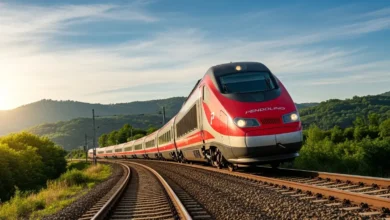
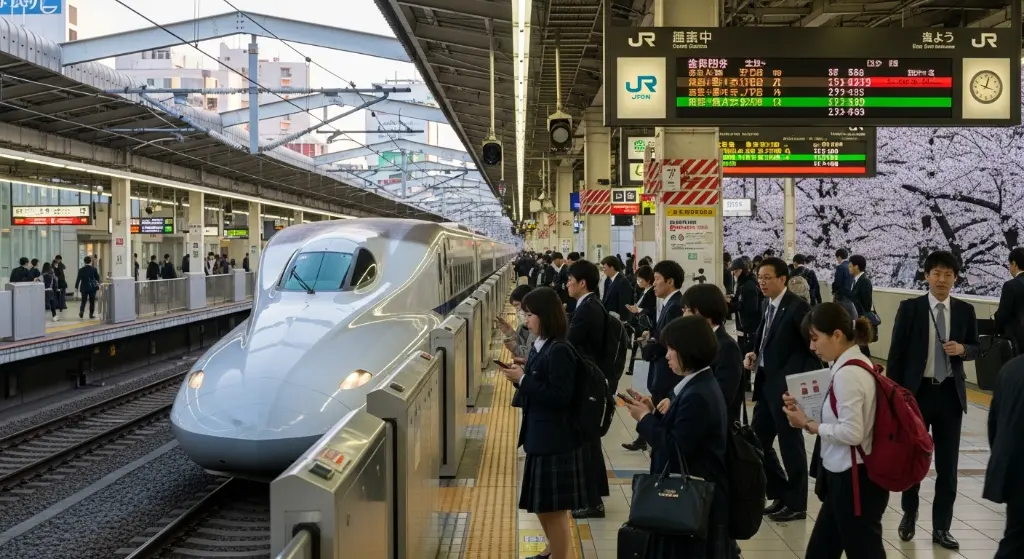
Forget everything you think you know about train travel. While Europe perfects the art of the intercity connection, Japan has mastered something else entirely: the rail journey as a destination. This year, a subtle revolution is unfolding across Japan’s iconic network. Fueled by a historic fare adjustment and a wave of new local openings, Japan Rail (JR) is capturing the imagination of European travelers looking for efficiency wrapped in unparalleled experience. This isn’t just about getting from Tokyo to Kyoto; it’s about why the journey itself becomes the most vivid chapter of your trip.
The All-Access Pass to a Nation
At its core, the **Japan Rail Pass** (JR Pass) is a tourist’s golden ticket. It’s a special fare card that grants unlimited travel on the vast majority of trains operated by the Japan Railways (JR) Group. This includes the legendary Shinkansen bullet trains (with a few exceptions), local commuter lines, scenic rural routes, and even some JR buses and ferries. For travelers planning to hop between major cities like Tokyo, Kyoto, Osaka, and Hiroshima, the pass transforms a complex fare system into a simple, all-in-one solution. You choose a validity period—7, 14, or 21 days—and the country’s rails become your playground.
2026: A Pivotal Year on the Tracks
The landscape of Japan Rail is evolving in 2026 with key developments that savvy travelers should note:
- A Historic Fare Adjustment: For the first time since its inception in 1987, Japan Railways is implementing a nationwide fare increase in March 2026. Driven by needs for infrastructure modernization and safety, the rise is moderate. For example, a ride on Tokyo’s famous Yamanote Line will increase from approximately 150 to 160 yen.
- What’s Not Changing: Crucially, the price of the tourist-focused Japan Rail Pass and many regional passes is not affected by this increase. Furthermore, fares on the busiest Shinkansen line, the Tokaido (Tokyo-Osaka-Kyoto), will remain unchanged.
- New Stations and Restorations: The network is expanding at a local level. A new station, Toyooka Daruma, will open on the Shinetsu Main Line in Gunma Prefecture, improving regional access. Meanwhile, after years of suspension, the Riku-U West Line is set to resume service, reconnecting communities.
- Experience-Focused Design: Beyond pure transport, railways are enhancing the journey. The Enoshima Electric Railway, famous for its coastal views, unveiled a new train in 2026 with rearranged seats and adjusted hanging straps specifically so every passenger can enjoy the sea vista.
Decoding the Network: From Bullet Trains to Local Lines
Navigating Japan Rail means understanding its hierarchy of speed and service:
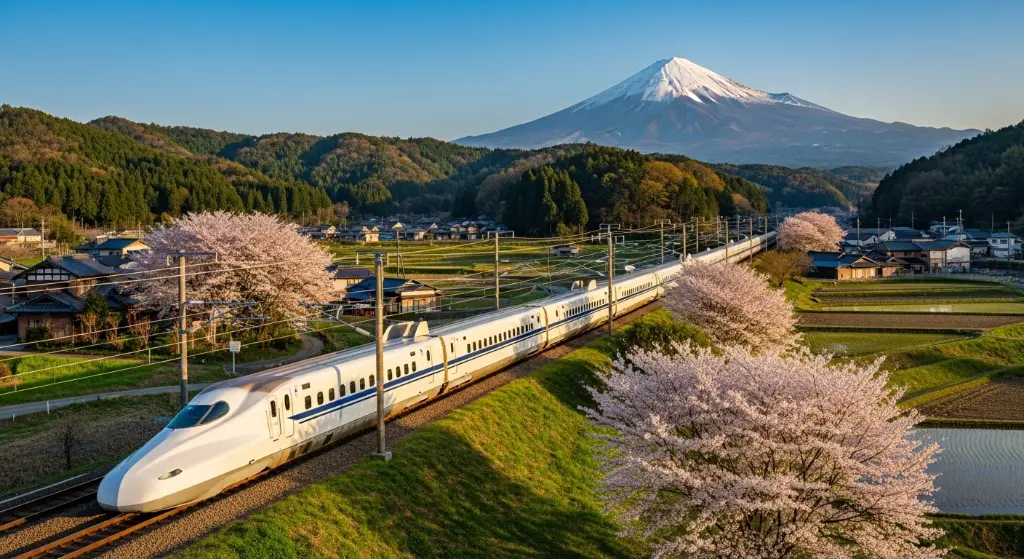
- Shinkansen (Bullet Train): The pinnacle of high-speed rail, connecting major cities across the islands at speeds over 200 mph. These are your highways in the sky.
- Limited Express (Tokkyu): Fast, comfortable trains that connect cities to regional destinations, often requiring a supplemental fare.
- Express (Kyuko) & Rapid (Kaisoku): Faster-than-local services on commuter and regional lines, usually covered by the base fare or JR Pass.
- Local (Futsu) Stops at every station, offering a slow but immersive way to see the country unfold.
What This Means for European Travelers
For a traveler accustomed to the networks of DB, SNCF, or Trenitalia, Japan Rail offers both familiar comforts and exhilarating differences.
The JR Pass Calculus: Does It Pay Off?
This is the most common question. The answer is a definitive “it depends.” The recent base fare increases make the pass an even sharper tool for the right itinerary. Do the math: A one-way Shinkansen ticket from Tokyo to Kyoto costs nearly ¥14,000. A 7-day Standard JR Pass costs approximately ¥50,000. Just that round trip alone recoups over half the pass’s value. Add a trip to Hiroshima or Kanazawa, and the savings become substantial. For a whirlwind tour covering long distances, it’s unbeatable. For a stay focused on one city like Tokyo, a local IC card (like Suica or Pasmo) or subway passes are more economical.
A Study in Contrasts: Japan Rail vs. European Networks
Your European rail experience is the perfect primer for Japan, but be ready for these shifts:
- Punctuality as Religion: While Deutsche Bahn or SNCF might announce delays, Japanese trains are famous for departures and arrivals timed to the second. Plan accordingly!
- Reserved Serenity Like reserving a seat on an ÖBB Railjet or a Renfe AVE, seat reservations on Shinkansen are highly recommended and free with the JR Pass. Unreserved cars exist, but during peak times, a reservation guarantees your spot in calm, orderly comfort.
- The Silence Carriage: While quiet cars are known in Europe, a broader culture of quiet contemplation exists on Japanese trains. Loud phone conversations are a notable faux pas.
- Seamless Urban Integration: Major stations like Tokyo or Osaka are not just transport hubs but sprawling, spotless cities unto themselves, filled with depachika (luxury food halls), shopping, and clear signage in English.
Your First Japan Rail Journey: A Practical Primer
Turning fascination into motion requires a few key steps:
- Plan Your Itinerary First: Map your must-see destinations. Use tools like the official JR Pass route maps to visualize connections. If your dream is a deep dive into Kyoto and Tokyo with a day trip to Mount Fuji, a pass might not pay. If it’s a sprint from Tokyo to the Alps to Kyoto to Hiroshima, it almost certainly will.
- Buy the Exchange Order Abroad: The JR Pass must be purchased *outside* Japan. You’ll receive an exchange order to validate at major airports and stations upon arrival, where you’ll set its active start date.
- Master the Two-Ticket System For Shinkansen and Limited Express trains, you often need both a base fare ticket (covered by your pass) and a supplemental express ticket. When reserving a seat with a JR Pass, the station staff will issue you a special seat reservation slip that covers both.
- Download Essential Apps: While Europe relies on DB Navigator or SNCB’s app, in Japan, hyper-accurate apps like **Japan Travel by Navitime** or **Google Maps** (which excellently integrates train schedules) are indispensable for real-time schedules, platform numbers, and transfer routes.
The Future is on Rails
Looking beyond 2026, Japan’s rail ambitions continue to soar. The monumental Chuo Shinkansen maglev line, which will eventually connect Tokyo to Osaka in a breathtaking blink, is a testament to a nation perpetually racing toward the future. For the traveler, this constant innovation means that a journey on Japan Rail is more than a transfer between points A and B. It is a front-row seat to a culture that venerates precision, respects shared space, and finds beauty in the journey itself. From the thunderous silence of a bullet train piercing the landscape to the gentle rattle of a local line along the coast of Enoshima, it offers a rhythmic, unforgettable way to discover the soul of Japan.