
OUIGO France 2026: Is the Low-Cost High-Speed Train Worth It?
OUIGO is France’s official low-cost high-speed train service, operated by SNCF. Think of it as the Ryanair of French rail: you get the same 300–320 km/h speeds as a classic TGV, but at a fraction of the price.
Tickets regularly start from €10–19 on popular routes that would normally cost €50–100 on TGV inOui. The trade-off? Tighter luggage rules, less flexibility, and frequent departures from suburban stations instead of central Paris terminals.
Here’s everything you need to know about OUIGO in 2026 — so you can decide whether the savings are worth the compromises.
What Exactly Is OUIGO?
OUIGO is SNCF’s budget high-speed brand. It uses the same TGV trainsets as the premium TGV inOui service, but with denser seating, fewer amenities, and a strict low-cost model.
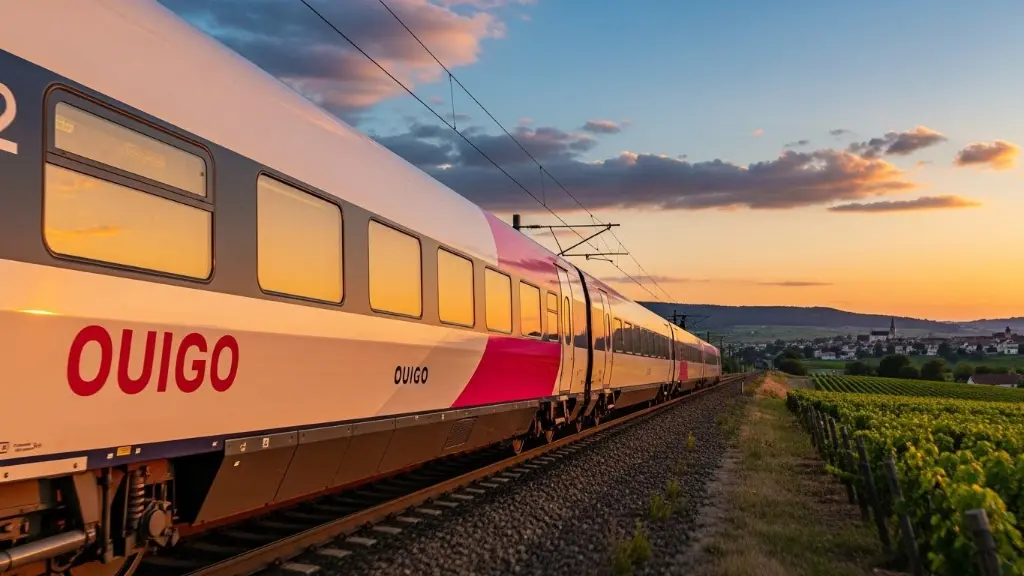
There is only one class of service (no First Class). Trains are double-decker on many routes, painted in the distinctive pink-and-blue livery, and aimed squarely at price-sensitive travellers, families, and backpackers.
Key Routes & Journey Times (2026)
OUIGO connects Paris with most major French cities and also operates some Spanish routes. Popular journeys include:
- Paris → Lyon – approx. 2 hours
- Paris → Marseille – approx. 3–3.5 hours
- Paris → Bordeaux – approx. 2–2.5 hours
- Paris → Montpellier / Nîmes – approx. 3–3.5 hours
- Paris → Nice – approx. 5.5–6 hours (with stops)
- Paris → Nantes / Rennes / Strasbourg – frequent services
Important station note: Many OUIGO trains do not depart from central Paris stations (Gare de Lyon, Montparnasse, etc.). Instead they often use:
- Marne-la-Vallée – Chessy (next to Disneyland Paris) – ~45–50 minutes from central Paris by RER A
- Massy TGV
- Aéroport Charles de Gaulle TGV
Always check the exact departure station when booking. The extra transfer time can add 30–60 minutes to your total journey.
Luggage Rules – The Biggest Catch
This is where most travellers get caught out. OUIGO has airline-style baggage restrictions.
Included free with every ticket:
- 1 hand luggage (max. 36 × 27 × 15 cm or 40 × 30 × 15 cm depending on the offer)
- 1 cabin bag / small suitcase (max. 55 × 35 × 25 cm including wheels and handles)
Extra or larger luggage:
- €5 per additional/oversized bag if added online at booking
- €20 per bag if paid at the station (and staff do measure)
There is no dedicated oversized luggage area. If you travel with typical American or large European suitcases, budget for the extra fee and always add it during booking.
OUIGO Plus Upgrade (Highly Recommended for Many)
For an extra €9 (free for children under 12 on some offers) you can buy OUIGO Plus. It includes:
- 1 extra piece of luggage (or XL bag)
- Seat selection (including seats with power sockets)
- Priority boarding at some stations
- Access to the OUIFUN entertainment system
For most travellers carrying more than a backpack + small cabin bag, OUIGO Plus is worth the money.
Onboard Experience
- Seats – Standard TGV-style but more tightly packed. Legroom is acceptable for average height; tall passengers (over 190 cm) may feel cramped on longer journeys.
- Power sockets – Only guaranteed if you select a seat with a socket or buy OUIGO Plus.
- Wi-Fi – Free on all trains, but can be slow when the train is full.
- Food & drink – No dining car and no trolley service on most trains. Bring your own snacks and water.
- Toilets – Available on both decks.
Pros & Cons of OUIGO in 2026
Pros:
- Extremely low prices (often 50–70% cheaper than TGV inOui)
- Same high-speed trains and journey times as regular TGV
- Free Wi-Fi
- Clean, modern trains
- Great for light packers and budget travellers
Cons:
- Strict luggage limits and high station fees if you forget to prepay
- Frequent use of suburban stations
- Very limited flexibility (tickets are usually non-refundable and hard to change unless you buy OUIGOFLEX)
- You must arrive at least 30 minutes before departure – gates close early
- No food service on board
- Less legroom than TGV inOui
When Is OUIGO Worth It?
Choose OUIGO if:
- You are travelling light (backpack + small cabin bag)
- You book several weeks or months in advance
- You are happy to use suburban stations
- Price is your top priority
Skip OUIGO (or choose TGV inOui) if:
- You have large suitcases
- You need flexibility to change or cancel
- You prefer central stations
- You want more space and guaranteed power sockets without paying extra
Booking Tips for 2026
- Book as early as possible – the cheapest fares appear 3–4 months ahead and rise steadily.
- Always add extra luggage online during booking (€5 is much better than €20 at the station).
- Compare OUIGO with TGV inOui on Trainline, Omio or SNCF Connect – sometimes the difference is only €10–15 and the regular TGV is clearly better value.
- Check the exact departure and arrival stations carefully.
- Download the SNCF Connect or OUIGO app – tickets are 100% digital.
Frequently Asked Questions
Is OUIGO the same as TGV?
It uses the same high-speed trainsets, but with a low-cost product (denser seating, stricter rules, fewer amenities).
Can I take a large suitcase on OUIGO?
Yes, but you must pay the extra luggage fee in advance (€5 online). At the station it costs €20 and staff enforce the rules.
Do I need to print my ticket?
No. Tickets are digital and stored in the app or as a PDF/QR code on your phone.
Is OUIGO covered by Interrail / Eurail?
Yes, but you still need a reservation (and the reservation fee usually includes the right to take larger luggage).
How early should I arrive?
At least 30 minutes before departure. Boarding gates close strictly on time.
Bottom line: OUIGO is an excellent option if you travel light, book early and accept the low-cost rules. For many short-to-medium journeys in France it offers outstanding value. Just read the fine print on luggage and stations — and you’ll save a significant amount of money without sacrificing speed.
Looking for the full-service alternative? Read our detailed review of TGV inOui.